




Aston Martin left the Miami Formula 1 GP showing signs of improvement in the reliability of its project in partnership with Honda. After a turbulent start to the season, the team’s two cars completed the sprint race and the main race of the fourth round of the year without serious problems, in a weekend considered encouraging by the team.
Read more F1: Sainz believes in Williams’ comeback only at the end of the year
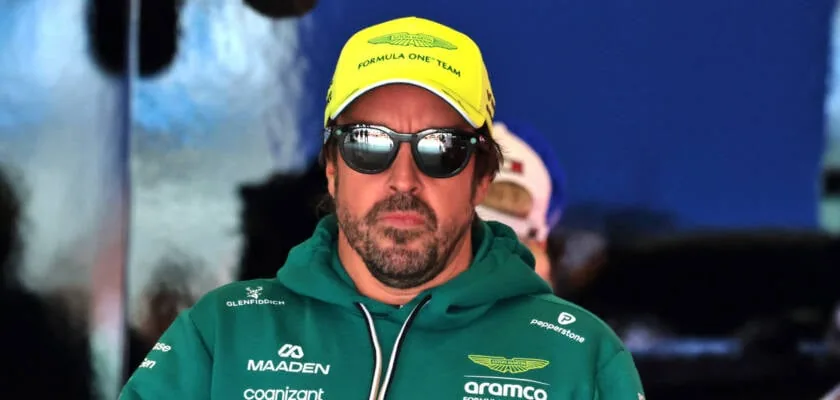
Fernando Alonso finished ahead of Sergio Pérez’s Cadillac in both races and stated that the AMR26 returned to normal behavior, with the vibrations apparently resolved. According to the Spaniard, however, the next development focus needs to be the gearbox: “No problems,” he said. “Honestly, the problem throughout the weekend was more the gearbox than the engine, so I don’t know if it was the electronics or something like that.”
“It was very strange during downshifts and upshifts, so it wasn’t very well controlled. So that is the number one fix for Canada. I think with all those heavy braking zones in Canada, we need to improve the gearbox behavior at that moment.”
The Miami GP also served as an important stage to evaluate the changes made by Honda to contain the harmonic resonance that affected reliability since the beginning of the year. Aston Martin was the only team not to bring chassis or aerodynamic updates, prioritizing direct data comparison.
One of the solutions adopted was unusual: the team left an AMR26 chassis in Japan for testing at Honda’s base in Sakura. The idea was to analyze the interaction between the power unit and chassis under controlled conditions. “I think we are satisfied with that, and I think our partner wants to do more,” said Mike Krack.
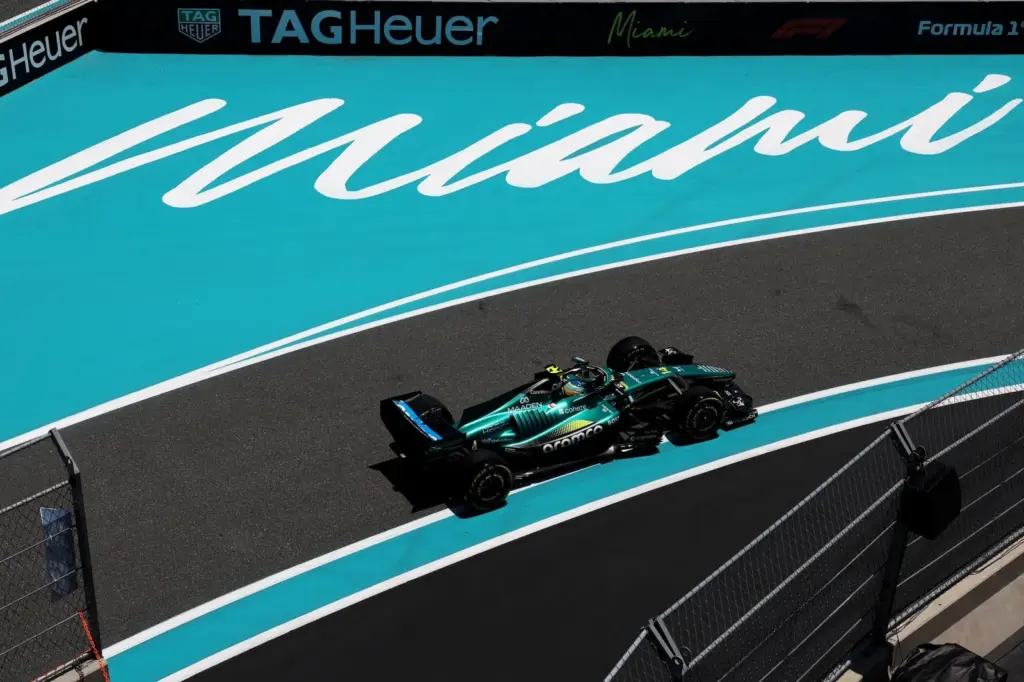
“We left one of the race cars in Sakura for some dynamometer tests. Honda is a huge company and has a lot of experience in this. That helped us mitigate some of the problems we were having.”
Read more Digital Transformation in Formula 1: From Home Grandstand to Virtual Pit Lane — How Brazilian Fans
According to Krack, the joint work allowed better identification of how vibrations propagated between systems: “The transmission path is something you only have with the real race car. That allowed us to work on the interfaces and Honda on the root of the problem. I am very satisfied with the result.”
At Honda, Shintaro Orihara confirmed that the countermeasures performed well on track: “We confirmed that they are working well. The drivers also gave positive feedback. We completed the full race and sprint distance without serious reliability issues. That is good progress.”
Orihara also explained that the solution involved both chassis and power unit. “It’s a combination. The vibrations come from the energy that passes from the chassis to the power unit. We combined countermeasures on both sides and it works very well. The next focus is to optimize energy management and drivability,” he said. “There is still a lot of room for improvement.”
Krack highlighted that the team is now going through a more consistent learning phase: “You learn on every lap. And now we can race and collect real data. If you don’t run, you don’t have experience with the tires. Now we can learn that in practice.”
Aston Martin is still fighting for its first points of the season, as is Cadillac.
Read more Alonso rules out leaving F1 with a ‘bitter taste’: «I am happy with my career»