





New rules work, Russell leads Mercedes 1-2 in Melbourne, but race reveals championship battle could be immediate
Read more F1: Verstappen compares midfield battle to “Mario Kart”
The 2026 Formula 1 season officially began this Sunday in Melbourne with an important milestone for the category. The Australian Grand Prix was the first race of Formula 1’s new technical generation, a regulation that brought profound changes to the power unit, aerodynamics and, especially, the role of electrical energy within the race dynamics.
If there were doubts about how these changes would behave in practice, the first answer was positive. The race at Albert Park indicated that the 2026 rules work and, perhaps more importantly, introduce new strategic variables that put the driver back at the center of the equation.
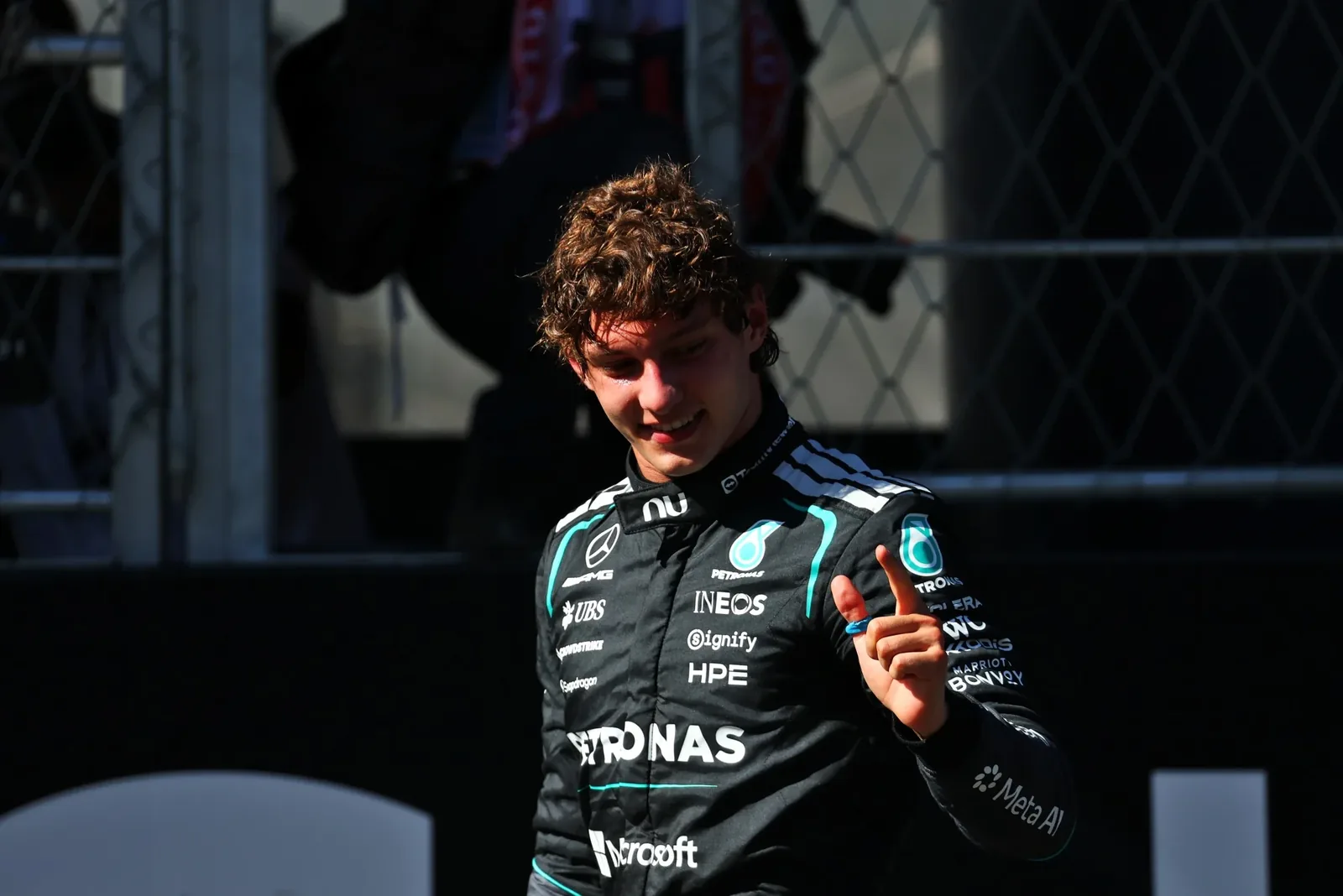
George Russell won the race leading a Mercedes 1-2 with Kimi Antonelli in second. Charles Leclerc completed the podium for Ferrari, followed closely by his teammate Lewis Hamilton, in a race that showed from the first stage that the battle at the top of the championship could be more balanced than Saturday’s qualifying suggested.
Russell thus takes the early lead in the Drivers’ Championship and puts Mercedes back at the top of Formula 1 right at the start of a new technical cycle.
But Melbourne also made it clear that this lead should not be solitary.
The new rules and the role of energy
The major conceptual change for Formula 1 in 2026 lies in the balance between combustion and electrical energy. With the split practically equal between these two power sources, energy management has taken a central role in race driving.
And this was evident right from the first race.
At various points in the race, it was possible to observe drivers adopting different driving approaches to handle battery management, including “lift and coast” strategies to recover energy and prepare attacks later in the lap.
At first glance, this type of management might create a sense of strategic artificiality. But at the same time, it also returns complexity to the work inside the cockpit.
For years, part of the paddock criticized the fact that modern cars had become “too easy” to drive. This was always a debatable view, but the 2026 regulations certainly give drivers a higher level of operational responsibility.
Now, in addition to pure driving, drivers must constantly deal with energy management, more delicate start procedures to avoid turbo lag and an even greater number of strategic decisions during the race.
In other words: the work inside the cockpit has increased. And this is perhaps one of the most interesting aspects of this new generation of cars.
Mercedes wins, but Ferrari shows strength
If the new regulation worked in sporting terms, the race also helped to start outlining the balance of power between the teams.
On Saturday, qualifying indicated a possible Mercedes dominance. Russell and Antonelli secured the front row with a comfortable lead over the rest of the grid, suggesting the German team could quickly pull away in the race.
But Ferrari made sure to show that the scenario could be more balanced.
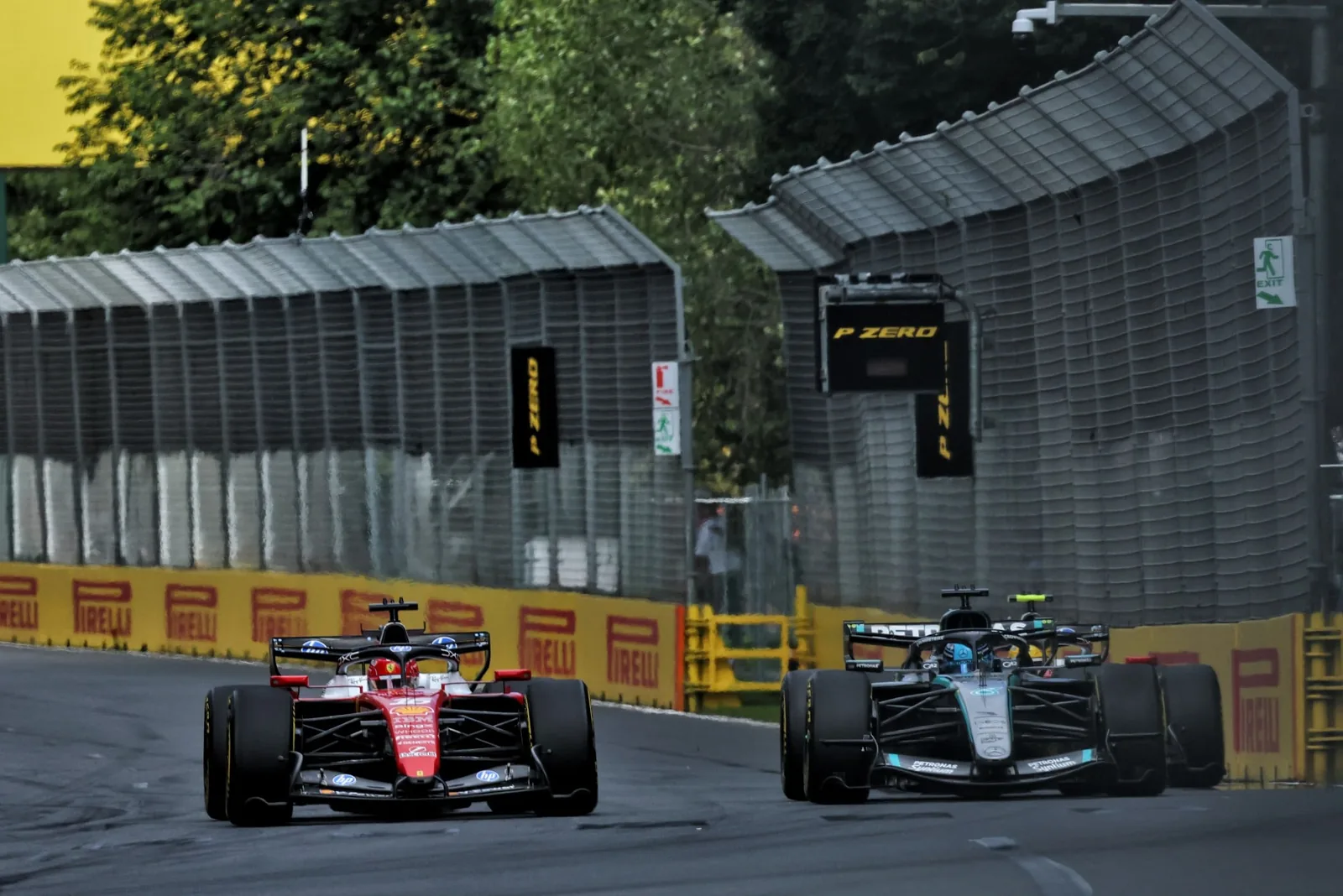
Charles Leclerc had a perfect start and took the lead in the very first meters by overtaking Russell at the first corner. Lewis Hamilton also had an extremely strong start and quickly entered the fight for the lead. This performance was no surprise.
During the pre-season, Ferrari had already worked on solutions to minimize turbo lag at starts, adopting a smaller turbo that favors the engine’s initial response. The effectiveness of this approach was clear in the first meters of the race.
Meanwhile, Antonelli had a complicated start and dropped to seventh position, which momentarily took Mercedes out of absolute control of the race.
Read more F1: Marko agrees with Verstappen on limitations of the new cars
In the opening laps, the lead alternated between Leclerc and Russell, with Hamilton also close enough to threaten turning the contest into a three-car battle.
The decisive moment of the race
The first important strategic moment happened on lap 12, when Isack Hadjar retired with mechanical problems. The situation triggered a series of pit stops, with Russell, Antonelli and other drivers taking the opportunity to pit.
Ferrari decided to stay on track with Leclerc and Hamilton, extending the first stint. The strategy kept the two cars temporarily in front, but also left them vulnerable when Mercedes returned to the track with fresher tires.
With just over half the race gone, Russell was on a stronger pace and with tires in better condition; he attacked Hamilton under braking at turn 9 and dived down the inside to take the lead of the race.
Ferrari ended up following Pirelli’s recommended pit stop window, which in the end did not prove to be the best option. Had they pitted along with Mercedes during the Virtual Safety Car period, it is possible that the fight for the win would have extended until the final laps.
Bortoleto scores points on Audi debut
While the battle for the top unfolded between Mercedes and Ferrari, Brazilian Gabriel Bortoleto delivered a solid race in his debut with Audi.
After starting in tenth position, the Brazilian faced difficult moments in the early laps but managed to recover throughout the race.
On lap 40, Bortoleto overtook Esteban Ocon and shortly after also passed Pierre Gasly to return to ninth position.
In the final laps, he still tried to close in on the battle between Oliver Bearman and Arvid Lindblad, but ended up finishing a few seconds behind the fight.
Even so, the result had historical weight. By finishing in ninth place, Bortoleto scored the first two points in Audi’s Formula 1 history in its official debut as a factory team in the category.
A lead that could be temporary
Russell managed the final laps calmly to secure the victory, while Antonelli completed the Mercedes 1-2 and Leclerc confirmed Ferrari’s first podium in this new generation of Formula 1.
But the scenario seen in Melbourne suggests a potentially open championship.
Ferrari showed the pace to fight for wins and could respond quickly as early as the next round, the Chinese Grand Prix, which takes place next weekend.
Furthermore, there is an important technical factor on the horizon. Mercedes is currently working with an engine configuration that may require adjustments starting June 1st, when a new method for measuring the compression ratio comes into effect – which will be evaluated at high temperatures.
Should this reduce the current advantage of the German power unit, the balance between Mercedes and Ferrari could become even more intense throughout the season.
Melbourne opened the new era of Formula 1 with a clear victory for Mercedes.
But the first race of 2026 also left an important message for the rest of the championship: Ferrari is very close, and the balance of this new generation of cars could change quickly in the coming rounds.
Read more F1: Russell hits back at Norris’s criticisms of the category’s new rules