






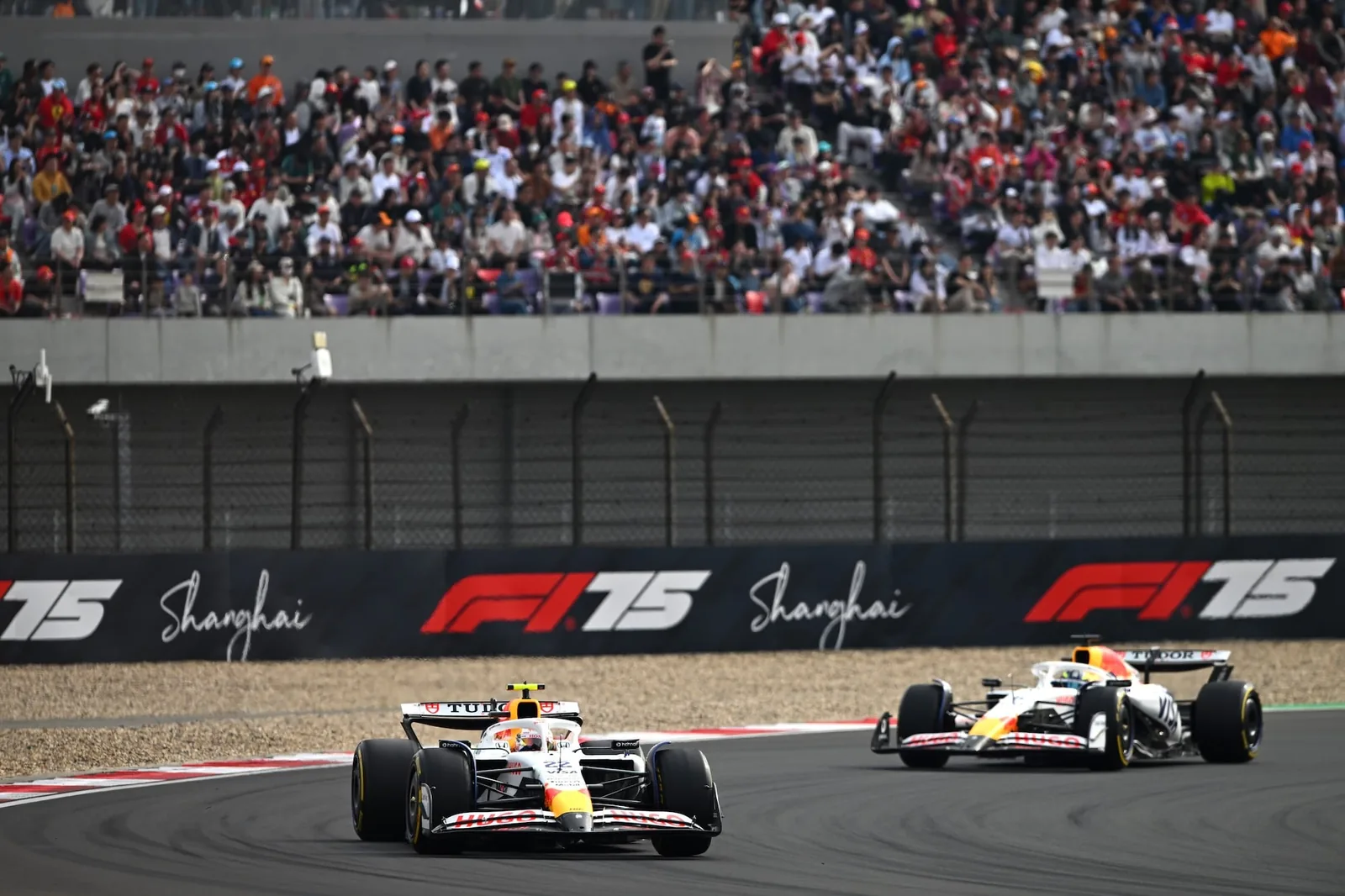
Formula 1 arrives at the Chinese GP surrounded by technical doubts, logistical problems, and pressure for quick answers after the season opener. This Wednesday’s (11) news on F1Mania.net showed a paddock attentive to tire wear, emergency FIA changes, and even uncertainties in the 2026 calendar, in a scenario that reinforces how the championship began under tension. 
Read more Cacá Bueno continues in NASCAR Brasil and renews with Team RC for 2026
The weekend in Shanghai appears as the next big test for several teams and also for the category itself. Among the day’s topics, F1Mania.net highlighted everything from George Russell’s warning about the new front wing on the straights to McLaren and Red Bull’s concerns with tire degradation, as well as Gabriel Bortoleto’s confidence in Audi’s future and Saudi Arabia’s pressure to remain on the calendar amidst the crisis in the Middle East. 
One of the main themes of the day was the FIA’s decision to relax operational restrictions before the Chinese GP. The reason was the delay in the arrival of Pirelli’s cargo in Shanghai, which forced the entity to review procedures planned for this Wednesday. In a note, race director Rui Marques explained that, exceptionally in this stage, the first restricted period was reduced by six hours to allow up to six operational members from each team to work on tire preparation after assembly by the Italian supplier. The episode reinforces that transport problems continue to directly impact the paddock at this start of the championship. 
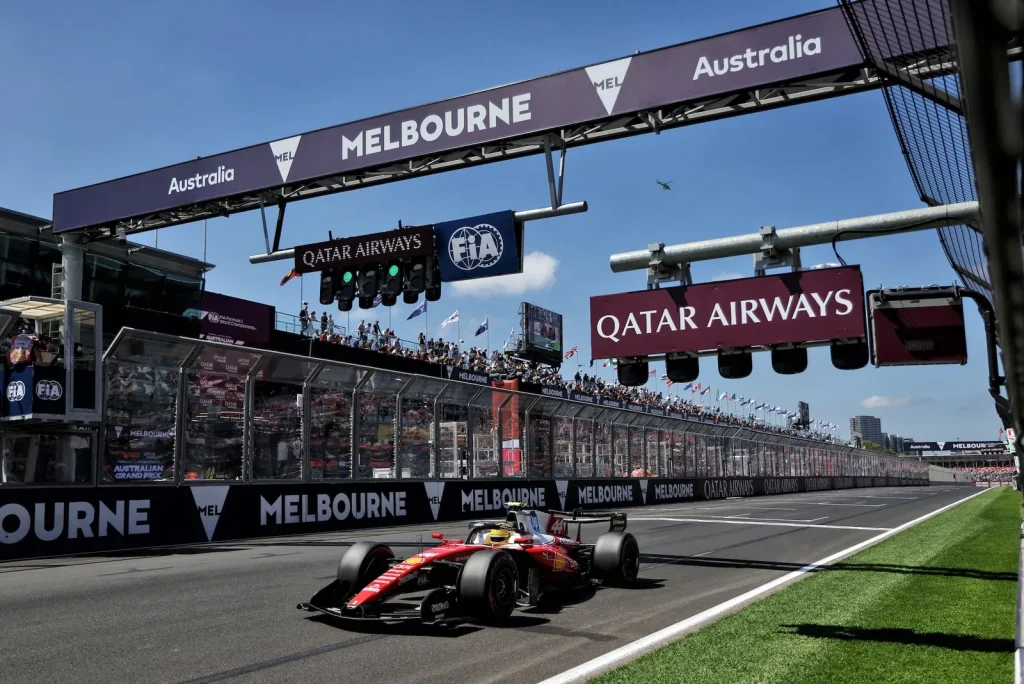
The tire issue, in fact, appeared strongly on other fronts. Lando Norris admitted that McLaren needs to resolve a recurring problem of graining and wear, evidenced in the Australian GP. Even putting the 51-second gap to George Russell in Melbourne into perspective, the Briton made it clear that the team is still far from the ideal level and that the compounds lost performance very early during the race. For Norris, McLaren needs to quickly understand why tire behavior continues to be a structural limitation of the car. 
At Red Bull, the discourse was similar, although with a focus more directed towards learning for the Sprint weekend in China. Max Verstappen highlighted that tire degradation affected performance in Melbourne and could once again be an important factor in Shanghai. The Dutchman stated that the team continues to collect data to improve the car and acknowledged that there will be less time for adjustments because of the Sprint format. Isack Hadjar, for his part, treated the next stage as another opportunity to seek stronger performance and measure himself against the main names on the grid. 
Read more F1: Verstappen values Red Bull engine despite criticism of the rules
Another relevant subject was Russell’s warning to the FIA about the front wing with the so-called Straight Mode. The Mercedes driver, winner of the Australian GP, stated that the activation of the system causes the opening to close too aggressively, generating understeer and reducing front-end efficiency, especially when the car is in the slipstream. According to Russell, a review already for China would make the race safer and improve car control in high-speed battles. 
On the Brazilian side, Gabriel Bortoleto was a highlight by demonstrating confidence in the Audi project. The driver stated he has no doubt that the German manufacturer will overcome the current power deficit and become one of the main engine suppliers in Formula 1 in the future. After debuting with a ninth-place finish in the Australian GP, Bortoleto acknowledged that the power unit still has limitations, but emphasized that the team understands the causes of the lack of performance and is in the initial phase of learning. Jonathan Wheatley also highlighted that the new hybrid regulations are still only at the beginning and should allow for important evolution in the coming years. 
Off the track, Formula 1 is also cautiously monitoring the situation in the Middle East. F1Mania.net showed that the Saudi Arabian GP is trying to preserve its spot on the 2026 calendar amidst the regional crisis, which has already affected the category’s logistics and put the stages planned for April in Bahrain and Jeddah at risk. The possibility of canceling the two races is treated as a likely scenario, without immediate replacement, which could reduce the season to 22 races. In this context, the championship continues at pace, but already pressured by factors that go far beyond the stopwatch.