






Few Formula 1 circuits demand as much from engineers as Spa-Francorchamps. With three completely different sectors, the Belgian track forces teams to find an almost impossible compromise between straight-line speed, aerodynamic downforce, and stability in high-speed corners.
Read more F1: Hamilton charges himself to «do better work» in Spa than in Silverstone
When a driver completes a lap at Spa-Francorchamps, the impression is that they have driven a single circuit. For engineers, however, the reality is different. In practice, Spa works as if it combines three completely different tracks into one lap, each requiring distinct car characteristics.

It is precisely this contradiction that makes the Belgian GP one of the most complex weekends on the calendar. While at some circuits the direction for setup seems relatively clear, at Spa any gain in one part of the track usually means sacrificing performance in another.
Therefore, it is no exaggeration to say that much of the weekend’s result begins long before the cars hit the track. It starts in the engineering rooms, where finding the ideal balance becomes one of the biggest technical challenges of the season.
Three sectors, three different philosophies
The first sector is dominated by speed.
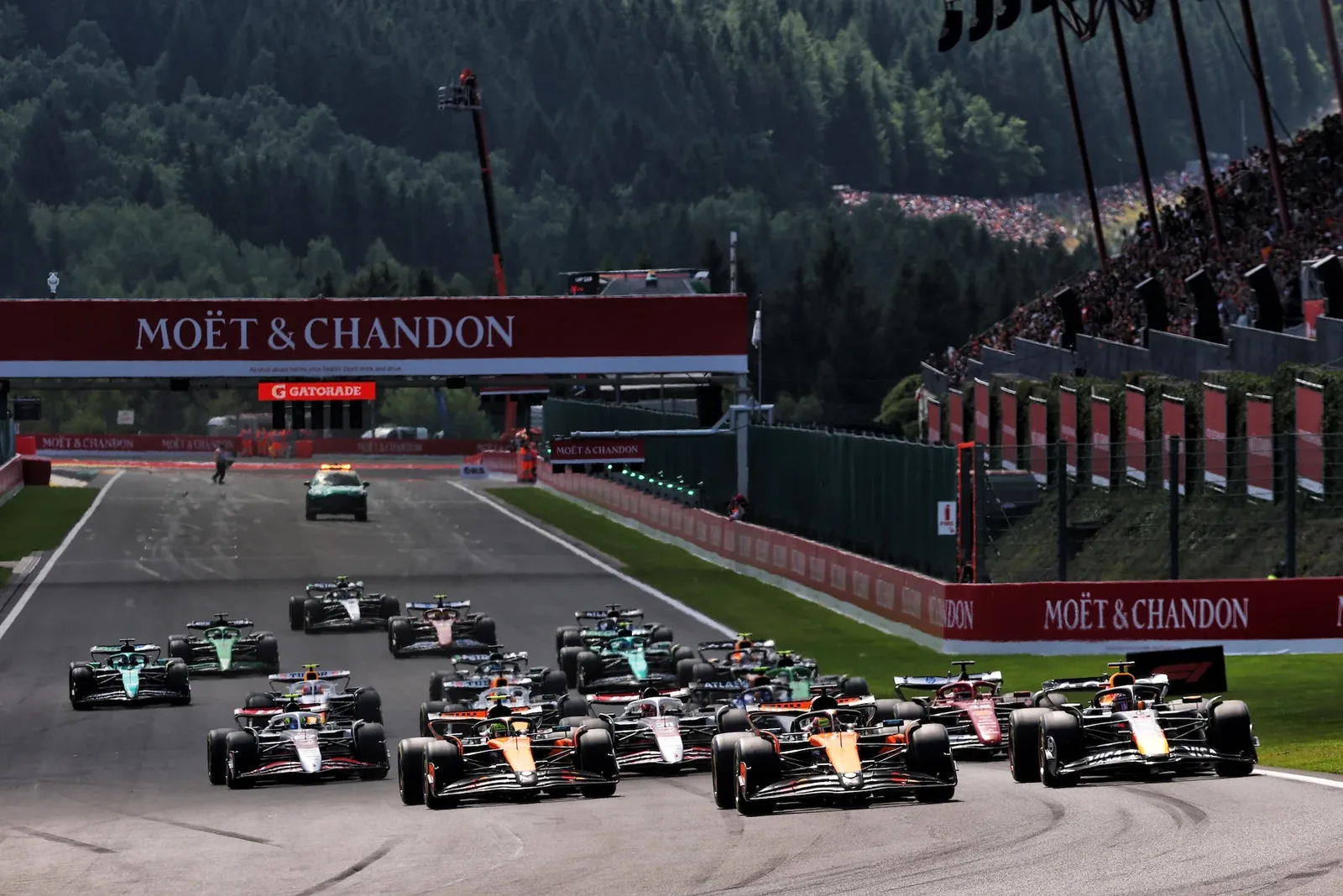
After the start, the cars pass through La Source and accelerate towards Eau Rouge and Raidillon before reaching the long Kemmel straight. It is a section where power, aerodynamic efficiency, and top speed make a huge difference, especially in battles for position.
The second sector completely changes the nature of the track.
Here appear corners like Bruxelles, Pouhon, and Fagnes, where car stability, aerodynamic balance, and driver confidence become decisive. A car set up only to reach high speeds on the straights usually loses a lot of time in this sequence of fast and medium-speed corners.
In the third sector, the challenge changes again. High-speed corners alternate with more technical sections before the main straight, requiring good traction on corner exits and a stable aerodynamic platform until the finish line.
The result is a circuit that demands practically all possible qualities of a Formula 1 car in a single lap.
The difficult choice of aerodynamic downforce
It is precisely because of these characteristics that Spa causes one of the biggest technical dilemmas of the championship.
Adding more aerodynamic downforce improves performance in fast corners, increases driver confidence, and reduces tire wear in various parts of the track. In compensation, it increases aerodynamic drag and makes the car lose speed on the long straights, making overtaking and defending more difficult.
Reducing downforce produces exactly the opposite effect.
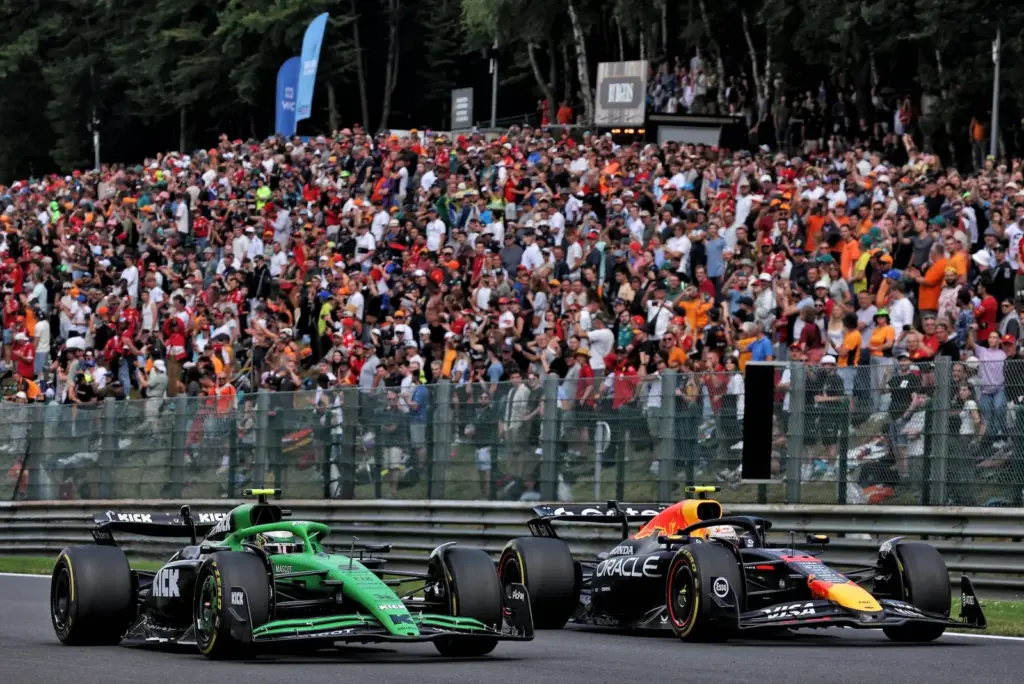
The car gains top speed and becomes more competitive in DRS zones, but demands much more from the driver in high-speed corners. Small steering movements become larger, balance changes quickly, and any mistake can cost several tenths of a second.
Finding the ideal point between these two extremes is a task without a single answer. Each team reaches different conclusions according to the characteristics of their car.
The driver is also part of the setup
In few circuits does driving style influence the engineers’ work so much.
There are drivers who prefer an extremely stable car in fast corners, even if that means losing a few kilometers per hour on the straights. Others accept a more nervous car in exchange for higher top speed, betting on their own ability to control the car’s behavior.
Read more F1: Pérez recalls how Verstappen received «all the opportunities» within Red Bull
This difference often means teammates use quite different aerodynamic setups during the weekend.
There is no universal solution.
There is the setup that best suits the car and the driver.
The weather makes everything even more complex
As if the technical challenge were not enough, Spa adds an ingredient that few tracks offer.
The weather in the Ardennes can change completely within minutes.
It is relatively common for one sector to be completely dry while another receives rain. Under these conditions, the setup chosen for dry track can quickly lose efficiency, while changes made thinking of wet conditions can become a problem if the weather clears again.
This unpredictability forces teams to work with larger safety margins during the weekend. Instead of just seeking the fastest car, often it is necessary to find the most versatile car.
This adaptability usually makes a difference especially in races.
Spa reveals the quality of a design
There is a reason why engineers value performance obtained in Belgium so much.
Spa does not favor just one specific type of car. It demands power, aerodynamic efficiency, stability, good traction, tire management, and balance in different types of corners. If a design can work well on a circuit with such varied characteristics, it usually shows a solid technical base.
Therefore, the results obtained at Spa are usually closely observed by the teams themselves.
A good performance can confirm that the chosen development path is correct. A performance below expectations, on the other hand, often reveals limitations that may have gone unnoticed on more specific tracks.
It is a kind of technical audit carried out at maximum speed.
Much more than courage
Spa is often remembered for the spectacular images of Eau Rouge and Raidillon, but its true challenge goes far beyond this postcard.
The Belgian track demands courage, it is true, but mainly precision. Every choice made by engineers influences the car’s behavior in completely different parts of the lap. Every adjustment represents a compromise. Every gain brings a loss in another part of the circuit.
Perhaps it is precisely this complexity that explains why so many professionals consider Spa one of the greatest challenges in Formula 1.
It is not enough to have the fastest car. You need to have the most balanced package.
And finding this balance continues to be one of the most difficult tasks of the entire season.
Read more F1: Rain may mark the start of the weekend in Belgium