






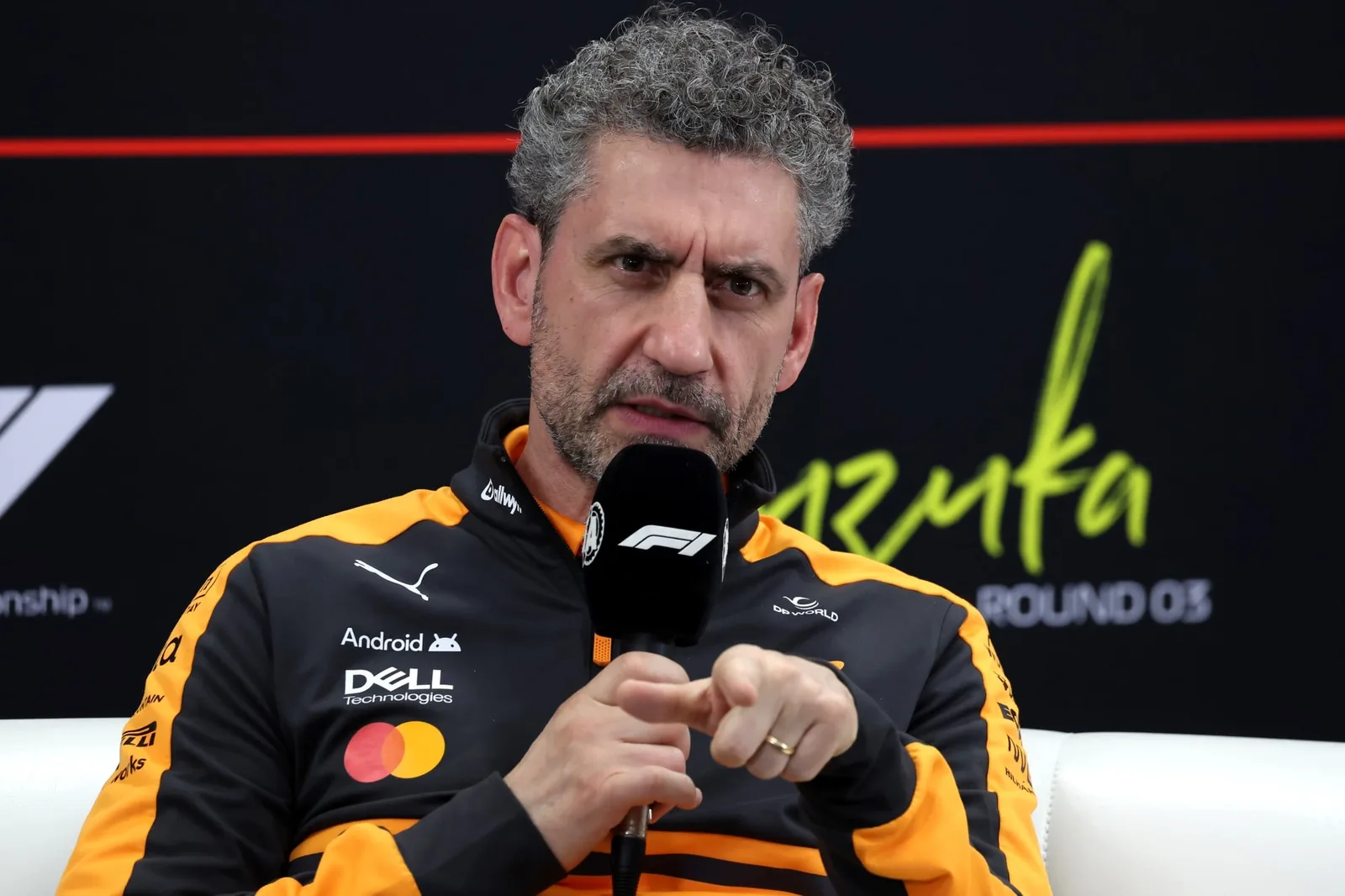
Andrea Stella pointed out that the Formula 1 hiatus without races during the month of April was a significant moment for McLaren, although he also described the period as a paradox in its eventual impact.
Read more F1: Ferrari reduces Mercedes’ lead and raises alarm in the title race
The British team entered the five-week period between Japan and Miami facing a complicated performance in the 2026 season. Reliability issues and lack of pace compared to Mercedes left the current World Constructors’ Champion searching for answers.

Therefore, for the McLaren chief, the race-free period gave time to review the MCL40. “There was not a single event that changed the course of things; it was, in fact, a growing awareness of the scale of the challenge we faced and the adjustments we needed to make,” he explained.
“Paradoxically, the forced break in April probably allowed us to fully focus on analyzing the MCL40’s performance and fully understand that we needed to redirect or reinforce its development in certain areas of the car.”
Read more F1: Sainz says deadline for decision about future in the category has changed
One of McLaren’s main points of suffering was the new generation of Mercedes HPP engines, with both cars unable to start in China due to electrical problems. Later, more reliability issues affected the driver duo, besides the team finding themselves behind Mercedes in the work, despite using the same engine unit.
“Returning to the car’s performance, it is clear that the weekend in Budapest, which marked the end of the first half of the season, was the highlight: not only because of the result, but above all because the aerodynamic package we introduced in Hungaroring is the result of this change in development direction and allowed us to achieve significant progress in terms of competitiveness,” Stella concluded.
Read more F1: Cadillac announces change and name of new team principal