







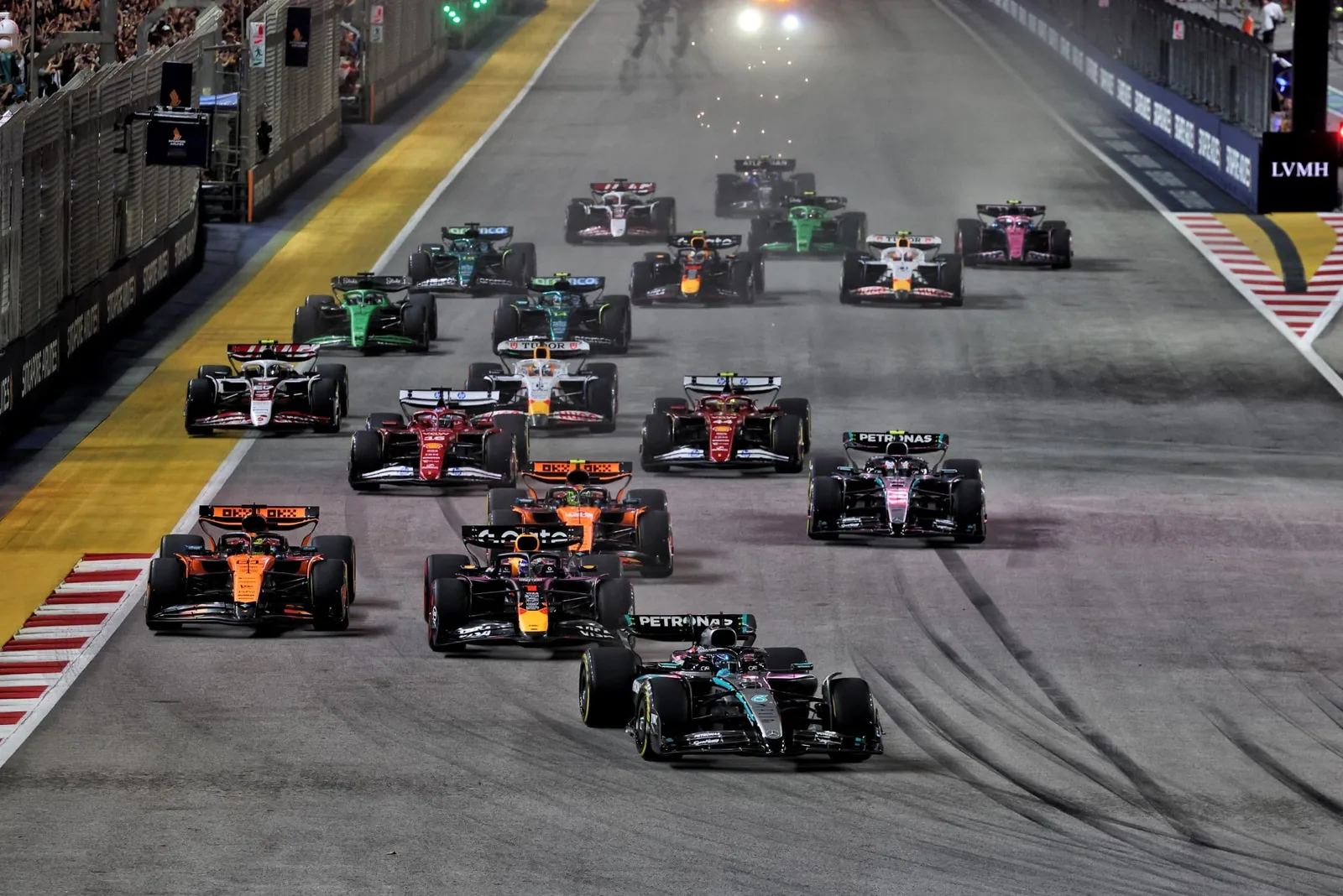
Formula 1 has confirmed a change in the start procedure, starting with the Australian GP this coming weekend, in response to the challenges posed by the new engines for the 2026 season. The change was necessary due to modifications in the power unit system, which now does not include the MGU-H component, directly impacting turbo behavior.
Read more F1: Norris is ironic about his biggest title rivals in 2026
During pre-season testing, concerns arose about how the cars would react at the start, as the removal of the MGU-H requires drivers to keep engine revs high for longer to avoid the delay in turbo power delivery, known as ‘turbo lag’. This adjustment is fundamental to ensuring that the cars pull away efficiently as soon as the lights go out.
To solve this problem and ensure a safer start, especially for drivers starting further back on the grid, Formula 1 tested a new solution during testing in Bahrain. A blue panel was shown for five seconds after the last car lined up on the grid, before the start of the traditional five-light procedure. This method will be adopted at the Australian GP to avoid any safety risk should any driver fail to accelerate properly.
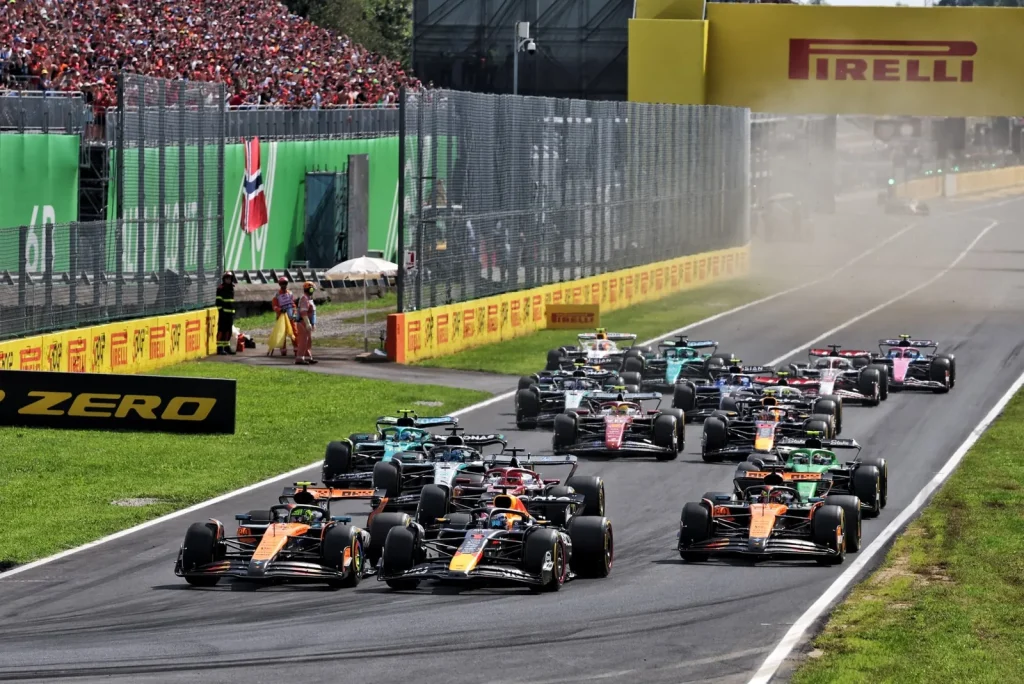
According to the notes of F1 race director Rui Marquez, the start panel lights will shine blue for five seconds, after which the message ‘Pre-Start’ will be displayed on the grid information screen. Only after that will the traditional start procedure begin.
Read more F1: Hadjar points out challenges in Red Bull’s one-lap pace
Additionally, another change will be the use of ‘Straight Mode’, a component of the new active aerodynamics to increase speed and aid overtaking, which can now only be activated after the first corner of the opening lap, limiting its use in the early stages of the race.
These changes aim to improve the safety and efficiency of the start of races in 2026, with the necessary adaptation to Formula 1’s new power unit regulations.
Read more F1: Bottas confirms he will have no grid penalty for the Australian GP