




The debate about approach speeds in Formula 1 has gained prominence again after the Miami GP, even with adjustments made by the FIA (International Automobile Federation) for the event. Before the race, the entity introduced changes to the regulations, such as a Boost Mode energy limit of +150kW and the restriction of MGU-K use to 250kW in specific parts of the lap.
Read more Formula 1: Antonelli reports mechanical failure during victory in Miami
The changes were motivated by concerns about the new generation of engines, which foresee an equal split between electric energy and combustion. The topic gained traction after the 50G accident involving Ollie Bearman, from Haas, in Suzuka, when he was hit at high speed behind Franco Colapinto, from Alpine, who was regenerating energy at the Spoon curve.
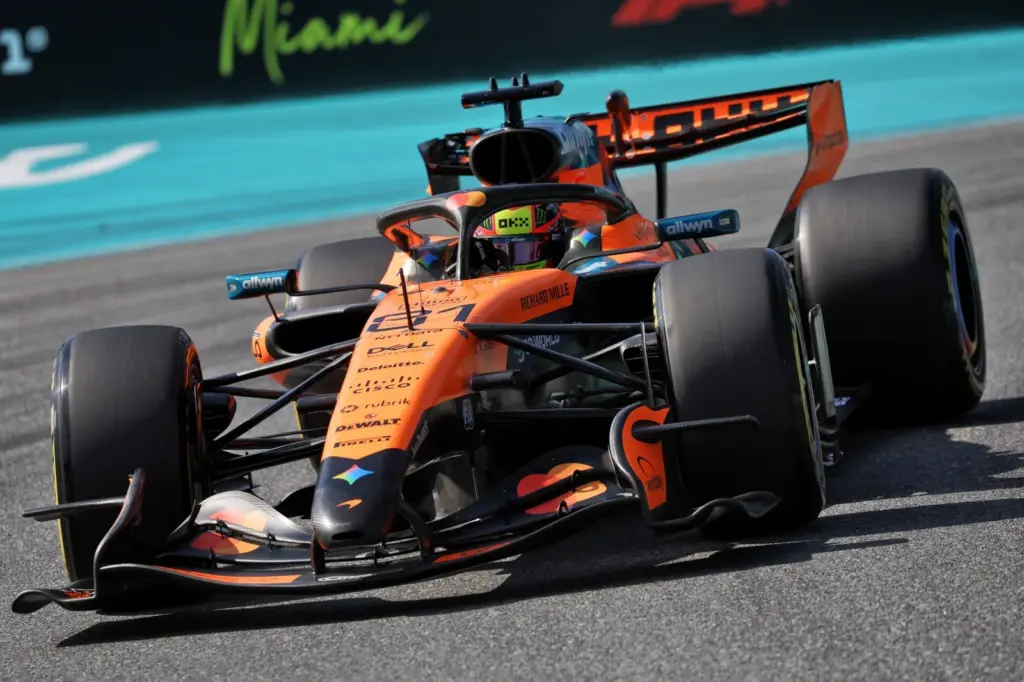
In Miami, McLaren driver Oscar Piastri had direct contact with the effects of these changes. Starting seventh, he finished third after battles with George Russell and Charles Leclerc. After the race, the Australian commented on the changes and assessed that there was only partial improvement: “I think reducing the energy harvesting limit in qualifying helped a bit. It didn’t solve the problem or all the problems, but it’s helping with one of them. The races are basically the same… It’s pretty crazy, to be honest.”
Read more F1: Russell uses Verstappen’s 2025 comeback as inspiration in 2026
He also highlighted his battle with Russell and how overtakes remain unpredictable: “At one point, George was a second behind me and managed to overtake me at the end of that straight. The approach speeds are huge and trying to anticipate that is incredibly difficult. I wasn’t very happy with one of his maneuvers, but I almost did something similar a few laps later. So, in that regard, not much has changed,” he concluded.
Read more F1: British press highlights Antonelli’s composure in Miami victory