








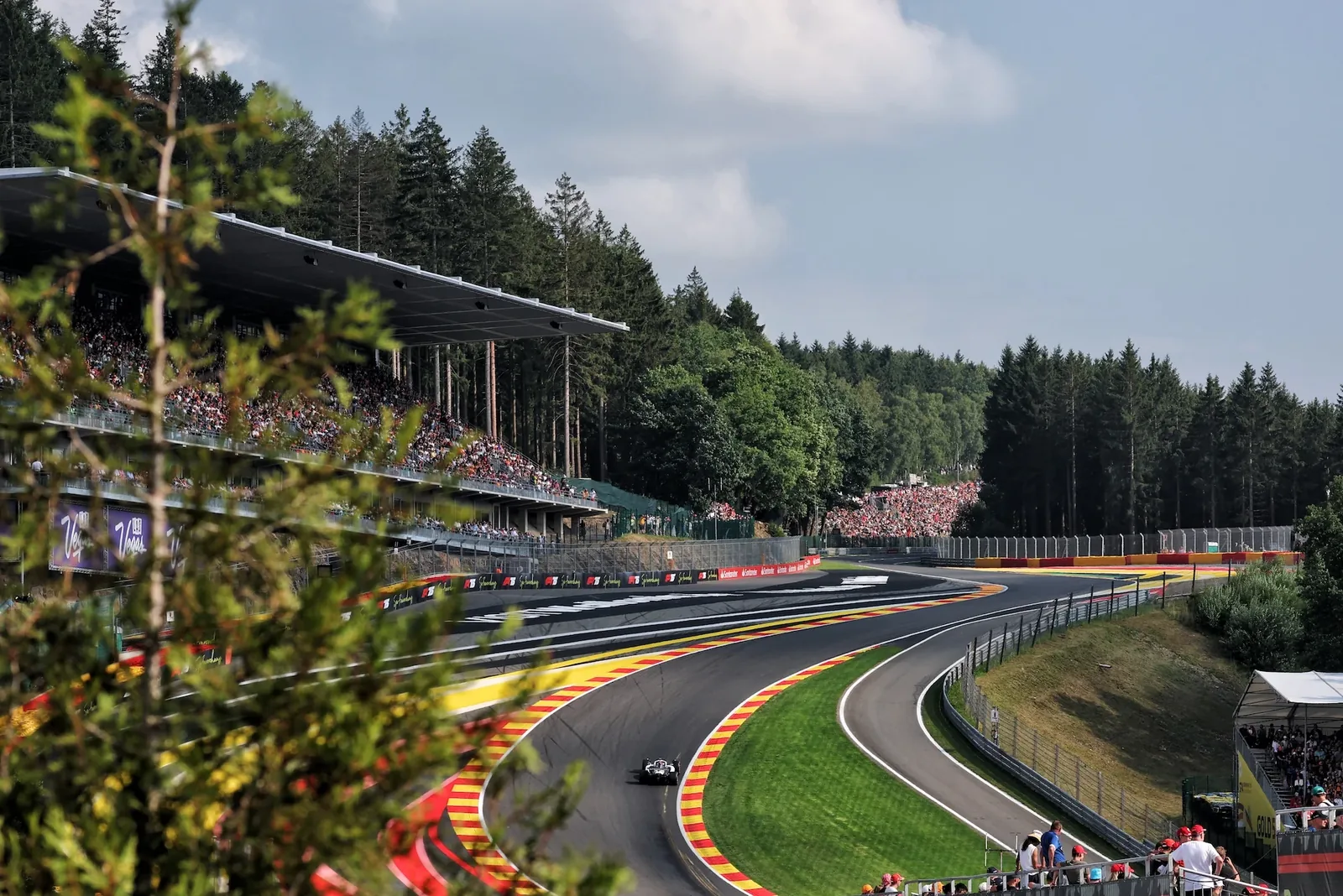
The longest circuit on the calendar, Spa-Francorchamps combines speed, elevation changes, unpredictable weather, and a layout that demands practically everything from a Formula 1 car. Decades after its debut in the World Championship, the Belgian track is still considered by drivers and engineers as the biggest test of the season
Read more It’s Race Week! Belgian GP marks the tenth round of F1 2026
In an era where Formula 1 races on ultra-modern circuits around the world, few layouts preserve an aura as special as Spa-Francorchamps. The circuit located in the Belgian Ardennes has spanned generations of cars, drivers, and regulations without losing a characteristic that has accompanied it since its creation: the ability to challenge all aspects of Formula 1 at the same time.

It’s not just a matter of tradition. Nor of nostalgia.
When drivers are asked about their favorite track, Spa repeatedly appears among the top answers. The same happens when engineers talk about circuits that best reveal the qualities and limitations of a car. In a calendar full of layouts designed to offer great races, Spa continues to be treated as a comprehensive exam for drivers, teams, and machines.
And there are good reasons for that.
A circuit that demands everything at once
Unlike most current tracks, Spa does not allow a team to hide a car’s weaknesses.
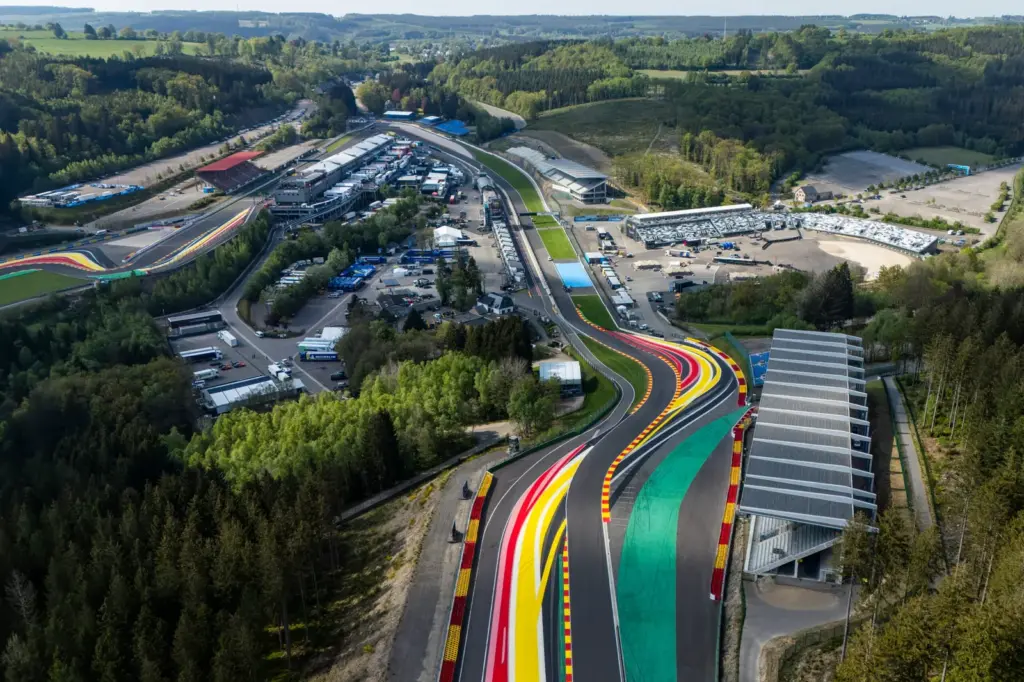
With just over seven kilometers in length, the longest circuit on the calendar combines long straights, high-speed corners, heavy braking, sharp changes of direction, and one of the biggest elevation changes of the season. This forces engineers to find an extremely delicate compromise between aerodynamic downforce, straight-line speed, and stability.
A car set up to gain speed on the long Kemmel straight may struggle in the fast corners of the second sector. On the other hand, a setup aimed at maximizing grip in Pouhon, Blanchimont, and the sequences of medium and high speed tends to lose performance precisely where overtaking happens.
Finding this balance may be the greatest technical challenge of the championship.
That is precisely why Spa is often considered one of the best tracks to evaluate the real performance of a design. If a car works well in Belgium, it usually presents a competitive package on practically any circuit on the calendar.
The lap never seems the same
Another element that makes Spa so special is its unpredictability.
In no other circuit on the championship does the weather have such a constant influence over the weekend. Located in a mountainous region, the track often experiences rapid changes in weather conditions. It is not uncommon for one sector to be completely dry while another receives heavy rain, forcing drivers and strategists to make decisions in a few seconds.
This characteristic turns practically all sessions into an exercise in adaptation.
Drivers need to modify braking references, change the way they attack certain corners, and manage grip levels that change throughout the lap itself. For engineers, predicting tire behavior and choosing the ideal moment for a pit stop becomes an even more complex task.
Few circuits can alter the dynamics of a race so much just because of the weather.
More than courage
For many years, Spa was mainly known for Eau Rouge and Raidillon, perhaps the most famous sequence of corners in Formula 1 history.
Although it remains one of the most impressive sections of motorsport, reducing Spa only to the courage needed to cross this climb at high speed would oversimplify the circuit.
Read more F1 today: Rafael Câmara, Bortoleto and the future of BYD in Formula 1
The real challenge of the track lies in the combination of factors.
The driver needs to fully trust the car, but also know exactly when to preserve tires, when to attack the curbs, how to manage traffic, and where to take risks. On such a long circuit, a small mistake compromises the entire lap. At the same time, finding a few tenths in just one sector can represent several positions on the grid.
It is a track that rewards talent, but also experience, intelligence, and adaptability.
A test for cars and drivers
Spa also often exposes differences between teams quite clearly.
More specific circuits may favor certain characteristics of a car. At Spa, this happens less frequently. Since the layout demands efficiency in practically all aspects of performance, it becomes difficult to hide deficiencies in power, aerodynamics, stability, or traction.
That is why positive results in Belgium usually carry special weight within the factories.
When a team manages to be competitive at Spa, it usually gains confidence for the rest of the season. Likewise, a performance below expectations often raises important alerts about the technical package.
This is one of the reasons why engineers closely observe everything that happens during the Belgian weekend.
Why does Spa continue to be unique?
Over the past few years, Formula 1 has incorporated new circuits, more sophisticated technologies, and increasingly faster cars. Even so, Spa-Francorchamps remains practically irreplaceable.
Its combination of history, technical characteristics, and natural challenges creates a rare setting in modern motorsport. It is not just a beautiful or traditional track. It is a circuit that continues to demand the maximum from drivers and teams, regardless of the generation of cars.
Perhaps that is exactly what explains its reputation.
While some circuits reward only power, others value only aerodynamics or traction. Spa demands everything at once. It demands speed, precision, courage, intelligence, and adaptability.
That is why, more than seven decades after its debut in the World Championship, the Belgian circuit continues to be seen by so many category protagonists as the biggest challenge in Formula 1.
And that is exactly why every return to Spa-Francorchamps remains one of the most anticipated moments of the season.
Read more F1: BYD rules out entry only as a sponsor