




Even after adjustments to next year’s regulations, the current Formula 1 format continues to divide opinions among teams, drivers, and officials. For this reason, the possible return of V8 engines has gained momentum behind the scenes of the category.
Read more F1: Verstappen’s uncertain future puts Piastri in Red Bull’s sights
The president of the FIA (International Automobile Federation), Mohammed Ben Sulayem, stated that V8 engines with minimal electrification “are coming back,” with a target for 2030 or, at the latest, 2031. Red Bull, Ford, and General Motors would be in favor of the idea. The last F1 season with V8 engines was in 2013, before the turbo-hybrid era.
During the Miami GP, the FIA confirmed small adjustments to the 2026 regulations to encourage more aggressive driving in qualifying and address safety issues. Even so, many drivers considered the changes insufficient. After that, the entity announced an agreement to change the ratio between electric power and internal combustion of the engines aiming for 2027.
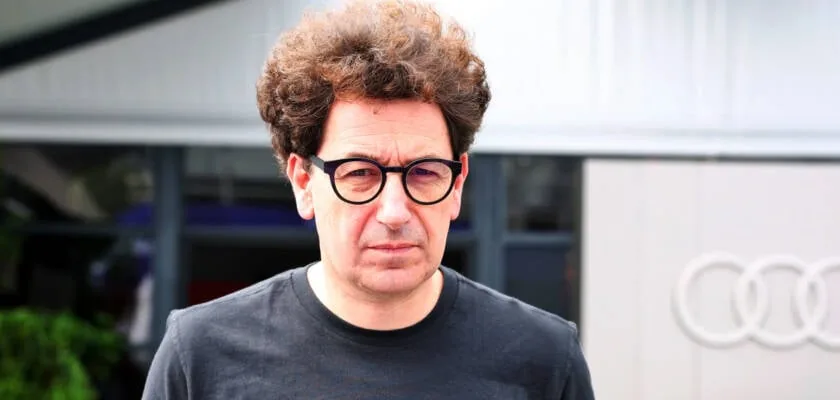
Amid the discussions, the head and CEO of Audi in F1, Mattia Binotto, defended the current format and stated that the scenario should not be seen so negatively: “First, I must say what our drivers’ comments are. Our drivers are enjoying the current format and I think it was a big change compared to the past,” he said.
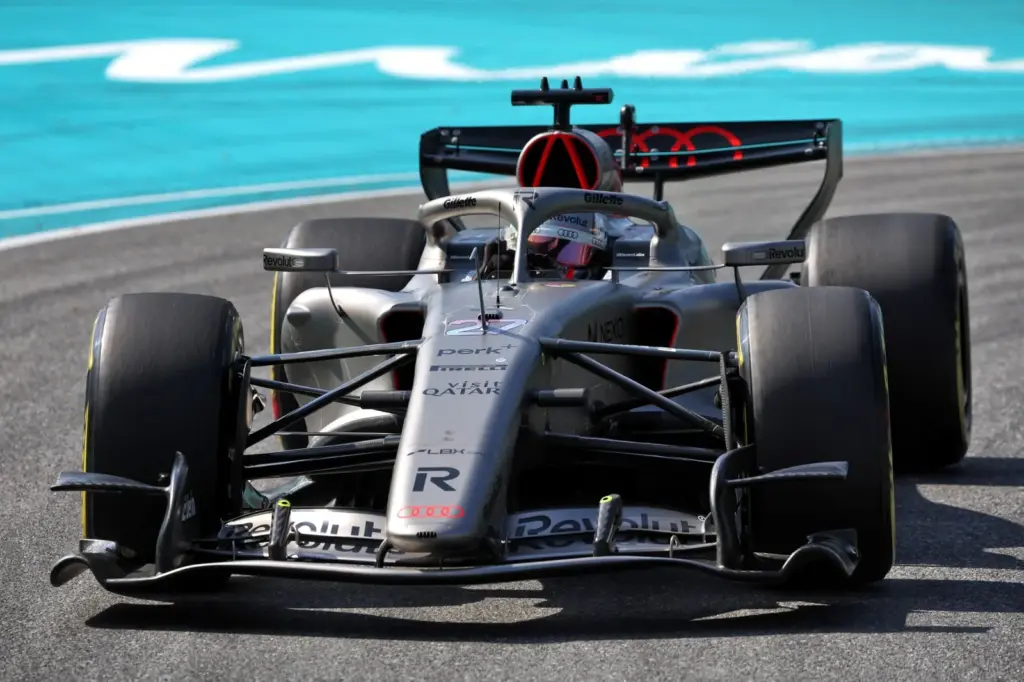
“But overall, I think if you look and watch the races, for the fans it has also been a great spectacle. Overtakes since the first race, close battles.”
Read more F1: George Russell reveals origin of viral “T-Pose” at Mercedes
Binotto also highlighted the technological importance of the category: “I think the format is great and F1 continues to be a platform for innovation at the forefront of technology.”
The official also reinforced that he sees no reason for so much pessimism regarding the current regulations. “Overall, I think it is a good format. Maybe we will do more in the future, but we should also be positive about what we can see.”
Meanwhile, Ferrari’s head, Fred Vasseur, stated that the energy management model of F1 2026 is less artificial than the old DRS system: “Honestly, we had good races, many overtakes,” he said. “DRS was just pressing a button. Today, it is energy management and that comes from the drivers or the team. It is nothing artificial. From the beginning, we have a parameter in mind: also to reduce the absurd engine budget. And that is for the benefit of F1.”
Read more F1: «There’s no point in getting frustrated,» says Krack about Aston Martin’s moment