



Formula 1 arrives at the 2026 Miami GP surrounded by strategic uncertainties. Even with a consistent recent history, the current scenario promises an unpredictable race.
Read more F2: Mini beats Beganovic and wins in Miami. Câmara takes the podium
This is because rain is forecast for the race, which could completely change the outlook. The strategies drawn up so far consider a dry track scenario, but teams already know they may need to react quickly.
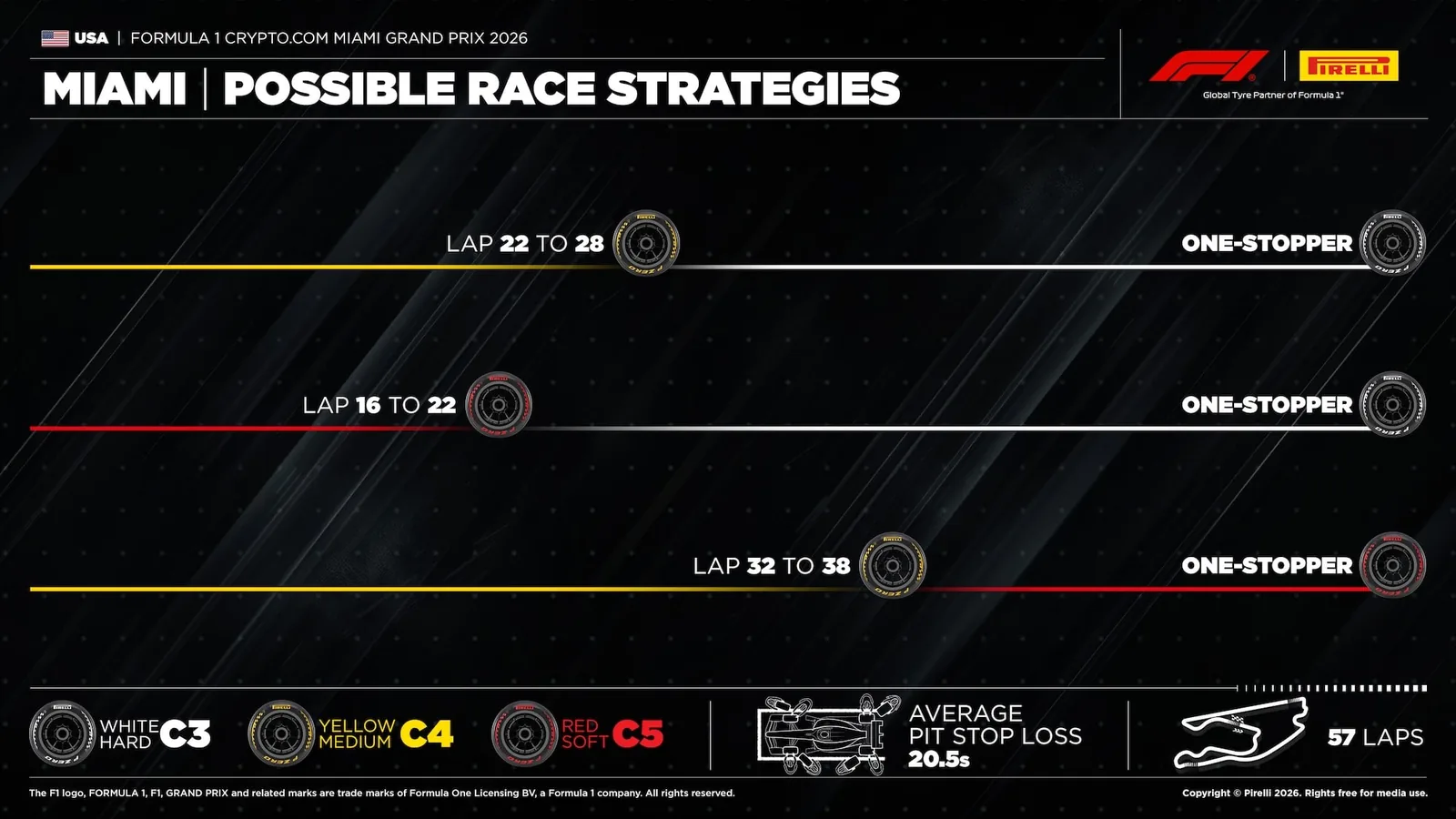
In previous years, Miami was dominated by one-stop strategies, using Medium and Hard tires. In 2025, for example, Oscar Piastri won following this pattern, with a pit stop between laps 25 and 29, a strategy adopted by most of the field.
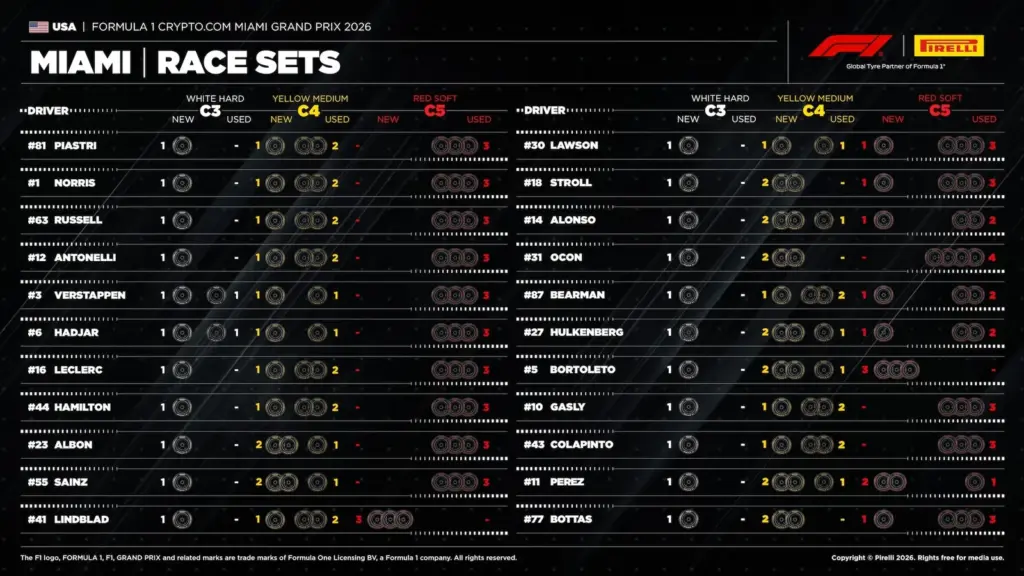
For 2026, the trend remains if it does not rain. According to Pirelli’s analysis, the Medium to Hard combination remains the most efficient in dry conditions. “The level of wear is low and degradation is manageable, so we believe the one-stop strategy will be used by most, perhaps all,” explained Mario Isola.
The ideal window for the change is between laps 22 and 28, with little advantage for undercut attempts. This may lead teams to extend the first stint, protecting themselves from possible Safety Car or Virtual Safety Car interventions.
Read more F1: Stella assesses McLaren’s performance drop in qualifying in Miami
Another viable alternative is to reverse the order of the compounds, starting with Hards and finishing with Mediums. The strategy offers a more aggressive final stint but carries risks if there are early neutralizations.
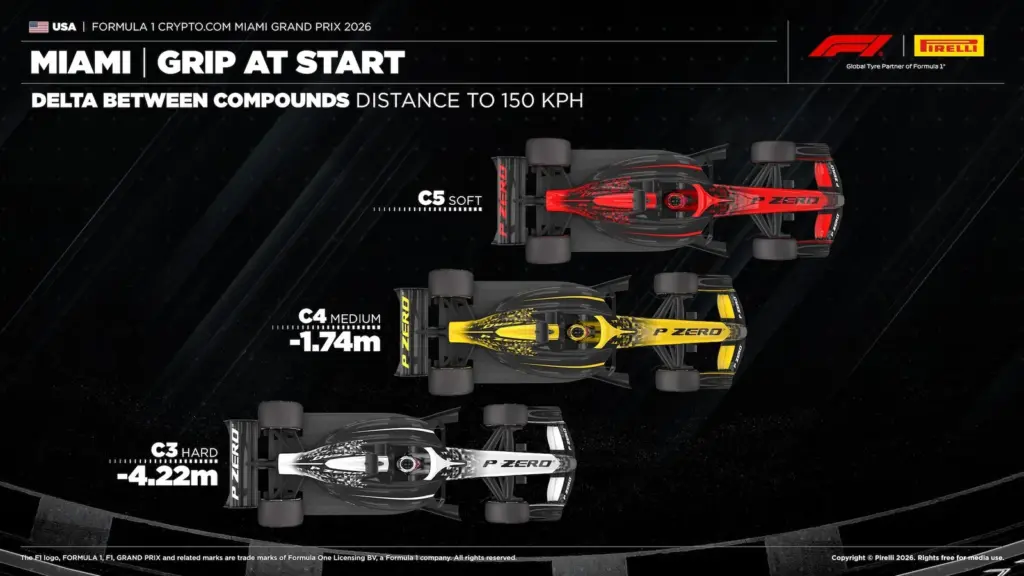
Further back on the grid, using Soft tires at the start can be a bet to gain positions quickly. In this scenario, the most likely plan would be Soft to Hard, with a stop between laps 16 and 22.
Still, everything can change. With the threat of storms throughout the day, the race has the potential to completely break from the traditional script and require real-time decisions.
Read more F1: Wolff talks about Antonelli’s «spectacular comeback» for pole in Miami