
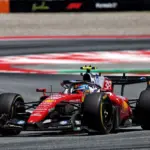


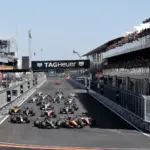



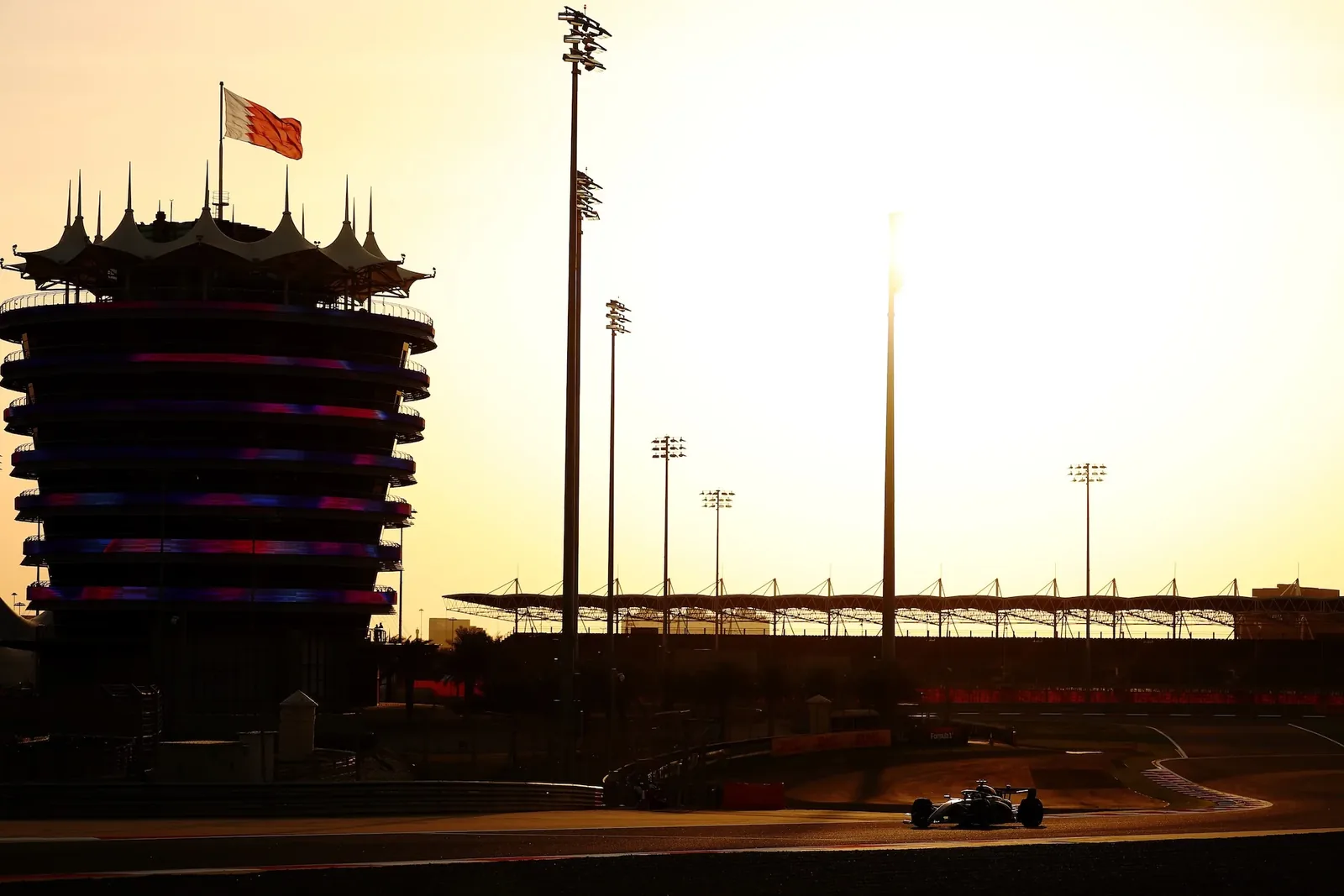
Bahrain in Malaysia sets a precedent for a 2027 calendar full of uncertainties. The category has officially announced 24 rounds for the next season but keeps alternatives amid instability in the Middle East; the precedent of the Bahrain GP in Sepang opens new possibilities to preserve contracts even if races need to change countries.
Read more F1: Coulthard points out ‘uncommon’ problem that cost Norris victory in Madrid
Formula 1 already has an official calendar for 2027. There are 24 races, ten Sprints, five continents, the return of Portugal, the comeback of Turkey, and a season that intends to start in Bahrain and end in Abu Dhabi. Everything is organized in the document released by the FIA. The problem is that, at this moment, no one can guarantee that it will be possible to follow this calendar exactly.

The situation in the Middle East makes the announcement particularly interesting. F1 still faces doubts about holding Qatar and Abu Dhabi at the end of the 2026 season itself, but has just confirmed the two countries again for December next year. Before that, it intends to hold pre-season testing in Bahrain, open the championship in Sakhir, and just one week later, race in Saudi Arabia.
Therefore, the calendar is official. Definitive is another story.
There is a very simple reason why Formula 1 publishes its calendar despite so many uncertainties: the category needs to work with some reference. A season does not start when the lights go out for the first race. Long before that, there are contracts with promoters, ticket sales, hotel bookings, broadcaster planning, sponsors, suppliers, and, above all, a huge logistical operation involving ten teams and thousands of professionals.
It would not be possible to reach the end of 2026 waiting for a definitive solution to the geopolitical situation before saying where Formula 1 intends to race in 2027. It was necessary to put the calendar on paper and, while there is no decision preventing events in the Middle East, the reference necessarily needs to remain what is stipulated in the contracts.
It is precisely here that the announcement also gains a commercial dimension. Bahrain, Saudi Arabia, Qatar, and Abu Dhabi remain on the calendar because they are the contracted events and because, today, Formula 1’s plan continues to be to hold them. Publishing these dates allows the entire commercial machine around the Grands Prix to keep functioning.
However, this does not guarantee that the cars will be in these places when the dates arrive.
2026 has already taught exactly that
There is no need to look for a distant example. The original calendar for the 2026 season itself was also official. Bahrain was on it. Saudi Arabia too. Neither of the two races took place on the initially scheduled dates and locations after the situation in the Middle East forced the category to change its plans.
Saudi Arabia ended up out of the championship. With Bahrain, however, something much more interesting happened to understand what may occur going forward. The race survived but was moved to Malaysia.
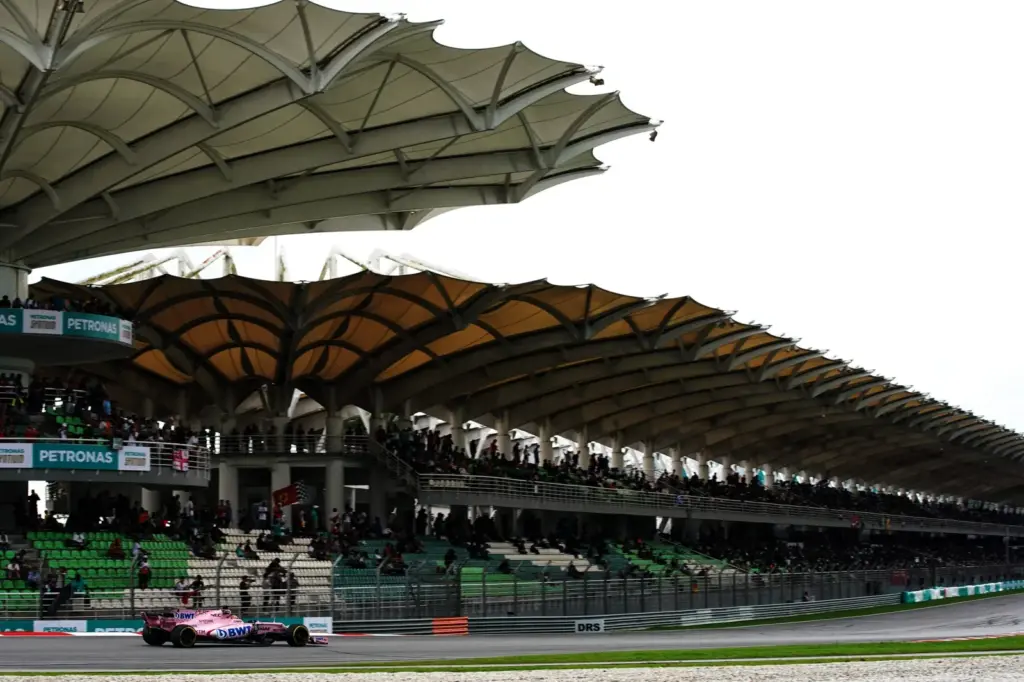
The Bahrain GP will be held between October 2 and 4 in Sepang. And the peculiarity is not only in the circuit change: officially, it remains the Bahrain GP. The commercial commitment was preserved and a solution built with Malaysia allowed the race to remain in the championship, although the cars are thousands of kilometers from Sakhir.
It may seem like just an emergency solution for a specific 2026 problem. It will probably be remembered as something more important.
Sepang created a precedent.
Until then, faced with a situation of this magnitude, the discussion seemed basically limited to holding, postponing, or canceling a race. Bahrain added a new possibility: moving the event.
A race no longer necessarily needs to take place in the race’s country
Obviously, this does not mean that Formula 1 can take any Grand Prix and simply move it to any available circuit. There are contracts, national federations, promoters, sponsors, governments, insurance, and a series of legal and commercial issues that need to be resolved. The operation set up between Bahrain and Malaysia is exceptional precisely because it depended on understanding between different parties.
But there is a huge difference between something being complicated and something never having happened.
Now it has happened.
When Formula 1 looks at any future problem in its calendar, the transfer of Bahrain to Sepang will be on the table as an example of a possible solution. Not necessarily reproducible in all cases, but possible.
And this gains importance immediately when looking at the 2027 calendar.
Because there are tracks waiting
Imola, Barcelona, and Zandvoort do not appear among the 24 rounds announced for the next season but are far from disappearing from the Formula 1 universe. The three have recent infrastructure, experience in organizing Grands Prix, and technical conditions to host the category again.
More importantly: the three appear in the context of alternative plans that F1 can use if it needs to reorganize the 2027 championship.
Barcelona may be the simplest case. The Catalan circuit has not broken its relationship with Formula 1 and will continue to be part of the rotation system adopted by the category. Being out of 2027 does not mean being unavailable. It is a homologated track, with ready infrastructure and decades of experience organizing F1 events.
Zandvoort also recently hosted the category and has an operation set up for a modern Grand Prix. Imola, in turn, may not even need to wait until 2027 to assume this alternative role.
The Italian track has already expressed availability to host a race this year if the situation involving Qatar and Abu Dhabi prevents the planned conclusion of the 2026 season. There is no confirmation that this will happen, but the mere fact that an alternative is being considered shows that Formula 1 is not just waiting to find out what will happen.
It is waiting with options.
The official calendar and the invisible calendar
Perhaps this is one of the most curious features of Formula 1’s current planning. There is the official calendar, the one presented by the FIA this week, with its 24 races and dates carefully distributed between March and December.
And there is a kind of invisible calendar.
It includes Imola, Barcelona, Zandvoort, and possibly other circuits capable of quickly entering operation if any of the scheduled events cannot take place. These are not confirmed races, nor formally announced reserves to replace a certain round. They are possibilities that give the category room to maneuver.
The transfer of Bahrain to Sepang adds another dimension to this invisible calendar. Before, imagining a European track hosting a race necessarily meant thinking of a new GP. Now there is the precedent of maintaining the commercial identity of an event and physically holding it in another country.
This does not mean we will see a “Qatar GP in Barcelona” or a “Saudi Arabia GP in Imola.” Such an agreement would require specific and probably quite complex negotiations.
But after a Bahrain GP in Malaysia, it would be hard to say that this possibility simply does not exist.
Read more F1: Leclerc gives update on Ferrari engine after heavy crash in Monza
The problem starts even before the first race
The dependence on the Middle East in 2027 starts before the championship begins. The four days of collective pre-season testing are scheduled for Sakhir, between February 24 and 27.
Just over two weeks later, the paddock should return to the same circuit for the championship opener, set for March 14 and already with a Sprint format. Seven days later, Formula 1 intends to hold the Saudi Arabia GP in Jeddah.
In other words, a possible inability to use the region at the start of next year would create a bigger problem than simply replacing two races. It would also be necessary to find another location to hold pre-season testing.
In this scenario, Barcelona immediately appears as a logical alternative. For many years, the circuit was one of Formula 1’s main testing bases and remains fully operational. Sepang also inevitably becomes part of the possibilities after the solution found for 2026.
Perhaps none of this will be necessary. This remains the category’s desired scenario. But it is significant that these questions can already be asked before the previous season ends.
And the problem reappears at the end of the year
After crossing five continents, Formula 1 intends to finish 2027 exactly in the region that today concentrates the greatest calendar doubts. Qatar hosts the penultimate round on December 5, while Abu Dhabi closes the championship a week later.
Both races will also have Sprint. Added to Bahrain, this means that three of the ten Sprints planned for 2027 are linked to the Middle East. A possible change, therefore, could also require changes in the season’s sporting program.
There is an irony hard to ignore. Qatar and Abu Dhabi are officially confirmed for December 2027 while Formula 1 is still monitoring the situation to see if it can hold Qatar and Abu Dhabi at the end of 2026.
This may be the best demonstration of the difference between what needs to be put on the calendar and what can actually be guaranteed today.
And then we talk about money
It may be impossible to understand why Formula 1 releases a calendar under these conditions without addressing the commercial issue. Not in the simplistic sense of saying the category puts money above safety. If conditions are not considered adequate to hold a race, F1 cannot simply ignore that.
The most interesting point is in the period before this decision.
A Grand Prix involves contracts of enormous value. Promoters pay to host Formula 1, governments invest in the events, sponsors buy exposure, tickets are sold months in advance, and entire hospitality, tourism, television, and advertising operations are built around that date.
Canceling a race means someone has to make a decision that produces huge financial consequences. Depending on the circumstances and clauses involved, there is also the question of who will be responsible for the losses.
Formula 1 knows this situation very well.
Melbourne, in March 2020, may be the most evident example. The Covid-19 pandemic was advancing, McLaren withdrew from the GP after a team member tested positive, and yet the cancellation was only official when practically the entire paddock was already in Australia and fans were starting to arrive at the circuit.
The current context is completely different, but there is a commercial logic that remains valid: no one wants to assume the cancellation of a Grand Prix prematurely while there is still a reasonable possibility of holding it.
A calendar that needed to exist
None of this means that the calendar released by Formula 1 is fictitious. On the contrary. It is the category’s real planning for 2027 and, if conditions allow, those 24 rounds will form the championship.
Bahrain will open the season. Saudi Arabia will be the second race. Portugal and Turkey will return. Ten weekends will have Sprint. Qatar will host the penultimate round and Abu Dhabi will continue to be the venue for the finale.
But it may be necessary to interpret this document for what it really represents at this moment.
It is a plan. It is a logistical necessity. It is a commercial necessity.
And it is also a statement of what Formula 1 intends to do if the scenario allows.
What it still cannot be is a guarantee.
2026 has already shown that an official race can disappear from the calendar. It also showed something even more curious: that a race can remain on the calendar and disappear geographically.
The Bahrain GP will continue to be the Bahrain GP. It just will not be held in Bahrain.
This precedent arises precisely when Formula 1 needs to organize a season with four rounds in the Middle East and, at the same time, keep European circuits ready to step in if something changes.
Perhaps the 24 races of 2027 will happen exactly as announced. That remains the plan and there is no official decision today saying otherwise.
But there is an important difference between plan and certainty. Formula 1 presented the first this week.
And, as long as the international scenario remains as it is, no one can offer the second.
Read more MotoGP: Check the schedule and where to watch the Austrian GP on TV and streaming