




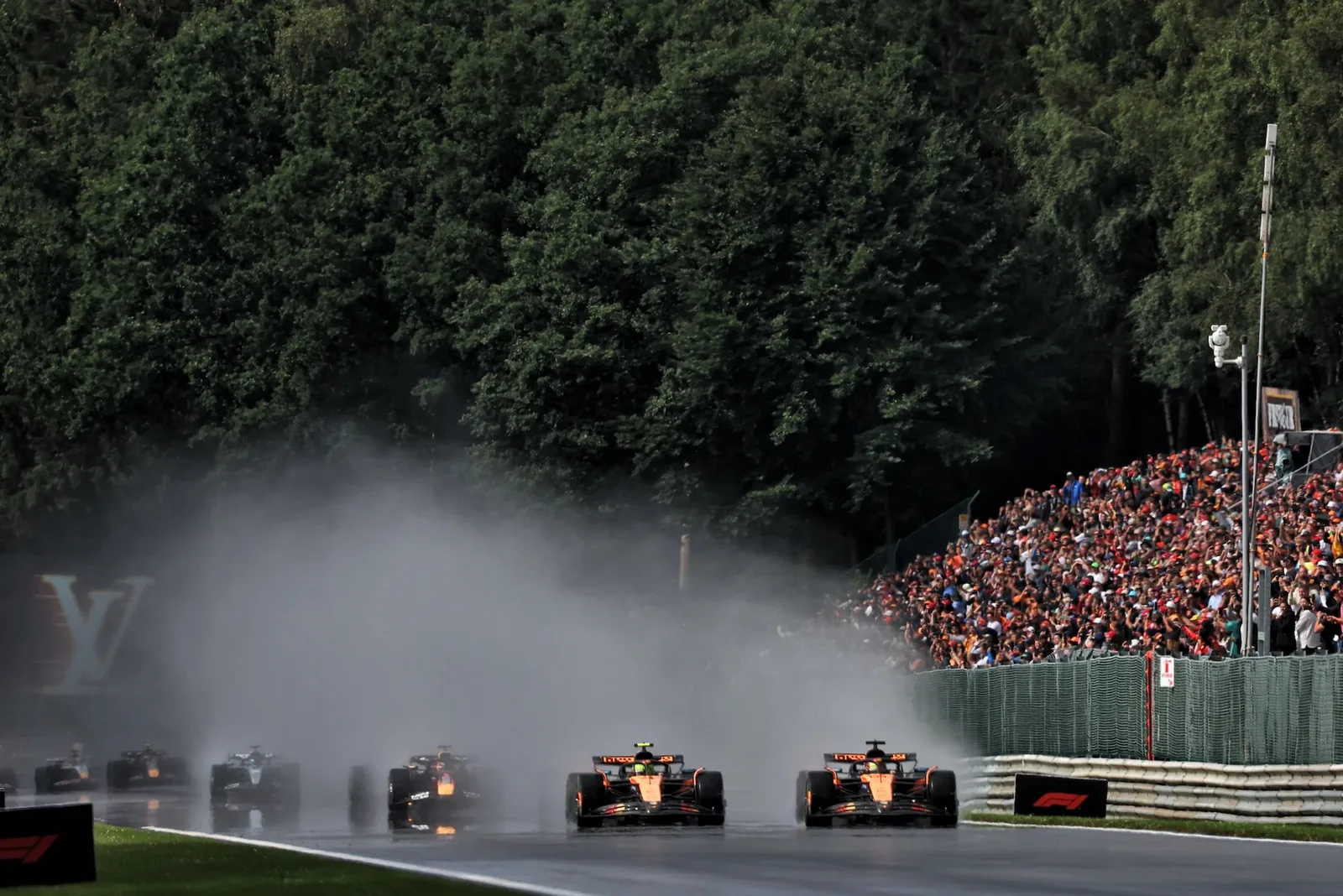
For decades, Spa-Francorchamps forced teams to choose between straight-line speed and cornering performance. With the new 2026 aerodynamics and the “straight-line mode,” Formula 1 may have changed one of the most traditional technical compromises of the Belgian GP.
Read more Belgian GP 2026: the days and times of F1 in Spa-Francorchamps
Spa-Francorchamps has always been a huge puzzle for Formula 1 engineers. With 7.004 kilometers in length and three sectors with very different characteristics, the Belgian circuit traditionally forced teams to make a tough decision: sacrifice cornering speed to gain on the straights or accept a loss of top speed in exchange for greater aerodynamic stability.

For decades, finding this compromise has been among the main challenges of the Belgian GP. The first sector, with the acceleration towards Eau Rouge, Raidillon, and the long Kemmel straight, favored cars with lower aerodynamic drag. The second, much more technical and with several medium-speed corners, required downforce and stability. The third sector again rewarded flow and efficiency up to the Bus Stop chicane.
But the 2026 Formula 1 introduced a variable capable of changing this equation.
With the new aerodynamic philosophy of the cars and the possibility to reduce drag on the straights, teams can work with higher downforce setups for the technical sectors without necessarily paying the same price in top speed. In no other circuit might this change be as interesting as in Spa.
The traditional Spa compromise
Until last season, any decision about the level of aerodynamic downforce in Belgium involved a very clear consequence. Adding more wing helped the car in the second sector, especially in medium and high-speed corners, but made the car vulnerable on the Kemmel straight and other full-throttle sections.
Reducing downforce produced the opposite effect. The car gained top speed and made attacking and defending easier, but demanded much more from the drivers in the technical sectors. On a track with significant elevation changes and downhill corners, this instability could cost several tenths over a lap.
Therefore, it was common to find different solutions even within the same team. Drivers more confident in a lower downforce car could accept a more challenging behavior in corners in exchange for straight-line speed. Others preferred greater stability.
In 2026, the new aerodynamics may allow a different approach.
The possibility to work with higher downforce in the technical sections and reduce aerodynamic drag on the straights creates a scenario where teams can seek a more efficient car over a much larger portion of the lap. The compromise has not completely disappeared but may have become less extreme.
Read more F1: New McLaren wing does not change expectations for Belgian GP
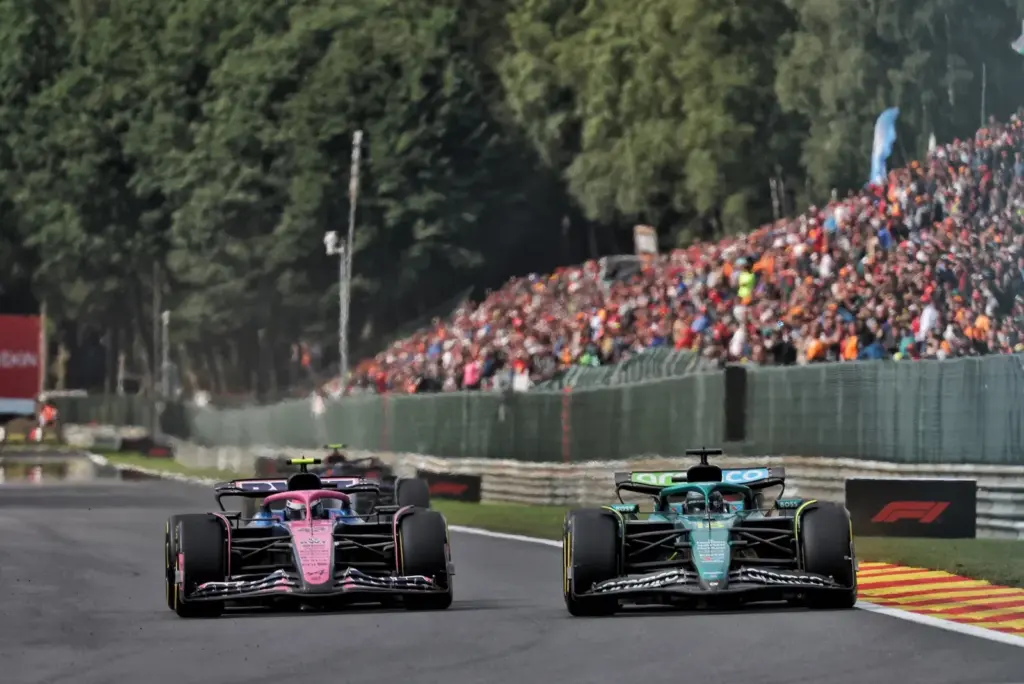
Will Spa be the biggest test of the new aerodynamics?
That is precisely why the Belgian GP gains even greater technical importance this season.
Silverstone has already shown how the new generation of cars can alter behavior on high-speed circuits. Spa takes this challenge to another level. No other track on the calendar combines such a long lap and sectors so distinct from each other.
If the new aerodynamics really allow cars to maintain higher downforce for the second sector without losing performance so significantly on the straights, the traditional Spa puzzle could gain a new solution.
This does not mean engineers will have an easy weekend. Temperature, tires, mechanical balance, and power unit management remain fundamental factors. Additionally, the way each team has developed its aerodynamic concept can produce important differences in the efficiency of the low-drag mode.
But the question has changed. For years, teams arrived at Spa trying to figure out “where they would accept to lose time.” In 2026, perhaps the quest is to understand “who can best exploit the two personalities of the car.”
If there is a circuit capable of showing how far Formula 1’s new aerodynamics can change the way to set up a single-seater, that circuit is Spa-Francorchamps.
Read more F1: Racing Bulls prepares update and aims for top 10 in Spa