







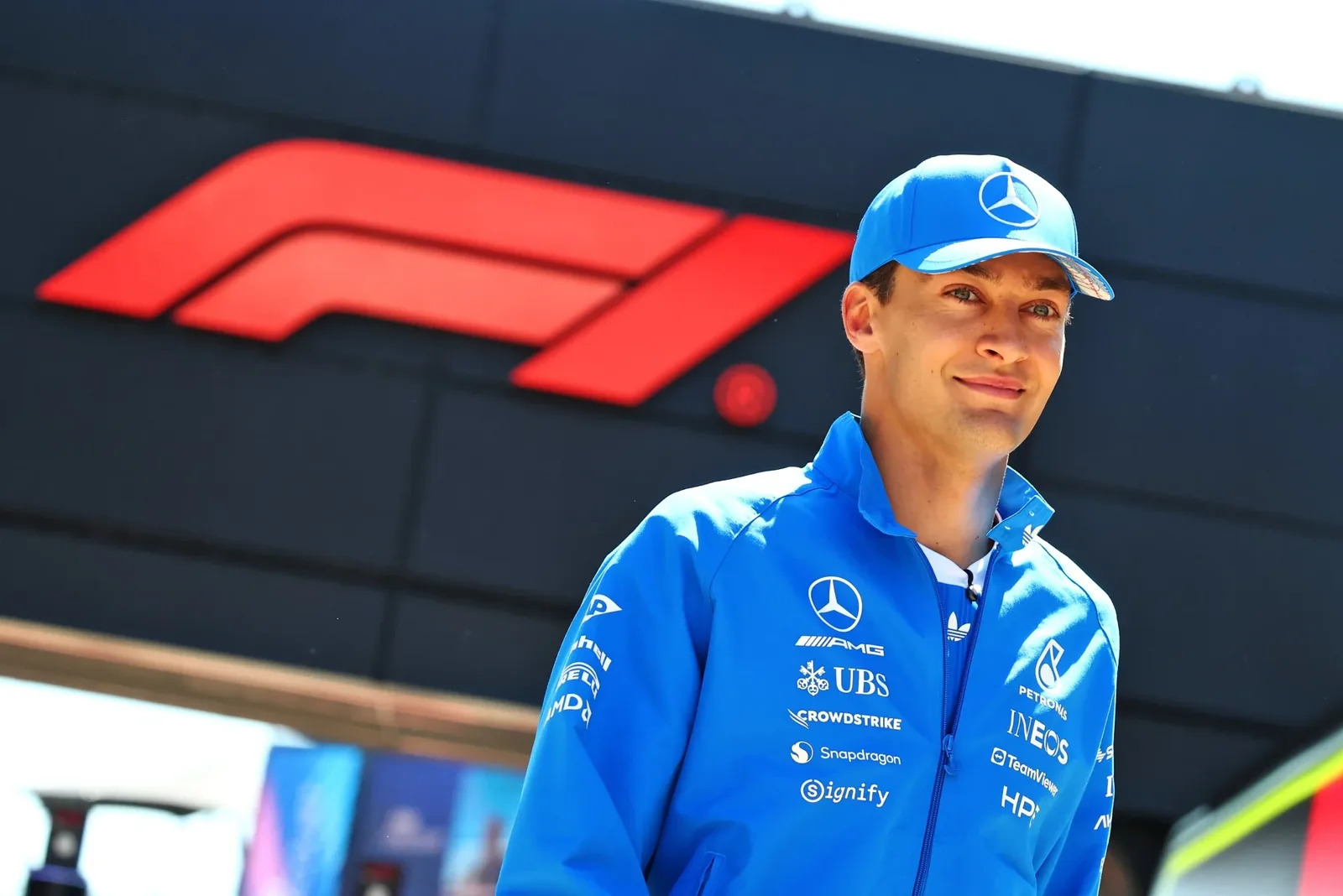
George Russell stated that Carlos Sainz’s proposal to punish drivers who cause yellow or red flags during Formula 1 qualifying has both positive and negative aspects. The Mercedes driver explained that the current procedure arose after discussions among the competitors themselves and highlighted the difficulty faced by marshals and race control in making decisions during incidents.
Read more F1: FIA releases schedule of press conferences in Belgium
The topic returned to debate after the Austrian GP qualifying. The Briton secured pole position while Max Verstappen caused a yellow flag with an accident. Kimi Antonelli interrupted his lap believing there was a double yellow flag, a situation that requires drivers to reduce speed and be prepared to stop. However, the signal was a single yellow flag, requiring only a reduction in speed.

Asked about Sainz’s suggestion, director of the Grand Prix Drivers’ Association (GPDA), Russell said the idea has been discussed before. “We have talked about this before, that if someone causes a yellow or red flag, they should be punished. It really affects the other drivers because their best lap can be compromised, and we see this happen in other categories. On the other hand, many would say that drivers would take fewer risks in qualifying, and everyone wants to see drivers pushing to the limit,” he said.
Read more F1: Verstappen highlights extra challenge at Spa and support from fans

“At the time, many drivers locked their wheels and went off into the runoff area, and we understood that this should not generate a double yellow flag because it ended up ruining another driver’s lap. A single yellow flag would be enough unless the FIA decided otherwise. This became the practical rule adopted,” he explained.
Russell also highlighted that the initial decision is up to the track marshals, who need to act within seconds. “The person showing the yellow flag is a volunteer marshal, not the FIA. The FIA reviews the situation afterward and, if necessary, changes the signal. I have been talking about this for 30 seconds, but they need to react in 5, 6, or 10 seconds, and that is simply not possible. So, should the Austria case have been a double yellow flag? Of course. But there have been many situations in the past where drivers argued that a single yellow flag was enough. It is not an easy job,” he concluded.
Read more F1: Pirelli rules out C6 and keeps five tire compounds for 2027