


The debut of the Spanish GP in Madring promises a race where strategy and track position can be decisive in Formula 1. The main trend is for one stop, but the level of graining observed in practice may push some teams to two tire changes.
Read more F1: Bearman leaves the pit lane after changes to the Haas car
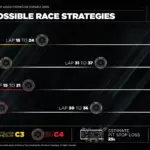
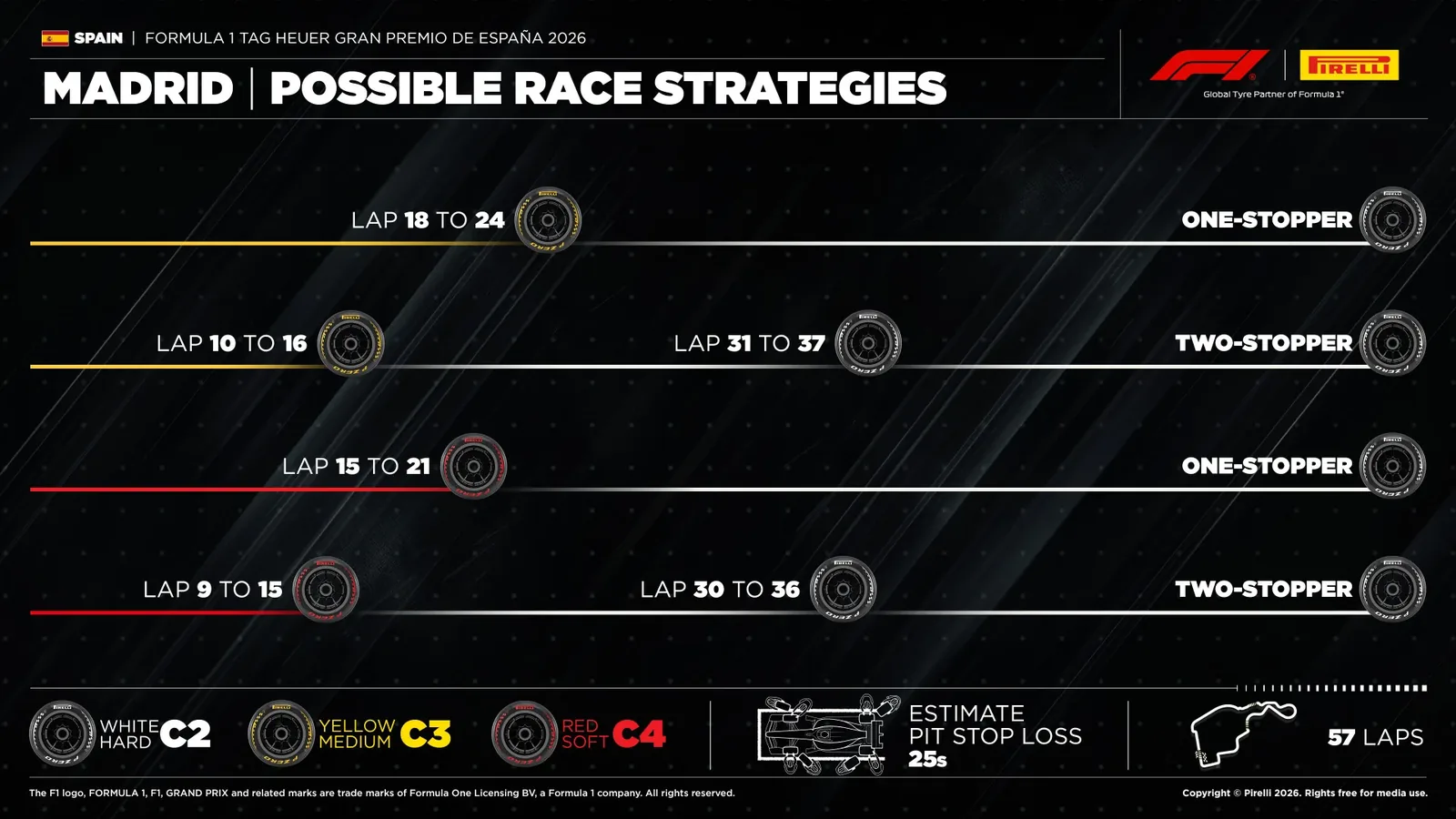
The most likely option is to start on Medium tires and switch to Hard between laps 18 and 24. A practically equivalent alternative in total time is Medium-Hard-Hard, with windows between laps 10 and 16 and then between 31 and 37. According to Dario Marrafuschi, Pirelli’s motorsport director, the decision between one and two stops will mainly depend on each car’s ability to control graining and preserve the tires.

Softs also appear as a possibility. The Soft-Hard strategy foresees a stop between laps 15 and 21, while Soft-Hard-Hard works with windows between 9 and 15 and then between 30 and 36. The advantage is greater grip at the start, but the compound reduces flexibility to extend the first stint.
For those starting further back, the Hard-Medium combination can be a bet to get out of the rivals’ sequence. The ideal moment to change would be between laps 36 and 42, but the strategy can be extended in the hope of a Safety Car or a red flag, a possibility considered above average after the several interruptions recorded in practice and in the support categories.
Read more Spain GP 2026: the live F1 race in Madring
Race pace data places Mercedes as the reference, closely followed by Ferrari at 0.14s per lap, Red Bull at 0.18s and McLaren at 0.19s. Further back appear Racing Bulls, Audi, Alpine, Haas, Williams, Aston Martin and Cadillac.
Heat also enters the equation. The forecast indicates about 31°C in the environment and up to 54°C on the asphalt, with no expectation of rain. With this, tire management should be one of the main factors to determine if the one-stop strategy will really be enough until the end.
Read more F1: FIA releases the official starting grid for the 2026 Spanish GP