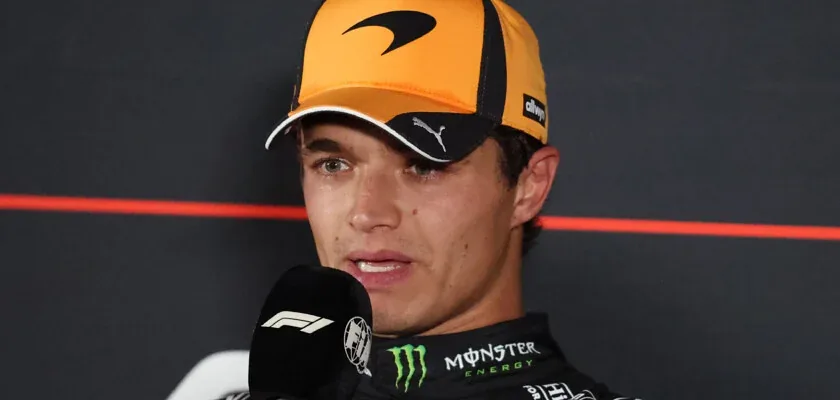

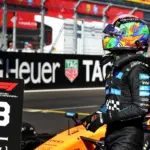

British driver has achieved two wins and three poles in the last four rounds and, even though still behind Antonelli in points during this period, is increasingly emerging as a protagonist both on and off the track.
Read more F1: McNish jokes about Bortoleto’s ‘new job’ after good performance in Madrid
Lando Norris does not lead the Formula 1 World Championship. He also was not the driver who scored the most points in the last four rounds. Kimi Antonelli remains ahead in both criteria. But there is a change happening in the 2026 season that is becoming hard to ignore: Norris has returned to the center of attention in the category.

The snapshot since the Hungarian GP helps to gauge this transformation.
In the last four rounds, Norris achieved two wins, three pole positions, three podiums, and did not finish any race below fourth place. He won in Hungary, repeated the result in the Netherlands, was fourth in Italy, and finished third in the Spanish GP, after a race in Madrid that seemed headed for another victory until the Virtual Safety Car intervention.
Antonelli still scored more points in this period. It was 83 against 77 considering only the Grands Prix. But the difference of just six points draws attention given the championship the Italian has been building and, especially, the dominance exercised by Mercedes during much of 2026.
Norris did not take the spotlight from Antonelli.
But he started to share it.
Three poles in four races
Perhaps qualifying is the best place to see this change.
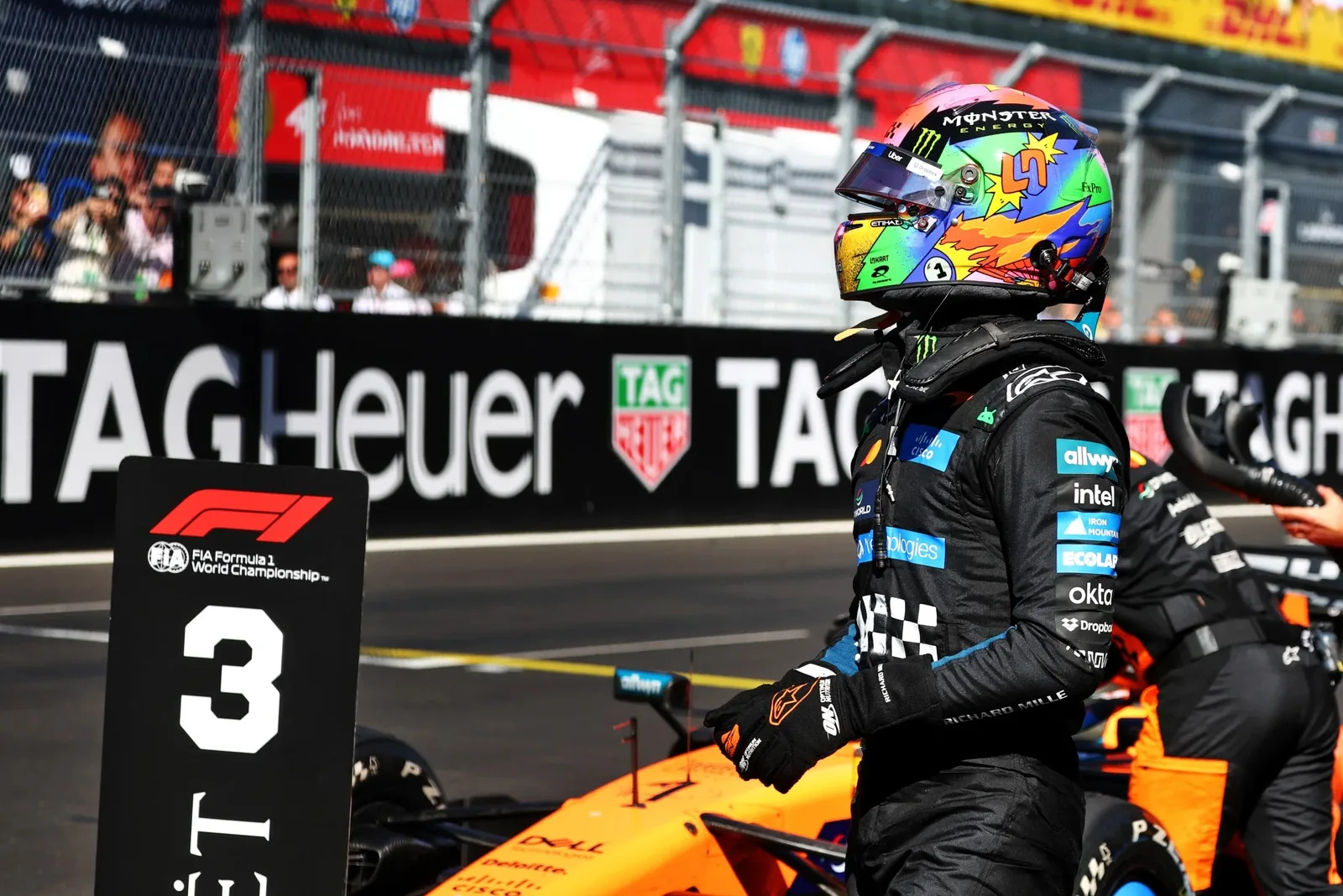
Norris took pole position in Hungary, repeated the feat in Zandvoort, and put McLaren back in the top spot in Madrid. In four rounds, therefore, he started three times from first position.
And these were not isolated results.
In Hungary, he converted pole into victory. In the Netherlands, he won again. In Madrid, he led the race, resisted Antonelli’s first attacks, and began building a gap that reached 4.7 seconds by the seventh lap.
McLaren’s own reading at that moment was favorable. Norris seemed to manage his tires better while Antonelli started to suffer more from wear.
Then came the VSC.
The British driver had just passed the pit entry when the race was neutralized. Antonelli, Verstappen, and other rivals immediately took advantage of the opportunity. Norris had to complete another lap and also faced a lengthy stop.
He returned in fifth.
Even so, he recovered ground and finished third, after spending the final laps pressuring Verstappen.
This is important because Madrid could easily have entered the statistics simply as an Antonelli win and a third place for Norris. The race showed something different.
McLaren had the conditions to win again.
And Norris was leading that attempt.
Norris’s growth is greater than McLaren’s own
There is another number that helps understand the moment.
In the last four races, Mercedes scored 132 points. McLaren, 99.
Therefore, we are not facing a complete reversal of hierarchy. Mercedes continues to produce more points and Antonelli keeps building a much more consistent season.
But within McLaren itself there is a considerable difference.
While Norris scored 77 points in the four races, Oscar Piastri managed 22. The British driver was responsible for practically four out of every five points earned by the team in this period.
This changes the interpretation.
It is not simply McLaren that has grown.
It is Norris who is managing to take advantage much more consistently of the potential the car has started to offer.
And this may be the most interesting part of his season.
A personality that is starting to emerge
For a long time, one of the questions around Norris was not related to speed.
Few doubted his ability to be extremely fast in a flying lap or to produce great races. The doubts were elsewhere: how would he react when he needed to definitively take on the role of protagonist?
Norris built part of his image in Formula 1 by being extremely self-critical. Mistakes were often accompanied by public self-demands. Poor results produced harsh statements. At times, he seemed to carry defeats longer than he should.
This fueled questions about his ability to sustain pressure at the highest level.
The Norris of recent races is starting to show a different attitude.
Madrid may have been the best example.
He had reasons to leave the circuit deeply frustrated. He took pole, led the race, built a gap, and saw a possible victory disappear because of the exact moment the VSC was activated.
There was not much he could have done.
After the race, he acknowledged exactly that. There was frustration, including with the VSC rule and with characteristics of Madrid itself, but there was no need to turn everything into a self-accusation.
It was bad luck.
And he treated it as bad luck.
This seems like a small change. For a driver who intends to fight for championships, it is not.
Read more F1: Audi junior driver moves up to F2 after finishing runner-up in F3
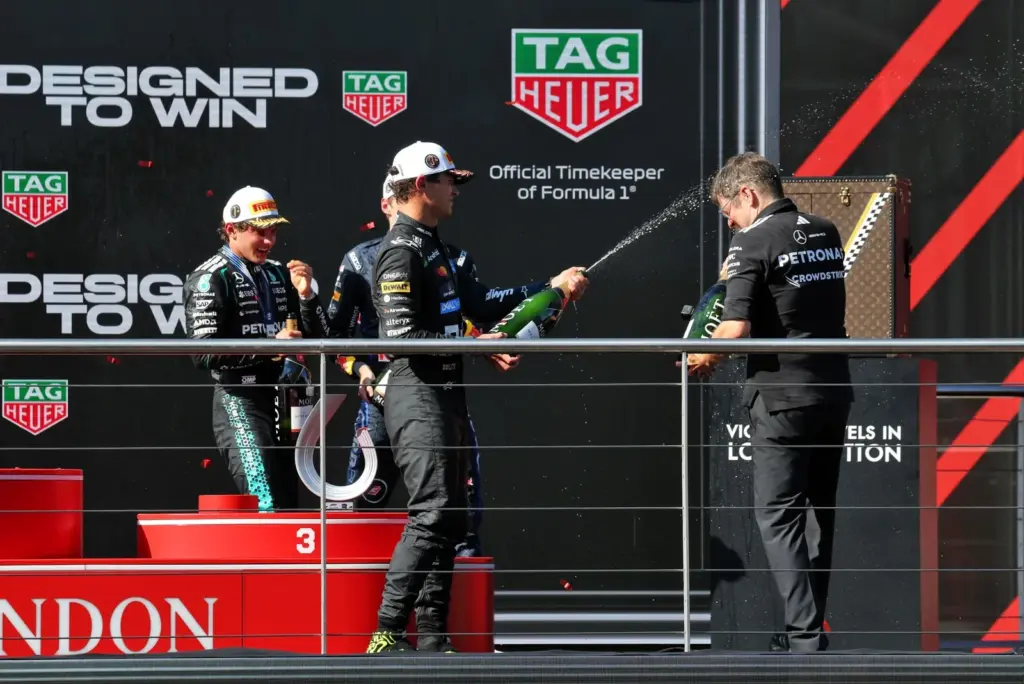
Even a soda can became a symbol
A curious scene after the race ended up working almost as a small representation of this new attitude.
In the room reserved for the top three before the podium ceremony, Norris appeared drinking a Coca-Cola. The problem is that Formula 1 has a commercial agreement with Pepsi, which led someone off-camera to question him about the drink.
Norris did not show much concern.
He had just competed in a Grand Prix and made it clear that, at that moment, he considered himself free to drink whatever he wanted. The episode quickly gained attention.
Isolated, it is just a curious post-race situation.
Within the moment the driver is living, however, it fits with something that is starting to appear more frequently.
Norris seems less worried about meeting what is expected of him.
He is more willing to take a stand.
The Norris who lost Madrid does not seem the same as before
This also appeared in how he reacted to the defeat.
Norris could have left Madrid devastated after losing a race that seemed under control due to practically unpredictable circumstances.
Instead, he acknowledged the bad luck, explained what happened, and even advocated changes to the VSC rule to prevent similar situations from producing such big advantages simply because of a car’s position at the moment of neutralization.
There is an important difference between complaining about a defeat and understanding why it happened.
A driver’s maturity also involves separating the two.
During recent seasons, Norris often seemed to take responsibility even when it was not entirely his.
In Madrid, he did not.
The race slipped away because circumstances changed. He knew that.
And he moved on.
There is still a huge mountain ahead
None of this means that Norris has suddenly become the favorite for the championship.
Antonelli remains the big name of the season. He has won eight times, leads the World Championship, and even during Norris’s best streak of the year, still managed to score more points in the last four rounds.
Mercedes itself remains superior to McLaren in the same snapshot.
This context is important precisely to avoid turning a trend into something bigger than it really is.
But the Formula 1 arriving at the final stretch of 2026 seems different from the one that entered the break.
Before Hungary, Norris had only won sporadically and McLaren was still trying to find consistency.
Since then, there have been two wins, three poles in four rounds, and a race in Madrid where third place probably represented less than the performance really showed.
More importantly, a different driver is starting to appear behind these numbers.
More confident. Less self-destructive when something goes wrong. More willing to take a stand. And apparently more comfortable with the space he occupies within Formula 1.
Perhaps Norris still cannot turn this reaction into a real fight for the 2026 title. Antonelli has built too big an advantage for four races to erase everything that happened before.
But there is another battle happening.
Who will be the main challenger to Mercedes and Antonelli in the continuation of this new era of Formula 1.
And, after the last four races, Lando Norris has once again arguments to put his name at the center of this conversation.
Read more F1: 1985 Senna’s Lotus will have ten faithful replicas in a historic project