
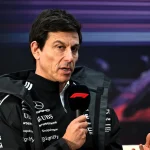


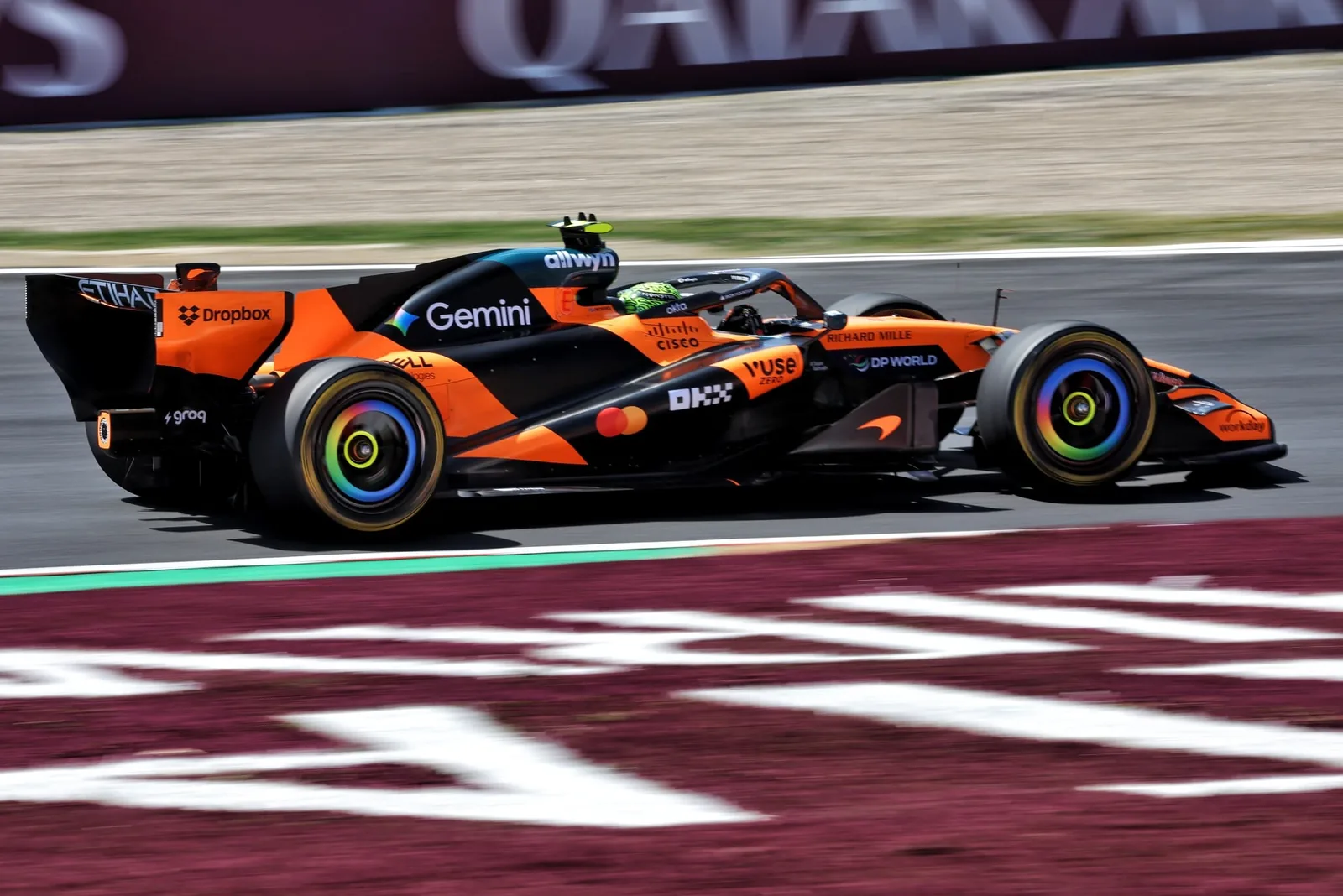
Former Formula 1 driver and current commentator, Martin Brundle, raised concerns about a fundamental problem in the category’s 2026 cars, following criticism from several drivers in the first races of the season. The commentator highlighted that the situation could contradict a long-standing principle of F1 regulations, especially after an episode involving Lando Norris at the Japanese GP.
Read more Tito Giaffone renews with Full Time and accelerates in the 2026 NASCAR Brasil season with PX
The new generation of cars brought more overtaking, but many drivers have classified these maneuvers as artificial. This is because limited battery use prevents drivers from defending their positions, creating battles that depend more on the system than on skill on the track.
In Japan, Norris brought a new dimension to the debate, reporting an involuntary overtake on Lewis Hamilton in the final laps of the race. The current champion stated that he did not intend to attack his competitor, but ended up overtaking due to the automatic behavior of the battery.
“I didn’t even want to overtake Lewis, it’s just about when the battery kicks in. I didn’t want it to kick in, but I can’t control that. So I overtook him and then I had no battery, and he just passed me again,” Norris explained.
The British driver also detailed the situation in one of the fastest corners of the Suzuka circuit: “The problem is that the battery kicked in at the 130R corner. I had to lift, otherwise I would have hit Lewis, and I couldn’t get back on the throttle. If I did, the battery would kick in again, and I didn’t want that because it should have been cut. There’s nothing I could do,” he said.
Read more After rookie award, Tito Giaffone returns to NASCAR Brasil more prepared

Brundle believes the case highlights a major flaw in the current regulations and argues that the FIA needs to act: “One thing that really concerned me was Norris saying he didn’t want to overtake Hamilton, but the battery decided for him, and then he had nothing to defend himself with,” he stated during The F1 Show program.
The former driver also highlighted that there is an old regulation that has existed for a long time: “There is a regulation in Formula 1 that has existed for a long time. The driver must drive the car alone and unaided. Drivers shouldn’t have surprises with a car that does things on its own,” he added.
For Brundle, power delivery needs to be directly controlled by the driver: “They need to solve this. Power delivery must be proportional to what the driver does with the throttle. That is the fundamental. It has to be linear. It’s a big problem for the FIA,” he completed.
The issue also appeared in the qualifying session, when some drivers lost time after small trajectory corrections that drained the battery instantly. This type of car behavior was also pointed out as a factor in Oliver Bearman’s heavy accident in Japan, when Franco Colapinto was 50 km/h slower, even while at full throttle, creating an unexpected speed difference.
Read more NASCAR Brasil: Witold Ramasaukas confirms partners for the 2026 season