






Audi has defined its strategy for the second half of the 2026 Formula 1 season. The team confirmed that it does not intend to introduce significant new updates to the power unit until next year, focusing its efforts on chassis development and preparing a more robust package for 2027.
Read more F1: Stella reveals that McLaren changed car concept after analyzing rivals
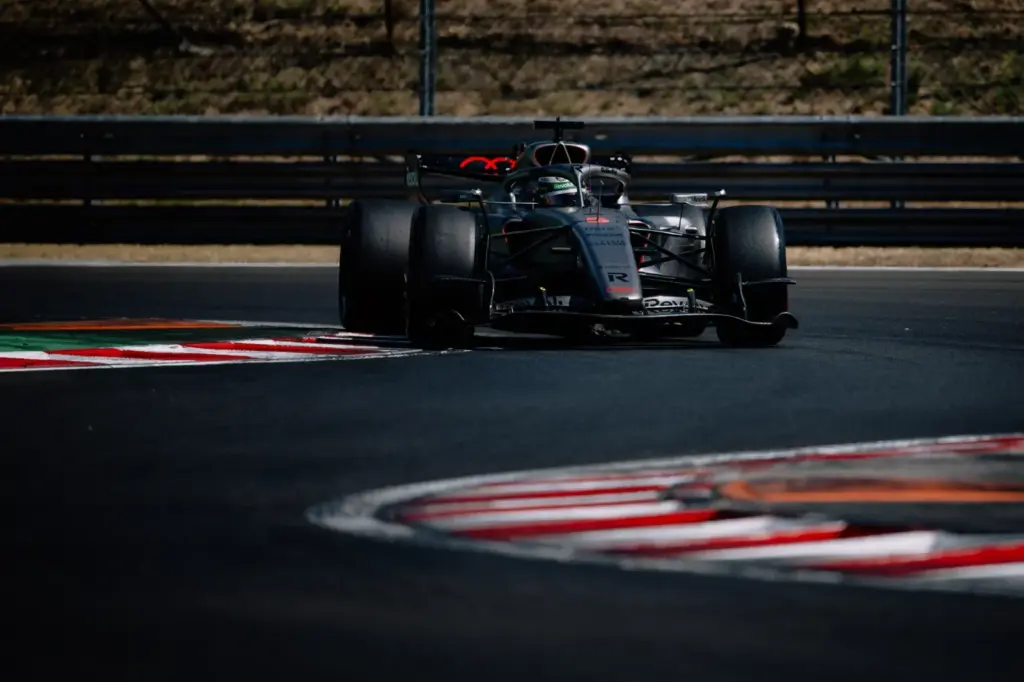
Despite the power disadvantage compared to the main rivals, the team has been showing progress throughout the championship. The updates introduced at the Austrian GP helped improve the R26’s behavior in slow corners, while the strong aerodynamic performance allowed minimizing difficulties on high-speed circuits like Silverstone and Spa.

In Hungary, Audi’s racing director, Allan McNish, explained that the recent focus has been on the car’s drivability. According to him, the team needed to set priorities to manage the available resources within the budget cap.
“It will arrive next year,” McNish replied when asked about a new power unit update. “We need to assess which areas deserve higher priority, also from the budget cap perspective. It is true that there will be additional resources for the ADUO and for the 2027 engines, but we also need to understand how to make the most of them.”
Audi has already used the Additional Development and Upgrade Opportunities (ADUO) mechanism to introduce an evolution in the combustion chamber during the Spanish GP in Barcelona. The change aimed to improve drivability and, according to McNish, brought positive results.
Read more F1 CEO assures that drivers can criticize rules, but supports new cycle
“From our point of view, with the ADUO, we introduced a small adaptation in Barcelona that worked well and helped us. I would say the most important parts will arrive in 2027. So, I would not expect to see, in fact, we will not see, anything significant on the engine until then,” he stated.
Meanwhile, the development of the R26 will continue focused on aerodynamic and chassis improvements, aiming to extract the maximum possible performance from the current package.
The strategy is part of a long-term plan by the German manufacturer. Audi’s project leader, Mattia Binotto, has already indicated that the power unit’s power deficit is not expected to be fully eliminated before 2028. The team’s goal is to build a gradual evolution, with the expectation of consistently competing for wins in the coming years and becoming a world championship contender by 2030.
According to the text, this approach is not exclusive to Audi. Honda has also chosen to limit updates to its engine this season, preparing only an intermediate package for Zandvoort before directing its resources to projects for the following years.
Read more F1: Coulthard compares new regulations to World Cup halftime show