






System created to help manufacturers at a technical disadvantage may release extra updates in important areas of power units, including thermal engine, battery, and MGU-K
Read more F1 today: Cadillac evaluates Herta and Wolff demands Antonelli
The FIA is close to concluding the analysis that will define which power unit manufacturers will have access to the ADUO system (Aerodynamic and Power Unit Development Opportunity), a mechanism created to reduce potential performance differences in the new era of Formula 1 engines.
The evaluation takes into account the average performance recorded in the first five stages of the 2026 season. For each manufacturer, the FIA uses as a reference the results of the best team equipped with that power unit, whether official or customer. The official communication of the beneficiaries should occur up to 15 days after the Canadian GP.
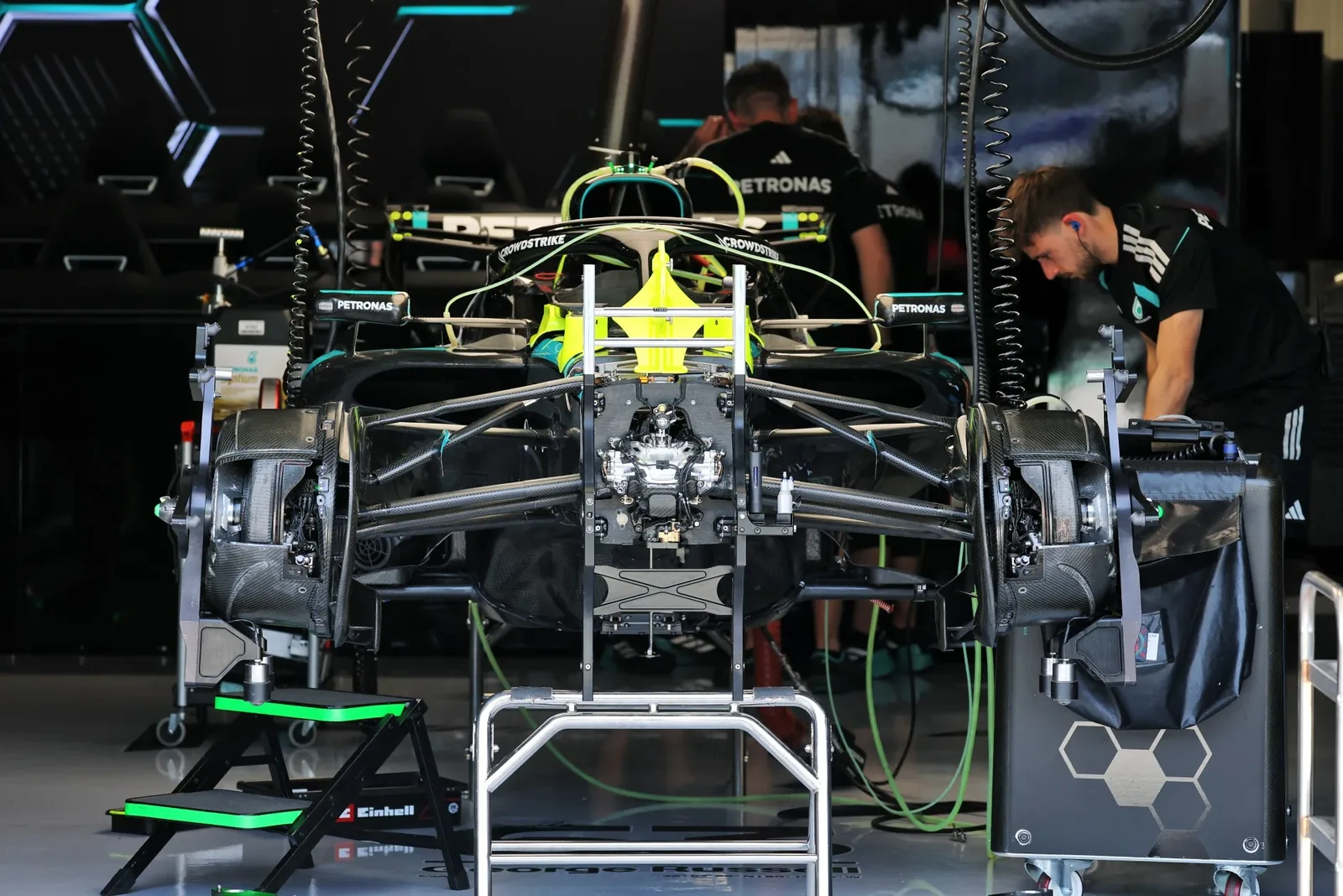
Although the internal combustion engine (ICE) is the main parameter used to determine who will have access to the benefit, the ADUO allows updates in a wide range of power unit components. The permissions are detailed in Table 1 of Appendix C4 of the FIA Technical Regulations for 2026.
The system was created to prevent a manufacturer from being stuck for years with a clearly inferior power unit, something that became a relevant concern given the new generation of engines, which began to divide power almost equally between the thermal engine and the electric system.
The ADUO does not represent total freedom to redesign a power unit, but grants additional tools to accelerate the performance recovery of manufacturers who are significantly behind the competition.
What can a manufacturer with ADUO update?
– Internal combustion engine (ICE) block
– Internal components of the thermal engine
– Oil circulation systems
– Water circulation systems
– MGU-K
– Battery
– Energy recovery systems (ERS)
– Power unit control electronics
– Hydraulic systems allowed by the regulations
– Fluids and certain ballast elements
What remains available to all manufacturers?
– Turbocharger
– Plenum (a sealed air chamber or reservoir located above the engine, right after the main air intake)
– Intake systems
– Some specific areas of the hybrid unit provided for in the regulations
What remains frozen for everyone?
– High-pressure fuel pump
– FIA standardized sensors
– Components classified as Standard Parts
– Items expressly blocked by the technical regulations
Read more Posadas will host the inaugural stage of the TCR South America in 2026
The possibilities are detailed in Appendix C4 of the FIA Technical Regulations and cover both the thermal set and the hybrid system.
The electrical part is pointed out by engineers as one of the most important areas of the current regulations. Therefore, the possibility of freely developing components such as battery, ERS, and MGU-K can represent a significant gain for manufacturers needing to recover competitiveness.
Another important feature of the system is that the benefited manufacturers can receive one or two additional homologations between 2026 and 2027. This allows an update package to be introduced throughout the regulatory cycle without the need to wait for future rule changes.
Still, the time factor remains decisive. Developing, producing, validating, and homologating new engine components is a much more complex process than creating aerodynamic updates. The greater the ambition of the development package, the higher the necessary investment and the more time required to put it into use.
The regulations also determine that any update introduced by a manufacturer must be made available simultaneously to all customer teams using that power unit. If the implementation requires significant changes to the chassis or auxiliary car systems, customer teams may request an additional adaptation period from the FIA.
Besides technical freedom, the ADUO also provides budget flexibility for engine development and available time for bench testing. However, these extra resources do not represent a permanent advantage. The system works as an investment advance, which will later be compensated within future budget limits.
From the FIA’s perspective, the goal is to create a balancing mechanism without eliminating technological competition among manufacturers. The period when manufacturers could spend tens of millions of dollars to completely redesign their engines is in the past, but the ADUO emerges as a tool to prevent excessive differences from compromising the category’s balance throughout the regulation’s validity.
With the decision approaching, anticipation grows in the paddock to know which manufacturers will receive the benefits and how this may influence the evolution of the technical battle in Formula 1 in the coming years.
Read more Interlagos hosts NASCAR Brazil with Osman and Zonta seeking recovery in the championship