







Ferrari has once again expressed discomfort with the change made by the FIA to the Formula 1 starting procedure in 2026. The team principal, Frederic Vasseur, stated that the alteration harmed teams that invested in developing specific systems for more efficient starts.
Read more F1: Verstappen impresses Ford with level of detail in technical feedback
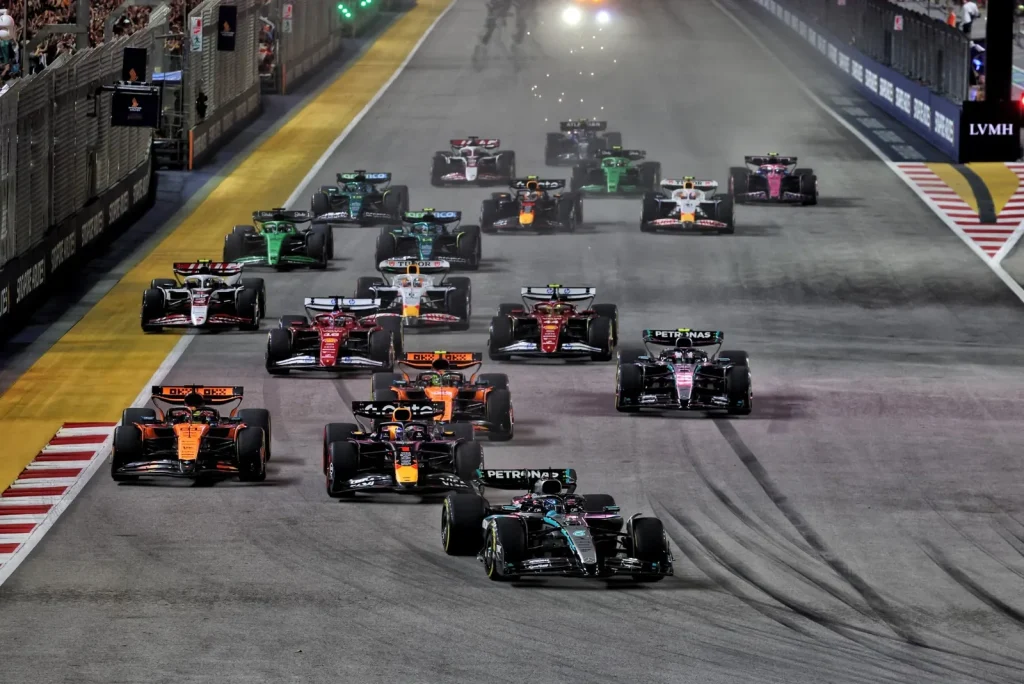
The topic gained momentum already during the pre-season tests in Bahrain, when it became clear that some teams had very different performance at starts. While Ferrari showed a clear advantage in this area, Mercedes faced difficulties getting their cars moving quickly.
The differences were linked to the philosophies adopted by each power unit manufacturer. Ferrari opted for a smaller turbo to speed up the car preparation process before the start, even giving up part of the maximum power. Mercedes, on the other hand, followed a more traditional concept, taking the risk of losing positions right after the lights went out, something that happened in the first stages of the championship.
The debate increased even more after statements from George Russell, who suggested that some teams were defending their own interests in light of the changes. The Briton said that the FIA tried to ease the situation by removing the energy recovery limit, but highlighted that ‘often people have selfish views and want to do the best for themselves’.
In an interview with The Race, Vasseur mocked the situation by commenting that, without the blue light system adopted by the FIA, ‘some cars would still be on the grid in China’. The Ferrari chief said the entity had the right to act for safety reasons but considered it unfair to change the rules after some teams had heavily invested in this concept.
Read more F1: Coulthard sees Verstappen’s ‘old school’ commitment at Nürburgring
“I went to the FIA a year ago and we talked about this. We discussed it at the SAC and also at the PUAC. I really liked the FIA’s response that you should design the car for the regulations, not the regulations for your car,” said the Frenchman. According to him, part of the grid used political arguments to pressure for the change. “Having half the grid complaining that it was extremely dangerous was politically well played, but not very fair,” he added.
Vasseur acknowledged that the FIA had the authority to intervene in the name of safety, regardless of the teams’ opinions. Still, he emphasized that Ferrari ended up penalized after developing its power unit based precisely on these starting characteristics.
The executive also suggested that there was another alternative to solve the situation without modifying the regulations so close to the start of the season: “I understand what they did for safety, but another option would be to ask those teams to start from the pits if they believed it was not safe. For us, it was also a development choice. We created the engine with this criterion and, in a way, they changed the rule at the last minute,” Vasseur concluded.
Read more F1: Aston Martin seeks first consistent progress at the Canadian GP