
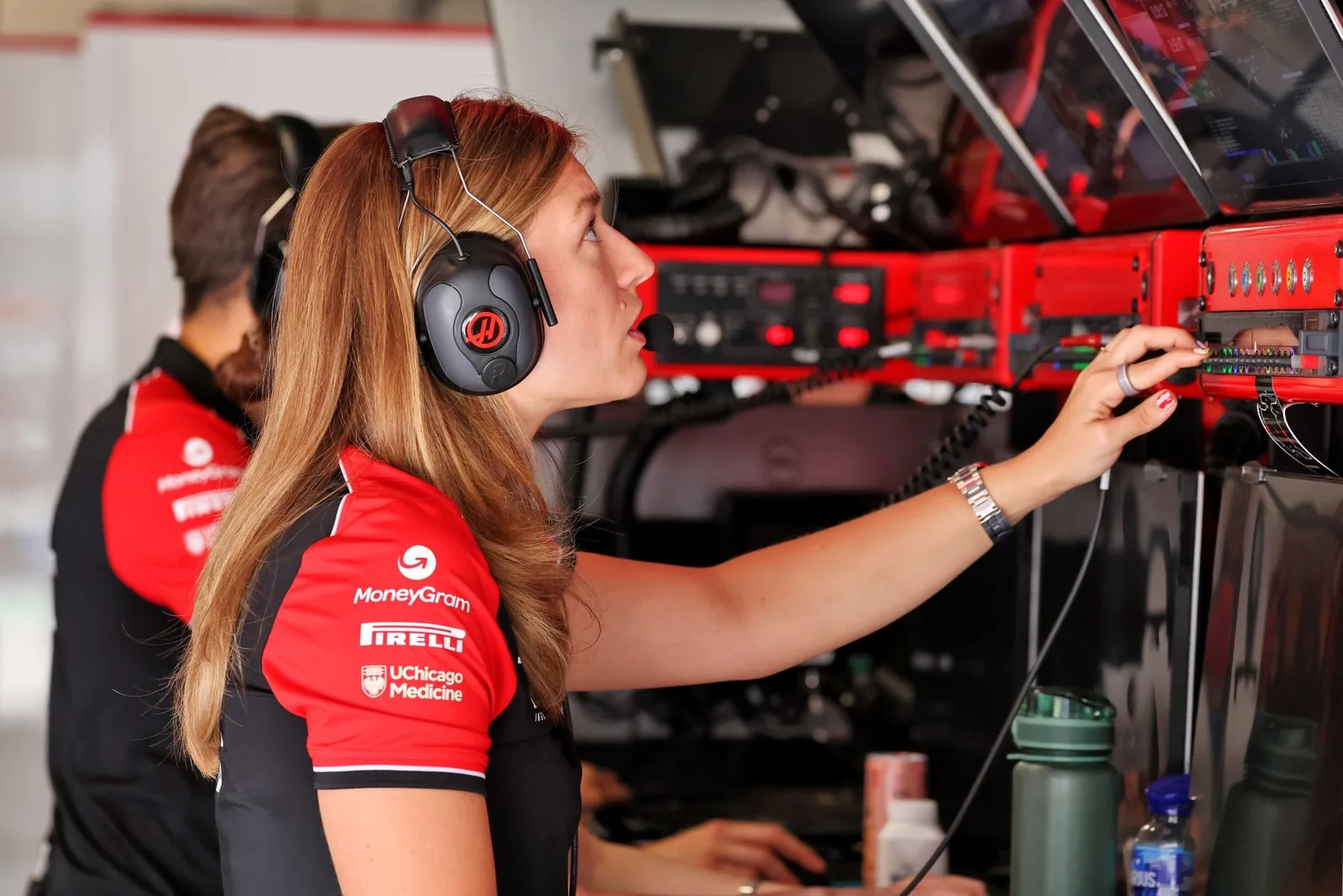
Formula 1 has long been recognized as the ideal form of motorsport for both the brains behind the wheel and the speed of the cars – and with constantly evolving technical regulations and teams inventing increasingly efficient engines, the reliance on data has reached unimaginable levels. To win a Grand Prix, you need not only the best driver behind the wheel and the fastest engine under your feet, but also the best people in their respective areas to process billions of data points as they speed by.
Read more F1: Bortoleto highlights preparation and wants a good weekend in Miami
From telemetry that reads tire temperature to algorithms that simulate race conditions, F1 is now a data science lab on wheels. With each lap, engineers answer whether they have correctly interpreted the conditions to optimize pit stops or if their drivers will lose important positions.
The role of real-time analysis and the fan experience
For the modern fan, understanding these subtleties is inevitable if they want to keep up with the category. Predictive analysis is now for everyone – it used to be a privilege reserved only for engineers at Red Bull, Ferrari, or McLaren.
For fans looking for statistical trends and wanting to follow each competitor’s performance beyond what is seen in broadcasts, checking today’s football matches and similar data platforms is essential. With features that present updated numbers and show who is dominating the competitive scene at the moment, it becomes possible to compare performance history with current probabilities. Consulting precise real-time information allows us to prioritize the accuracy of numbers over emotion, analyzing the context of each event in a much more technical, well-founded way, and connected with what is happening now in sports.
Telemetry: The Pulsing Heart of Strategy
Each Formula 1 car is equipped with hundreds of sensors that transmit data via radio to garages and factories. Everything is monitored, from oil pressure to front wing wear, but data doesn’t win races. The intelligence lies in processing this data:
- Tire management: Graining or thermal degradation can be predicted minutes before they become critical. When telemetry shows that the left front tire will reach its limit in a few laps, the strategy team prepares the undercut.
- Fuel consumption: Due to fuel quantity restrictions, drivers will have to ease off the throttle and let the car coast (lift and coast) in corners. Data indicates how many milliliters of fuel can be used in each sector to stay within the limits of what is possible without risking a dry run.
- Energy Recovery: The management of hybrid systems (ERS) is done corner by corner. Telemetry allows engineers to advise the driver on the power delivery mode needed to defend a position or attempt an overtake.
Probabilities and Monte Carlo Simulations
Strategy teams can predict results thanks to Monte Carlo Simulations. They can run thousands of possible scenarios – weather changes during the race, probability of Safety Car deployment, and track incidents – and determine the ideal window for the pit stop.
Read more F1 today: Miami on rain alert and Horner keeps future open
The accuracy of these simulations is impressive. Sometimes, you see a driver simply giving up a track position to gain tire advantage at the end of the race. This is not intuition; it’s a mathematical calculation. When a strategist shouts “Box, Box” on the radio, they have a probability of success that they know has been virtually calculated thousands of times in milliseconds.
The human factor versus artificial intelligence
Even in the era of AI and Big Data, the human factor remains the most difficult for computers to predict. Why do some drivers know how to extract maximum performance from an unstable car or manage their tires better than the simulator predicts? This is what makes F1 exciting and unpredictable.
Data may say that overtaking is impossible, but the driver’s talent and audacity can defy mathematical logic. Even this talent is now observed and “quantified”:
- Use of comparative telemetry between teammates.
- Identification of millisecond gains and losses in each corner.
- Use of driving style as an engineering metric.
Conclusion: Victory is an equation
Modern Formula 1 is, in essence, a battle of data efficiency. The car is the interface, the driver the operator, but who holds the brain? For us, who follow the sport, both as professionals and as enthusiasts who love a game of chess (with supercars) on wheels, this is the beauty of Grand Prix racing: the eternal illusion of numbers versus reality.
Ultimately, whoever best interprets telemetry and makes decisions, whoever combines the coolness of data with the courage of the driver, will climb to the highest step of the podium. Formula 1 is not a car race; it is the biggest race in the world and the greatest technological dispute on the planet, where a single piece of data can be worth a world title.
Read more Rafael Câmara seeks new podium in F2 debut in Miami