







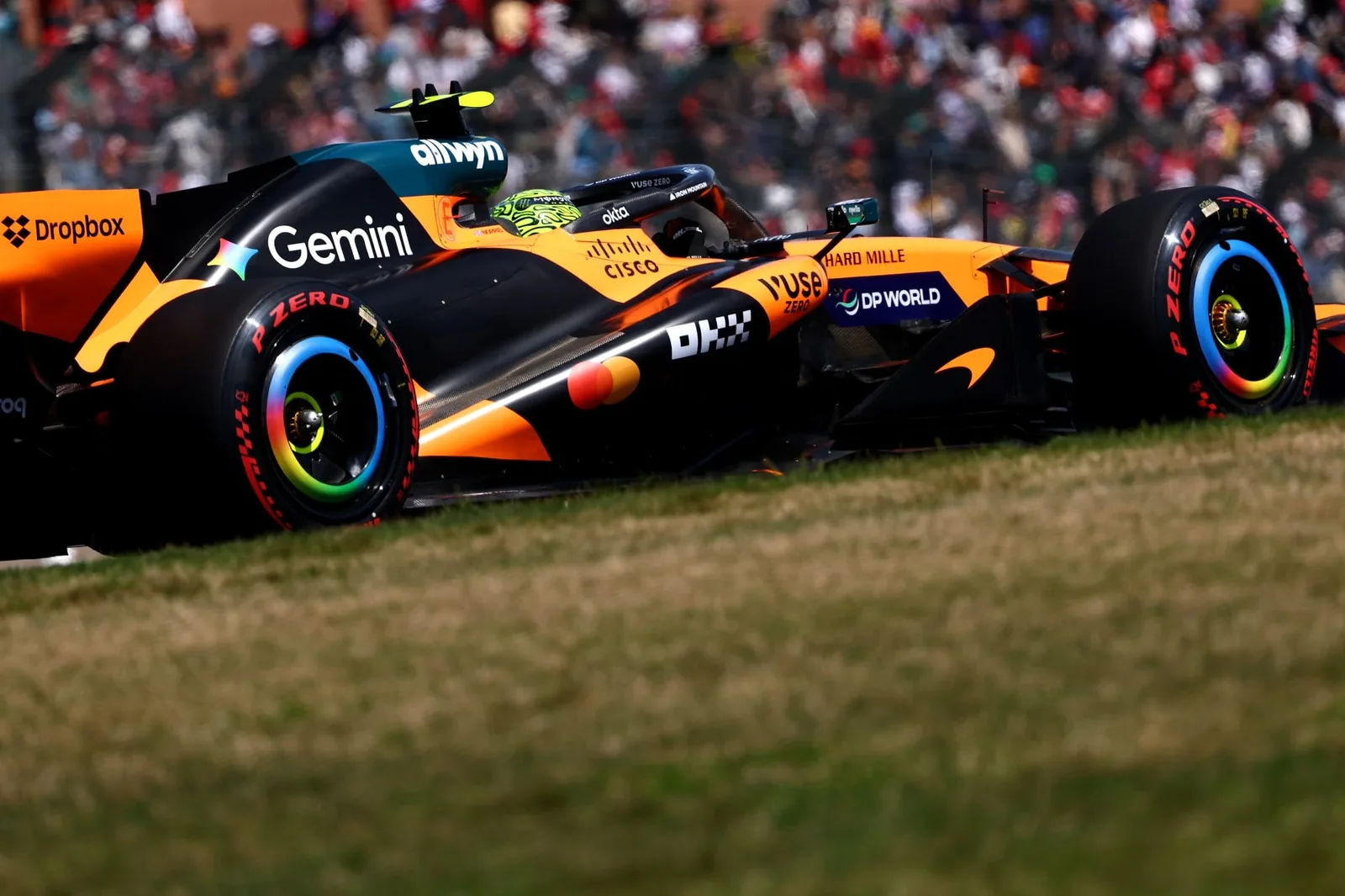
The current Formula 1 champion, Lando Norris, expressed concern about the effects of the category’s new technical rules. The Briton stated that the situation could leave drivers at the mercy of potentially dangerous situations, mainly because of the speed differences observed in qualifying sessions.
Read more F1: Horner reveals Lambiase’s hidden talent after exit announcement
The concern arose after the first three rounds of the season, when teams, the FIA, and Formula 1 began discussions to find solutions to the identified problems. Qualifying sessions have become one of the main points of tension, as cars cannot run at full power all the time.
During the Japanese GP, the situation became even more evident, especially at Suzuka’s 130R corner. Drivers had to reduce speed to manage energy, which created large speed differences between cars at different points of the lap.
Norris explained that the situation forces him to drive in an unnatural and potentially dangerous way: “Of course there are better and worse tracks, and they have made some improvements, but it can still improve more. We just want to go flat out, I don’t want to lift and lose 60 km/h at 130R, going into the last corner,” he said.
Read more F1: Verstappen disagrees that only qualifying needs adjustments
The Briton also highlighted that other categories can reach higher speeds than Formula 1, which, in his view, reinforces the need for adjustments: “Some things can be improved, the FIA knows this and I hope they do. The racing might look good on TV, but inside the car it certainly isn’t as authentic as it needs to be”.

According to Norris, the main problem lies in energy management, which limits the driver’s freedom during the lap: “The big problem was that there was energy deployment at 130R, and I needed to lift, and I couldn’t get back on the throttle. If I got back on the throttle, the battery deploys energy, and I didn’t want that to happen, because it should have been cut,” he added.
This situation, according to the current champion, reduces driver control and increases risk, especially in qualifying sessions: “There’s nothing we can do, so there’s not enough control for the driver, that’s why you’re at the mercy of what’s behind you,” concluded Norris, reinforcing the concern about speed differences and possible dangerous situations, as already happened in the accident involving Oliver Bearman and Franco Colapinto at Suzuka.
Read more F1: Former Red Bull driver questions Verstappen’s future after Lambiase’s departure