


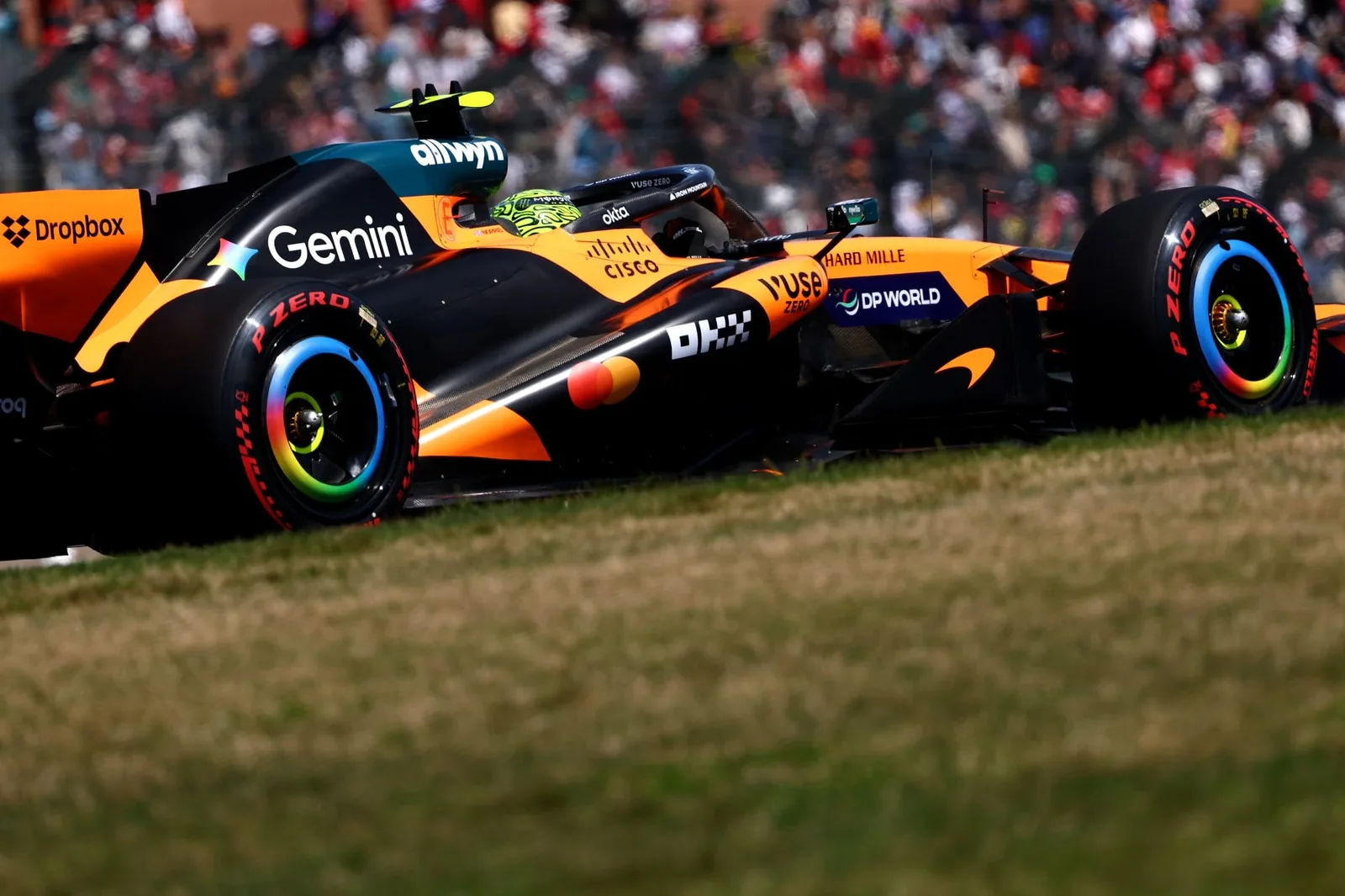
McLaren responded to the criticisms made by Lando Norris and Max Verstappen after the Formula 1 Japanese GP. The team acknowledged that the behavior of the battery and overtaking was influenced by limitations of the current regulations.
Read more F1: Audi admits problem and says solution will not be immediate
The subject gained relevance after Norris and Verstappen highlighted, after the race, that drivers were practically forced to attempt overtakes as soon as they were less than a second behind the car in front. Both also pointed out that battery usage seemed to occur automatically, something that according to them, limits strategic options during the race.
Andrea Stella, McLaren team principal, explained that the characteristics of the Japanese circuit had a major impact on this behavior. According to him, the sequence of three consecutive straights creates a scenario where there is not enough energy for all of them, forcing drivers to choose when to attack or defend: “What happens on a track like this, with three straights in a row, is that you won’t have enough energy for all of them. So you have to choose when you want to attack or defend,” he stated.
Stella further detailed that the best point for overtaking, especially when following Ferrari, was between the Spoon curve and the chicane: “There, if you press the boost button, you will have an extension of the MGU-K usage. This consumes a lot of energy and makes the speed approaching 130R very high. We are talking about 340 km/h”.
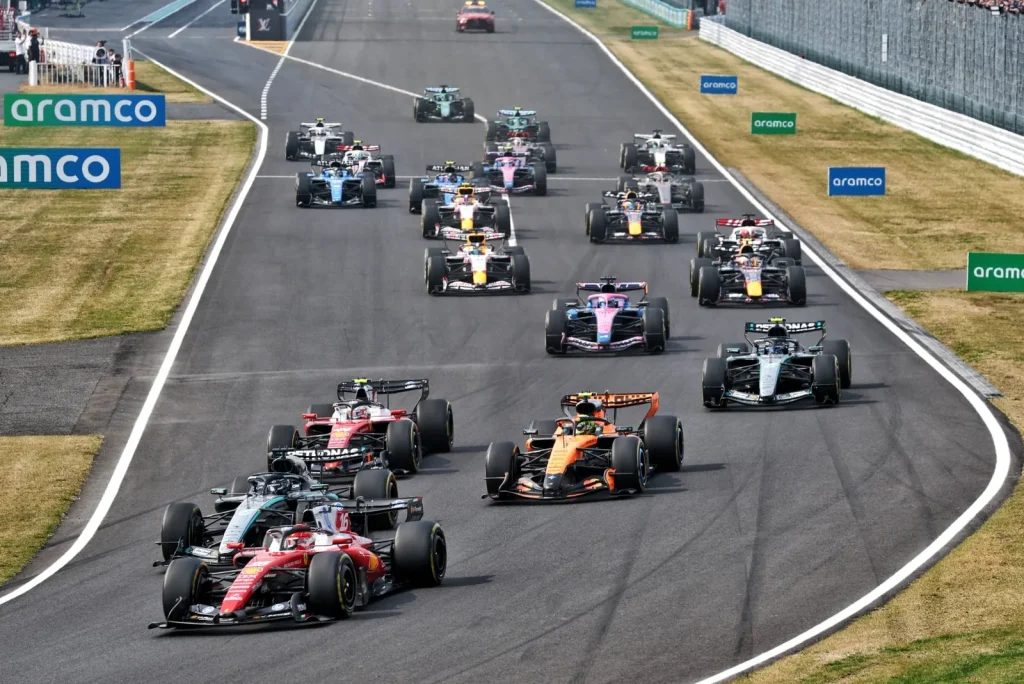
At that speed, the traditional 130R corner is no longer taken with the throttle fully pressed. Stella continued: “At 340 km/h, 130R is no longer a flat-out corner. You lift not only to recharge, but because otherwise, you would have stability problems,” he said.
Read more F1 today: Red Bull sinks and Ferrari gains time to react
According to the official, if the overtake is not completed, the driver needs to accelerate again and, at that moment, the rules mandate the use of the electric motor. This consumes even more battery and can harm performance shortly after: “This means you will have to use even more battery. Most likely, if you completed the overtake, you will be low on energy after the chicane”.
Stella highlighted that this scenario explains why some overtakes were reversed between the chicane and Turn 1. The McLaren boss suggested that the FIA review the current rules to give engineers more freedom in energy management: “You could allow engineers to select sections where, after lifting, when accelerating again, there was no use of the electric motor, giving more freedom in battery usage,” he added.
Finally, Stella cited examples from the race in Suzuka involving Norris, including battles with Lewis Hamilton: “I think we saw Lando overtake Lewis a few times and then be overtaken again. There is the possibility of giving more freedom to drivers and engineers,” he concluded.
Read more Porsche Cup announces postponement of the Sprint Challenge and Trophy round in Goiânia