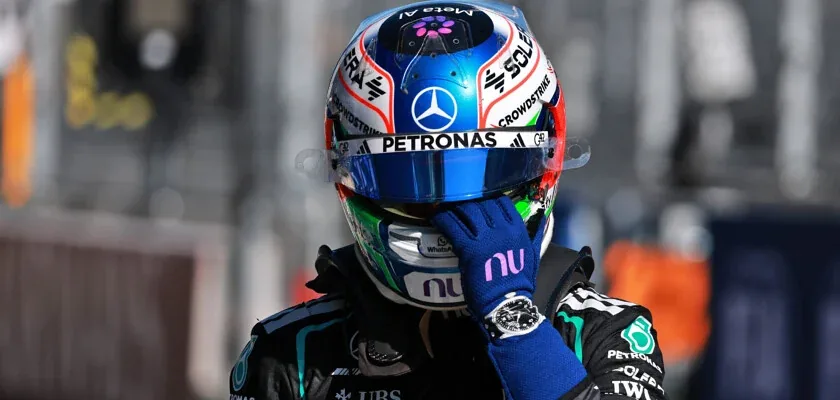



George Russell decided to delay an inevitable grid penalty while waiting for the next Mercedes internal combustion engine specification. The Briton has already reached the limit of some power unit components in the 2026 Formula 1 season.
Read more F1: Antonelli believes in a race decided by tire management
The idea is to synchronize the penalty with the arrival of the update planned within the Additional Development and Upgrade Opportunities program, the ADUO. Russell had been pointed out as a possible candidate to serve the penalty already at the Azerbaijan GP, where Baku’s long straights could facilitate a recovery starting further back.

However, this scenario has changed. The new Mercedes specification is now considered more likely for the sequence formed by the United States, Mexico, and São Paulo GPs, which may push Russell’s penalty to the end of October.
The reliability problems faced by Mercedes at the start of the season forced Russell and Kimi Antonelli to use more components than planned. Russell has already reached the annual limit for internal combustion engine, turbo, energy storage, and control electronics. Any new replacement of these elements before the ADUO update would result in a grid penalty.
Read more F2: Check the championship standings after the Madrid stage

Antonelli chose a different path in Monza. The Italian received the penalty at the Italian GP, started from 19th position, and managed to advance through the pack to claim victory.
The result naturally raised the question of why Russell did not adopt the same strategy. The explanation lies precisely in Mercedes’ planning: the Briton prefers to wait for the new engine specification to concentrate the component changes and the consequent loss of positions in the same weekend.
Read more F1: One-stop strategy gains strength for debut at Madring