








The Italian Formula 1 GP is expected to be decided with just one pit stop, but without a clearly superior strategy over the others. Pirelli’s simulations indicate very low degradation in Monza and show different tire combinations separated by only a few seconds in total race time.
Read more F1: Verstappen admits to taking risks amid Red Bull problems
The theoretically fastest option is to start on Medium tires and switch to Hards between laps 24 and 30. However, starting on Softs and switching to Hards, stopping between laps 19 and 25, or doing the Medium-Soft combination, with a change between laps 30 and 36, shows similar performance. Another alternative is Soft-Medium, with a window between laps 22 and 28.

“When there is management, I would not expect the differences between compounds to really make a difference during the race. That is why all strategies are so close,” explained Dario Marrafuschi, Pirelli’s motorsport director. According to him, the difference per lap is approximately 0.2 seconds between Hards and Mediums and 0.5 to 0.6 seconds between Mediums and Softs.

Softs can still offer an important advantage at the start. Pirelli’s data indicates that, in acceleration up to 150 km/h, Mediums need 1.59 meters more than Softs, while Hards lose 3.49 meters. On the other hand, anticipating the stop may force the driver to complete a very long stint on Hards and leave him vulnerable if a Safety Car appears later.
Read more F1: Barrichello and Vettel drive F2002 in tribute to Schumacher
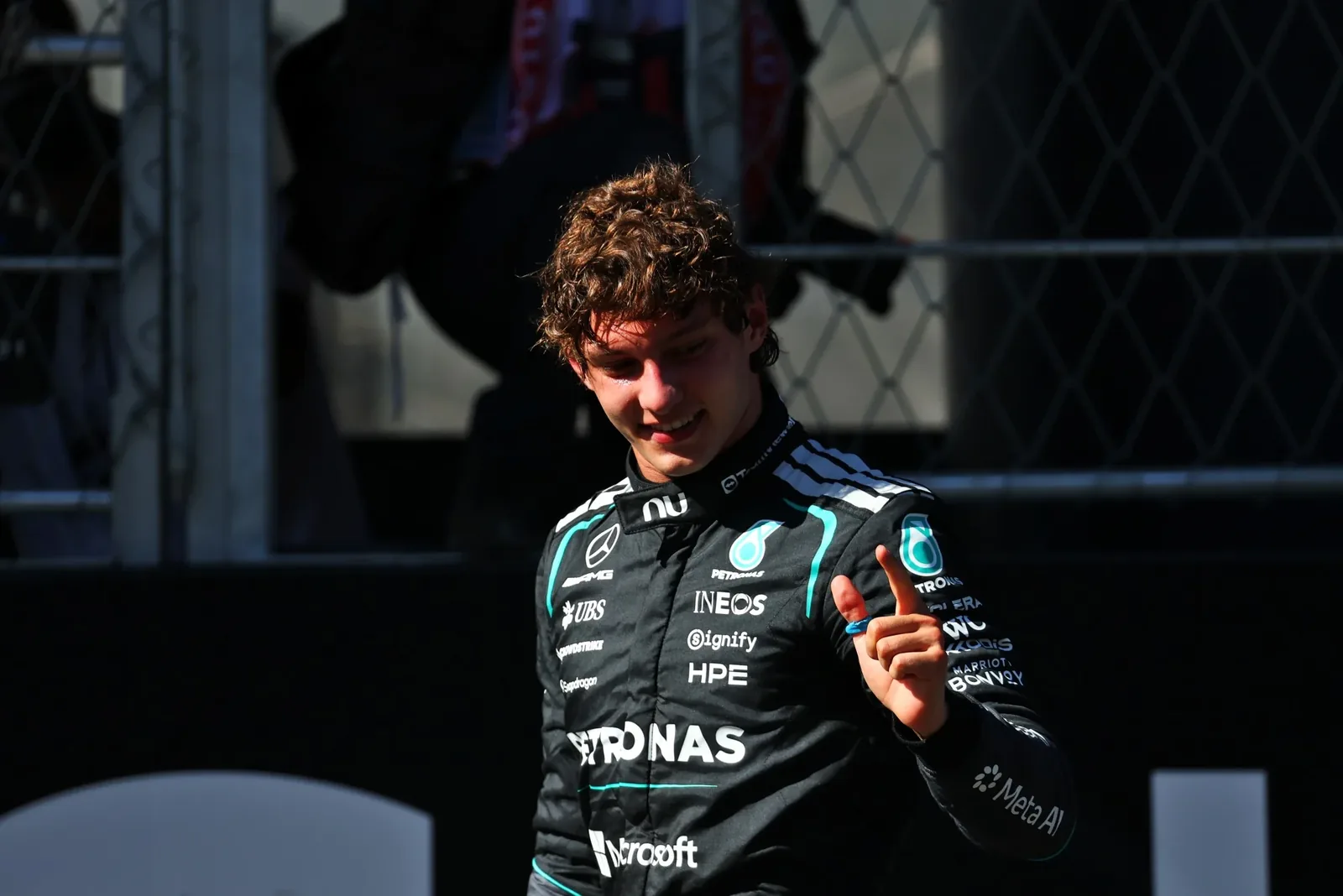
For those starting at the back, the Hard-Soft alternative emerges with an ideal window between laps 32 and 38. Kimi Antonelli is cited as a driver who may try to extend his first stint in search of an opportunity created by a Safety Car, although Pirelli considers it unlikely that many will choose Hards for the start.

The race pace recorded in practice places Mercedes as the benchmark, followed by McLaren just 0.08 seconds per lap behind. Ferrari appears 0.32 seconds back, Red Bull 0.47, and Alpine, which starts from pole with Pierre Gasly, 0.53. Audi appears 0.97 seconds behind Mercedes in the simulations.
The temperature will also be high, with a forecast of 33°C ambient and approximately 55°C on the asphalt. Despite the heat, the practice sessions did not indicate excessive wear, while the graining observed on the front axle was considered small and manageable.
Read more F1: Gasly hopes to turn historic pole into great result