







Ferrari is not a small team, but it can no longer spend without limits. Between millionaire salaries, technical development, global logistics, and digital presence, a sector where platforms like 888starz seek visibility, every decision influences the speed of the single-seater and the strength of the brand.
Read more F1: Bottas jokes and says Antonelli «can buy me dinner» after winning in Spa
This reality explains why the Scuderia’s finances arouse curiosity among fans and investors, in a digital environment where the 888 starz app seeks visibility. Next, you will see how much the drivers receive, how much a competitive single-seater costs, and how Ferrari operates efficiently.

How Ferrari finances one of Formula 1’s most iconic teams
Ferrari’s position in the Formula 1 financial landscape
Among recognized Formula 1 teams, few possess Ferrari’s financial and commercial strength. Besides being the only one present in all seasons of the competition, the brand transforms tradition, prestige, and global reach into revenues that guarantee stability, even when sporting results fall short of expectations.
Main revenue sources that sustain the team
A large part of these revenues comes from Formula 1’s commercial distribution, including performance bonuses and the historic bonus attributed to Ferrari. Global sponsors, licensing, official products, and interest in the Formula 1 car complete a particularly diversified revenue structure.
Balancing performance with financial sustainability
Even with this advantage, spending more does not guarantee victories. The budget cap forces Ferrari to carefully choose between upgrades, spare parts, and future development, while driver salaries, marketing, and hospitality remain outside the cap and require separate financial control.
Detailed analysis of Ferrari’s Formula 1 budget
How the team’s annual budget is distributed
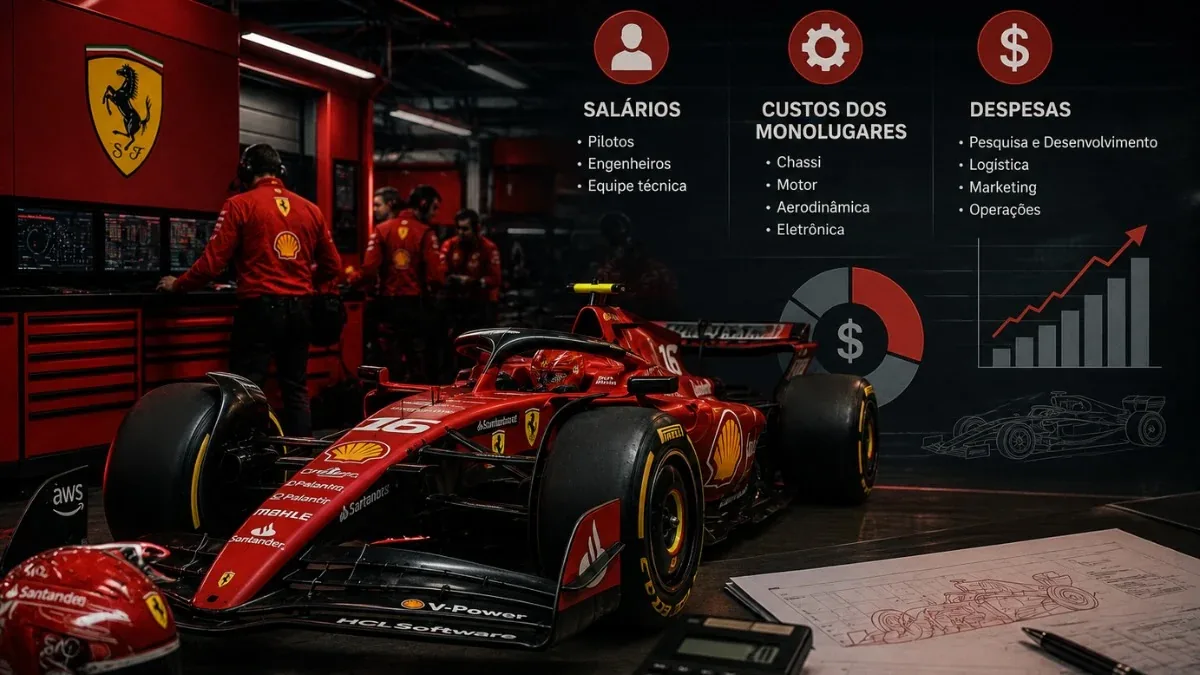
The annual budget helps understand how much a Formula 1 car costs, covering aerodynamic research, parts manufacturing, technical team salaries, track equipment, and international transport. As the calendar is extensive, Ferrari also allocates funds for repairs, upgrades, and components that need to be replaced during the season.
The influence of Formula 1’s budget cap
The budget cap for 2026 profoundly changed this distribution. Ferrari can no longer produce unlimited versions of a part until the desired performance is achieved, as each attempt consumes part of the available limit. This turns development errors and accidents into technical and financial problems.
Expenses outside the budget cap
Discovering how much a Formula 1 driver earns shows that not all expenses are subject to this control. Driver salaries, remuneration of the three highest-paid executives, marketing, hospitality, and part of business activities are outside the limit. This way, Ferrari invests in talent and image without reducing the budget allocated to the single-seater.
Ferrari driver salaries and contract structure
Base salaries of Ferrari race drivers
Lewis Hamilton receives between 60 and 70 million dollars per season, while Charles Leclerc earns about 50 million euros per year. In the ranking of the highest-paid drivers, the two contracts raise the base salaries paid by Ferrari to over 100 million euros.
Performance bonuses and incentive payments
Bonuses help understand how much a Formula 1 driver earns, varying with wins, podiums, points, and titles. Clauses related to winning the championship can add between 5 and 10 million dollars, while exclusive cars and ambassador roles increase the total remuneration package.
How Ferrari compares to rival teams in driver remuneration
Among Formula 1 drivers, Ferrari’s duo leads, with salaries exceeding 110 million dollars per year. Red Bull is close to 75 million, McLaren is around 43 million, and Mercedes pays approximately 36 million dollars.
How much it costs to build and develop a Ferrari Formula 1 single-seater
Chassis design and manufacturing costs
The carbon fiber monocoque costs between 650,000 and 700,000 dollars, while the suspension can add about 450,000 dollars. When calculating the cost of a single-seater, impact structures, special materials, and autoclave processes further increase the total value.
Power unit development and integration costs
The hybrid power unit is the most expensive component, valued at close to 15 million dollars per single-seater. In addition to the engine, Ferrari needs to invest in integration with the chassis, cooling systems, and adaptation to sustainable fuels.
Aerodynamic research and wind tunnel investment
Aerodynamics require millions of dollars in investments in wind tunnel tests, scale models, computational fluid dynamics, and supercomputing. Although the FIA limits usage hours and simulations, Ferrari maintains advanced infrastructure in Maranello, as a well-developed wing or floor can represent decisive tenths of a second per lap.
Investment in research, technology, and engineering
Simulator technology and virtual testing
The Maranello simulator accurately reproduces the behavior of the Formula 1 steering wheel, tire wear, and different setups. During race weekends, development drivers complete hundreds of virtual laps, allowing the team to test solutions before decisive sessions.
Data analysis and race strategy operations
Each single-seater integrates over 300 sensors, responsible for sending millions of data points to the track and to Maranello. This data feeds predictive models that calculate wear, traffic, and pit stop windows, helping strategists make decisions in a few seconds.
Continuous updates throughout the Formula 1 season
Ferrari updates the single-seater throughout the season, creating specific packages for fast, slow, or high-downforce circuits. However, under the budget cap, each part needs to match the predicted results from CFD simulations, wind tunnel, and simulator before being manufactured.
Ferrari’s operational expenses throughout a season
Logistics and international transport
Throughout the year, Ferrari transports over 4,000 tons of equipment between continents. Critical parts travel by air, larger structures are transported by ship, and in Europe, customized trucks take the single-seaters, tools, and mobile facilities directly from the Maranello headquarters.
Factory operations and engineering team
In Maranello, engineers, data scientists, and technicians keep the operation running almost without interruptions. As performance-related salaries are covered by the budget cap, Ferrari controls hiring, roles, and productivity to prevent the wage bill from compromising development.
Read more F1: Wolff details power loss problem that hampered Russell in Spa
Pit crew preparation and execution on race weekends
On race weekends, the same mechanics responsible for the single-seater also make up the pit crew. They perform hundreds of repetitions in practice, use lightweight equipment, and analyze high-speed videos to reduce errors during stops that last about two seconds.
Sponsorships and commercial partnerships
Ferrari’s biggest commercial partners
HP holds the position of main partner, through a sponsorship agreement with Ferrari estimated at 100 million dollars per year. Shell, UniCredit, IBM, Richard Mille, and BingX complete a network that combines financing, technology, fuels, financial services, and international exposure for the team.
Formula 1 prize money and commercial revenues
In addition to sponsorships, Ferrari receives a privileged share of Formula 1’s commercial revenues. The historic bonus and Constructor’s Championship prizes can raise annual payments to between 200 million and 250 million dollars.
Merchandising, licensing, and global brand value
The commercial impact extends beyond racing. Official products, apparel, miniatures, and licensing agreements generate royalties, while sporting prestige increases interest in road cars. This cycle helps sustain a brand considered one of the strongest in the world.
How Ferrari compares financially to its biggest rivals
Budget comparison with Red Bull Racing
Ferrari and Red Bull operate with similar operational limits but follow distinct models. Ferrari maintains its own production of chassis and power units, while Red Bull expanded its structure through Red Bull Powertrains and concentrates a significant portion of salaries on Max Verstappen.
Investment differences compared to Mercedes-AMG F1
Compared to Mercedes, the main difference lies in industrial organization. The German team divides its operations between Brackley and Brixworth, while Ferrari concentrates chassis, power unit, and engineering development in Maranello, sharing infrastructure with other divisions of the Italian manufacturer whenever permitted.
Areas where Ferrari invests more aggressively
Outside the budget cap, Ferrari invests more aggressively in salaries, digital technology, and hospitality. The duo of Hamilton and Leclerc receives over 110 million dollars per year, while simulators, supercomputers, and global events reinforce performance, sponsorships, and brand value worldwide.
Financial challenges shaping Ferrari’s future
Budget cap restrictions and competitive balance
The budget cap changed how Ferrari transforms money into performance, as there is no longer room to correct all errors through new investments. These are the main effects of this rule on single-seater development and competition with rival teams:
- Ferrari, Red Bull, and Mercedes operate with similar limits, which reduces the financial advantages that could previously be decisive.
- An unsuccessful upgrade consumes part of the budget without generating return and reduces the resources available for new developments during the season.
- Serious accidents require new parts and divert funds that could finance important aerodynamic improvements to the single-seater.
In practice, Ferrari’s financial advantage remains important outside the budget cap, but it does not allow for unlimited solutions for the single-seater. Success depends on choosing efficient upgrades, damage control, and preserving sufficient resources to maintain development until the end of the season.
Investment in future regulations and innovation
The 2026 regulations require new single-seaters, active aerodynamics, sustainable fuels, and a greater electrical component in the power unit. Ferrari needs to simultaneously finance chassis development and the separate budget cap for power units, estimated at 190 million dollars per season.
Managing profitability while seeking to win championships
While seeking to win championships, Ferrari also protects the profitability of the parent company. Quarterly revenues close to 1.85 billion euros and an EBITDA margin of 39.1% show that Formula 1 acts as a global showcase, reinforcing sponsorships, licensing, and sales of high-value cars.
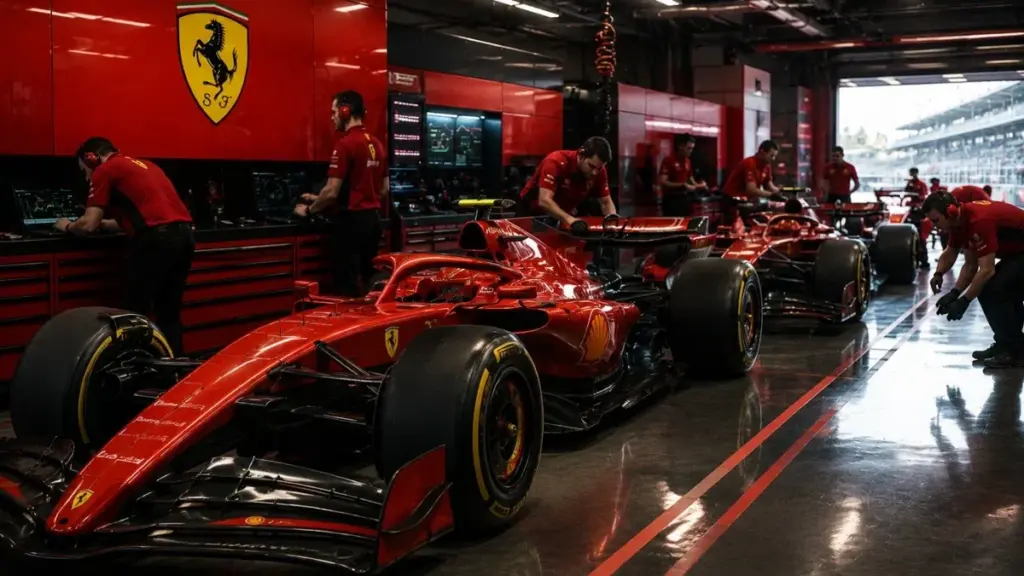
Conclusion
Ferrari’s finances demonstrate that competing in Formula 1 requires much more than buying expensive components. The team needs to balance salaries, innovation, logistics, and development within complex rules, transforming each investment into performance, visibility, or sustainable commercial growth.
Even in the face of stricter technical limits, Ferrari continues to use its tradition and financial strength to maintain one of the most ambitious operations on the grid. The current challenge is not simply to spend more, but to better direct each resource while seeking to win new world titles.
Frequently asked questions
Who oversees Ferrari’s accounts in Formula 1?
The FIA’s Budget Cap Administration analyzes the team’s financial reports, documents, and annual declarations.
Can Ferrari save unused budget for the next season?
No, as the limit is assessed per accounting period and does not function as an accumulable balance. Saved resources can only be utilized within that same financial and strategic cycle of the team.
What happens if Ferrari exceeds the budget cap?
It depends on the severity and nature of the infringement. Penalties can include fines, loss of points, aerodynamic restrictions, or a future reduction in development capacity.
Does Ferrari earn money by supplying engines to other teams?
Yes, as supplying power units, technical support, and components to customer teams generates additional revenue, helps distribute industrial costs, and increases the amount of data available for comparison.
Read more F1: Leclerc issues warning despite Ferrari’s good form