






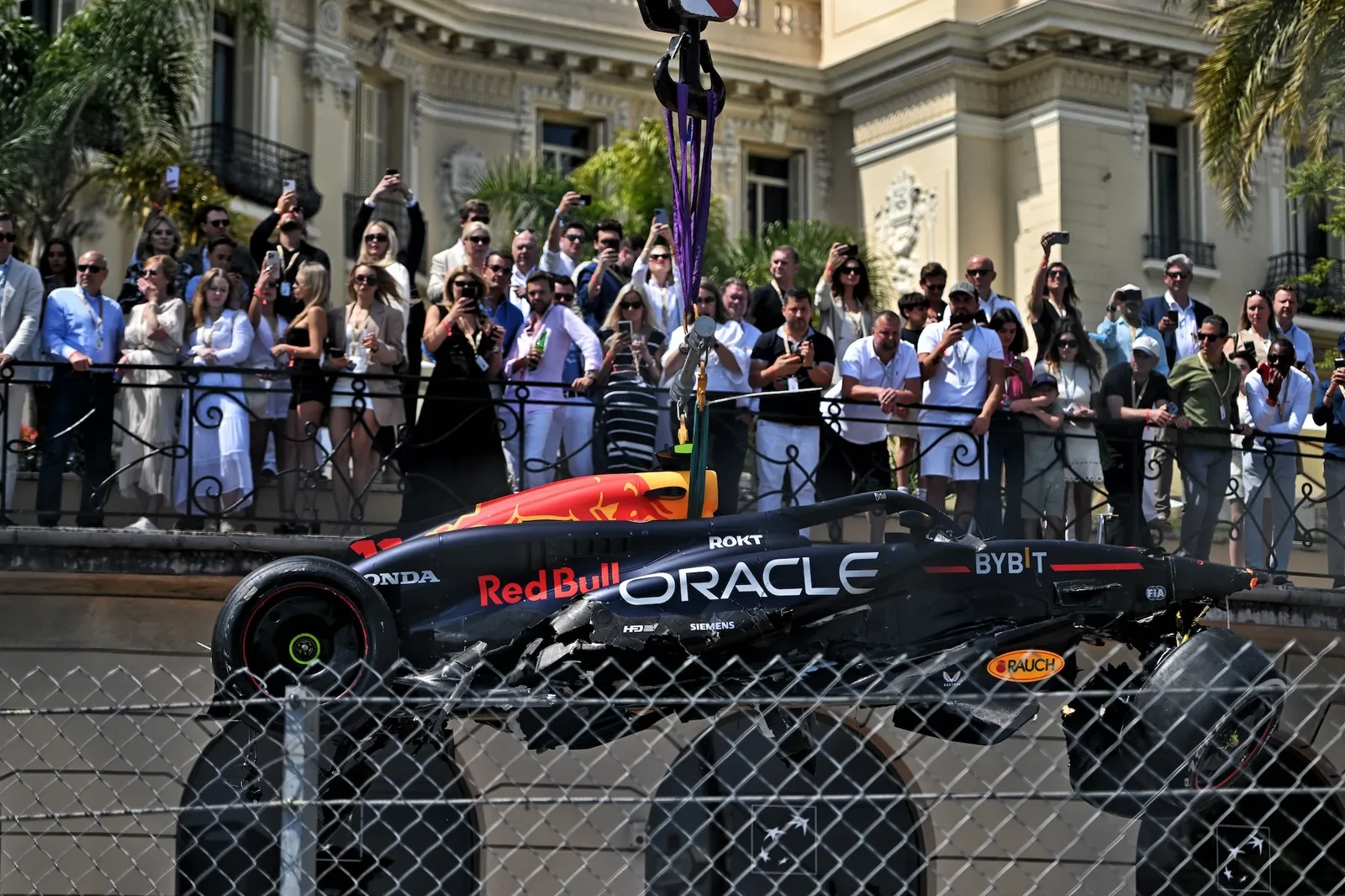
Cars have become bigger, wider, and heavier over the decades, but the streets of the Principality have practically not changed. Understand why overtaking remains the biggest challenge of the Monaco GP.
Read more F1 today? Find out how to watch the free practices of the Monaco GP 2026
Every year, when Formula 1 arrives in Monte Carlo, the same discussion resurfaces: does it still make sense to race on a circuit where overtaking is so difficult?
The question has accompanied the Monaco Grand Prix for decades, but it has gained even more traction in the modern era of the sport. While cars have evolved in size, power, and aerodynamic complexity, the streets of the Principality have remained virtually the same, creating a contrast that helps explain why starting position has become so important.
The result is a unique race on the calendar. In no other circuit does qualifying exert as much influence on the final outcome as in Monaco.
A circuit created for another era
When the Monaco GP held its first edition in 1929, cars were much smaller and narrower than they are today. Even in the first decades of Formula 1, single-seaters occupied much less space on the streets of the Principality.
Over the years, safety has evolved, technology has advanced, and cars have grown considerably. Today, Formula 1 single-seaters have dimensions that would have been unthinkable for drivers of the 1960s, 1970s, or 1980s.
The problem is that Monte Carlo hasn’t grown with them.</p
The streets remain delimited by the same buildings, the same sidewalks, and the same protective barriers that helped build the race’s identity. Although small modifications have been made over the years, the track largely preserves its original characteristics.
Centimeters make all the difference
In many sections of the circuit, there simply isn’t enough space for two cars to dispute a corner side-by-side without high risks of contact.
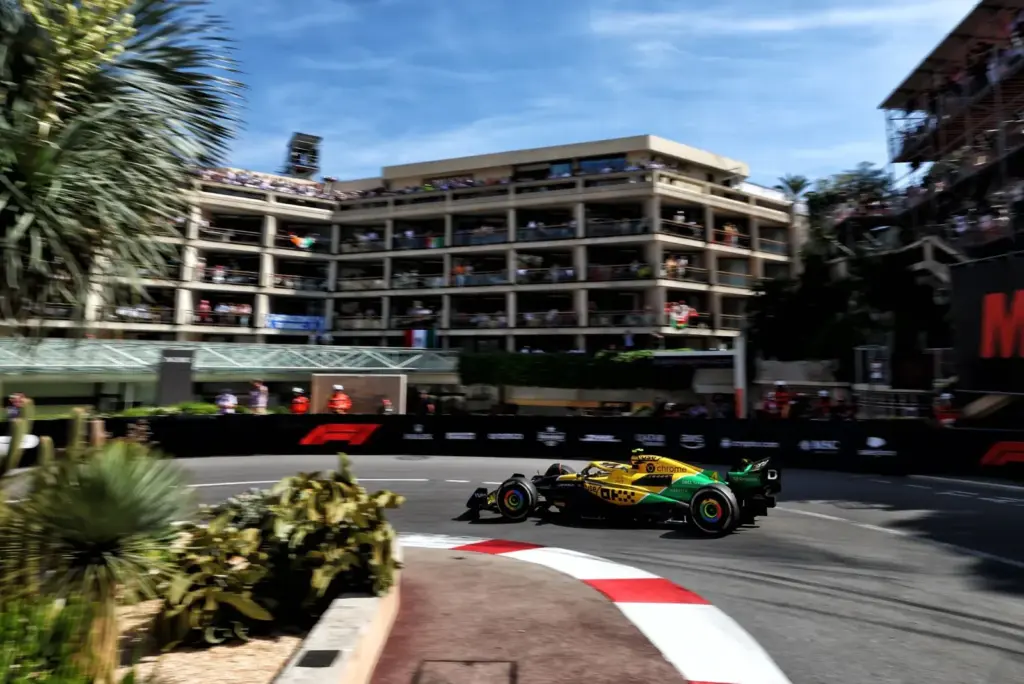
Corners like Loews, currently known as the Fairmont Hairpin, already require speeds close to 50 km/h just for cars to complete the turn. In other places, such as the climb to the Casino, the chicane after the tunnel, or the Swimming Pool section, any overtaking attempt involves a high level of risk.
Therefore, most of the positions gained during the weekend happen even before the start. A good qualifying lap often counts for more than any elaborate race strategy.
Not even DRS solved the problem
The introduction of DRS brought a significant increase in overtakes on various Formula 1 circuits. On tracks like Montreal, Spielberg, or Sakhir, the device completely transformed the dynamic of the battles.
In Monaco, however, its impact has always been limited. The main reason is simple: it’s not enough to have enough speed to overtake. It’s also necessary to find space to position the car alongside the opponent.
Even when a driver manages to get close using DRS, the next corners usually offer few real opportunities to complete the maneuver without taking excessive risks.
Read more F1 announces Las Vegas GP to remain on calendar until 2037
This helps explain why many races in Monte Carlo are decided more by pace management and strategy than by direct on-track battles.
Qualifying became the race within the race
The difficulty of overtaking has turned Saturday into one of the most important moments of the entire season. On few tracks does a pole position hold as much value as in Monaco.
It’s no coincidence that some of the most memorable laps in Formula 1 history happened precisely in the Principality’s qualifying sessions. Ayrton Senna, Michael Schumacher, Fernando Alonso, Lewis Hamilton, and Max Verstappen built part of their reputations by challenging the limits between Monte Carlo’s guard rails.
For many drivers, a perfect lap in Monaco represents the ultimate individual test of driving skill.
The 2026 factor: can the overtake button change anything?
Despite all the natural limitations of the Monte Carlo circuit, there is a new element that could bring an unprecedented variable to this year’s race.
With the end of DRS and the introduction of Manual Override Mode (MOM), popularly known as the overtake button, drivers now have a new tool to manage their attacks and defenses throughout the race. Unlike the previous system, which depended on specific activation zones, the new feature allows for much broader strategic use.
The question is whether this novelty can create overtaking opportunities in places where they normally didn’t exist.
On conventional circuits, the answer seems relatively clear. In Monaco, however, the challenge is different. The historical problem of the Principality has never been just the speed difference between cars, but mainly the lack of physical space to complete a maneuver.
Even so, the intelligent use of extra energy could allow for more aggressive approaches out of slow corners, especially at points like the tunnel exit, the braking zone of the Nouvelle Chicane, or even on the approach to Sainte Dévote after the main straight.
In the latest episodes of the F1Mania Em Ponto podcast, presented daily by Carlos Garcia and Gabriel Gavinelli, this possibility has been discussed as one of the main unknowns for the weekend. After all, for the first time in many years, Monaco will host a race under regulations that significantly alter how drivers manage their attacks throughout the event.
Perhaps the final result will still be a race primarily defined by qualifying. But there is legitimate curiosity to understand if the new system can create unexpected opportunities on a circuit that has always been known precisely for the difficulty of overtaking.
Read more F1 today: Ferrari gains strength and McLaren celebrates historic milestone