







Between walls, guard rails, and narrow streets, the Monaco GP demands a level of concentration and precision from drivers rarely seen in any other stage of the championship.
Read more Overtaking in Monaco remains almost impossible in modern F1?
When Formula 1 drivers describe the challenges of Monaco, one word often comes up: precision.
In a championship that passes through high-speed circuits, technical tracks, and modern layouts spread across the world, the Principality continues to offer a unique test. Not necessarily by demanding the highest speed or the most violent braking, but because any error, no matter how small, usually has immediate consequences.
Over almost a century of history, the streets of Monte Carlo have built a reputation that spans generations. Winning in Monaco has always meant something different within Formula 1. And much of that prestige is directly linked to the degree of difficulty that the circuit imposes on drivers.
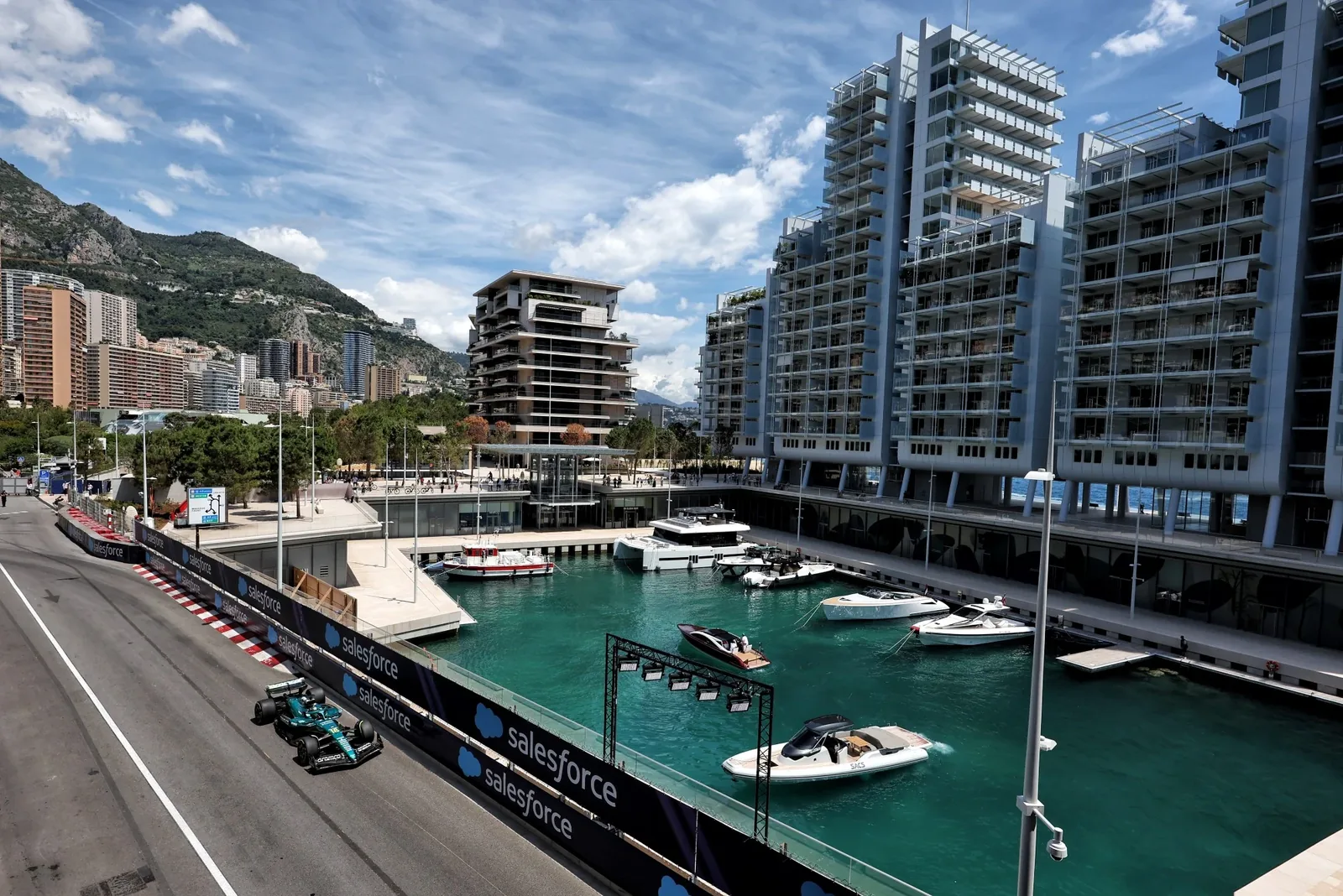
The Monaco track is only 3.337 kilometers long, but it concentrates 19 corners distributed among narrow streets, elevation changes, and protective barriers that accompany almost the entire course.
Unlike modern racetracks, where run-off areas allow for corrections in case of error, Monte Carlo offers very few opportunities for recovery.
At many points on the circuit, a few centimeters separate the car from the guard rail. This means that a small wheel lock-up, an early acceleration, or a slightly incorrect trajectory can immediately end a session.
It’s no coincidence that drivers are often seen touching the walls during practice and qualifying as they try to find the limits of the car.
The perfect lap requires courage in corners that are part of Formula 1 history</p
One of Monaco’s most fascinating characteristics is that absolute speed doesn’t always tell the whole story.
Drivers need to build confidence gradually throughout the weekend, getting closer and closer to the barriers with each lap. The goal is to use the entire available width of the track without exceeding the limit.
This pursuit of the perfect lap transforms qualifying into a spectacle in itself.
It is precisely in this scenario that some of the most famous laps in Formula 1 history were born. Ayrton Senna, Michael Schumacher, Fernando Alonso, Lewis Hamilton, and Max Verstappen starred in memorable sessions on the streets of the Principality, exploring every centimeter of the circuit.
In Monaco, the difference between a great lap and an accident is often measured in a few centimeters.
Read more F1 today? Find out how to watch the free practices of the Monaco GP 2026
When it comes to corners, the circuit brings together some of the most well-known corners in world motorsport.
Sainte Dévote is often the scene of battles right after the start. The climb towards the Casino requires precision in changing direction. The Fairmont Hairpin remains the slowest corner of the entire season, while the passage through the tunnel presents an abrupt change in luminosity that challenges drivers with each lap.
Following that, the braking for the Nouvelle Chicane demands total car control after the high speed reached inside the tunnel. The Swimming Pool complex perhaps represents the best example of the aggressiveness needed to be fast in Monte Carlo.
Each sector presents its own characteristics and requires a specific combination of technique, courage, and concentration.
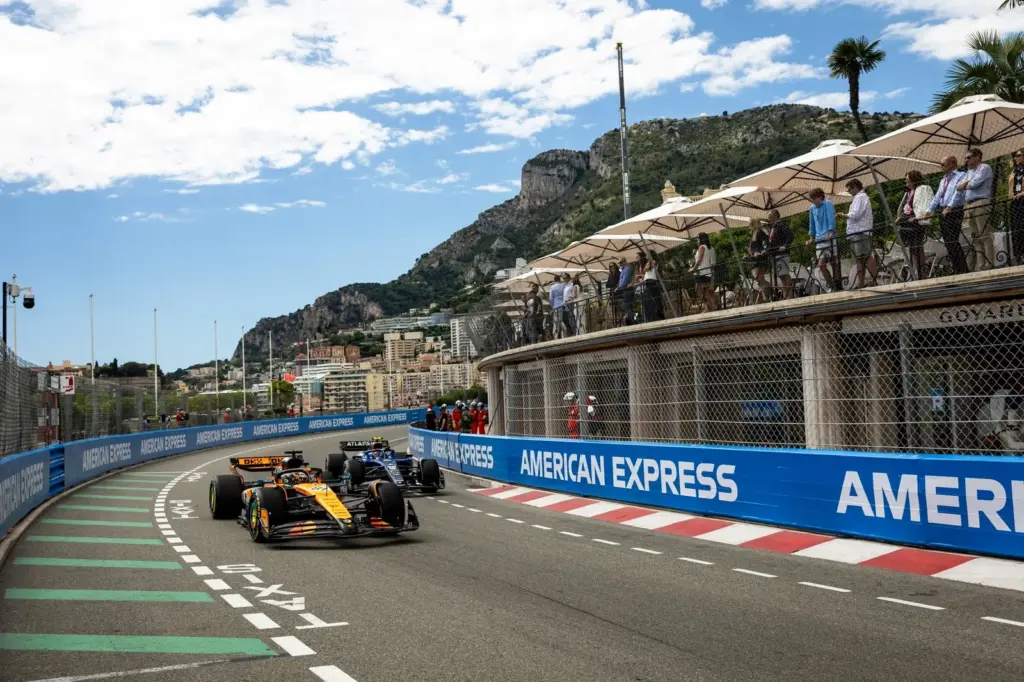
The mental challenge is as important as the physical one
Monaco’s demands are not just technical.
For 78 laps, drivers need to maintain an almost uninterrupted level of concentration. Unlike other tracks, where there are moments of respite on long straights, the Monegasque circuit demands constant attention.
A minimal distraction can result in contact with the barriers. For this reason, many drivers describe the Monaco GP as one of the most mentally exhausting races of the entire season.
The need to repeat precise laps, keeping the car close to the walls throughout the race, generates psychological pressure that few circuits can reproduce.
Why does winning in Monaco remain special?
Formula 1 has changed profoundly over the last few decades. Cars have become faster, safer, and technologically more sophisticated. New circuits have emerged in different parts of the world, bringing modern challenges and impressive structures.
Even so, Monaco continues to hold a special place among drivers and teams.
Part of this is related to its historical prestige. Another part comes precisely from the challenge that the circuit represents.
Winning in Monte Carlo means overcoming a test that uniquely combines speed, technique, courage, and concentration. That’s why so many champions consider a victory in the Principality one of the most important achievements of their careers.
In an era of advanced simulators, real-time data analysis, and increasingly sophisticated technology, Monaco continues to remind us that, in the end, there is still an essential element in Formula 1: the driver’s ability to execute a perfect lap under pressure.
And few places demand this perfection as relentlessly as the streets of the Principality.
Read more F1 announces Las Vegas GP to remain on calendar until 2037