



After a month without activities, Formula 1 returned and left the audience with a curious feeling — as if they had been hit by a “neuralizer,” an object used by agents K and J, played by Will Smith and Tommy Lee Jones in the Men in Black franchise.
Read more F1 today: FIA studies changing calendar and engine debate heats up
In the movies, the device erases recent memories and replaces them with more convenient versions of reality. In Miami, Formula 1 seems to have done something similar: it didn’t completely erase the initial bad impression of artificiality caused by the new regulations, but softened it enough for the show to work again.
In the session that opened the stage, seeing young Kimi Antonelli more than half a second behind Charles Leclerc was a shock. Except for the TL1 in Australia, this was Mercedes’ worst result in practice. But, unlike the session in Melbourne, the result in the United States already indicated something: teams like Ferrari, McLaren, and Red Bull took advantage of the calendar break to improve their understanding of the regulations.
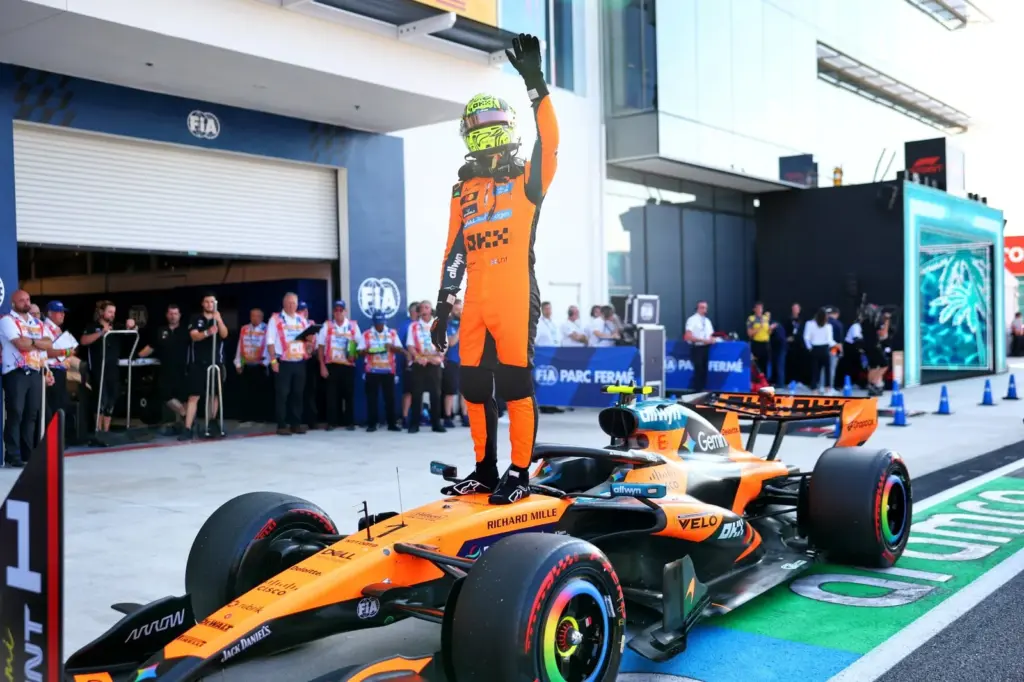
McLaren didn’t hide their hand: they already secured the sprint pole with Lando Norris and placed Oscar Piastri on the second row. In a lukewarm race, Norris won without major threats, Piastri maintained the good result, and Charles Leclerc completed the top 3. A routine race, very similar to the standard seen in 2025.
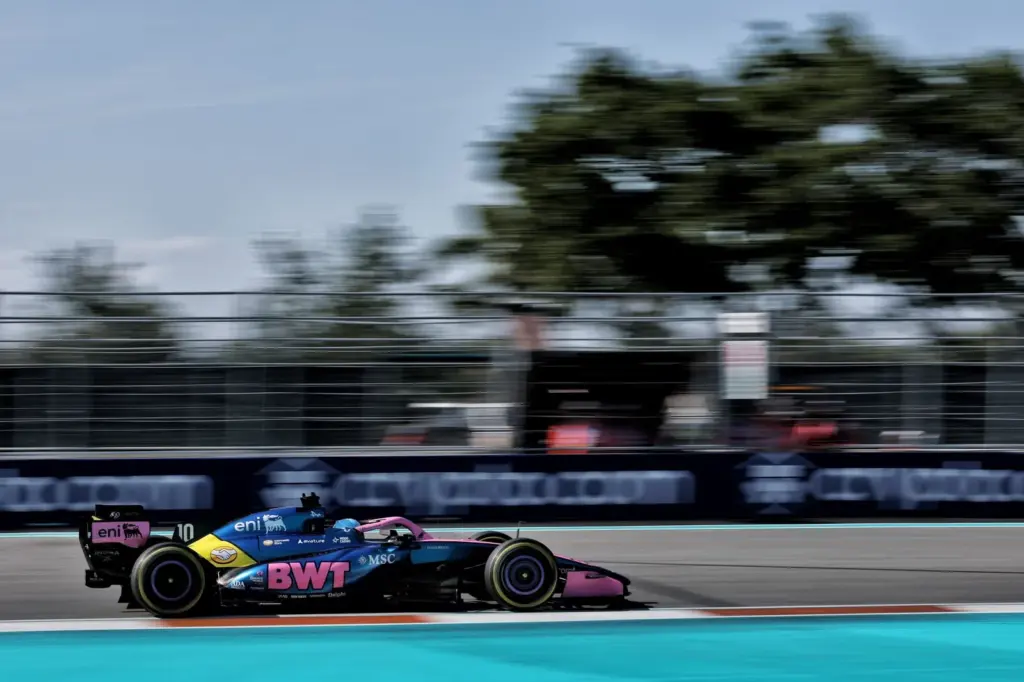
In qualifying, the second effect of the neuralizer came. This time, the memory of young Antonelli highlighted throughout the season spoke louder, and he secured pole position. The surprise appeared right behind: Max Verstappen appeared in second position. The four-time world champion returned to the role expected of him — even if only for a brief moment — while the rest of the grid organized itself without major surprises. Highlight for Alpine’s good performance, placing both their cars in the top 10.
Between Saturday and Sunday, the expectation of rain dominated the debate and helped shift the audience’s focus. The possibility of a chaotic race on a wet track began to be treated almost as a necessary condition for the spectacle. Everyone thought of everything… except a breathtaking start, with dry weather.
When the lights went out on Sunday, what was seen was one of the best starts of the year. Leclerc made a completely clean and cold move. Verstappen showed why he is a four-time world champion: he spun alone but still managed to regain control of the car and continue in the race. The rest of the grid composed an extremely chaotic start and reminded fans of an essential truth of the sport: the driver is still in control of the cars.
Throughout the race, this remained evident. That constant position swapping that gave the impression of artificial overtakes simply did not appear at the start of the Miami race. Those who managed to gain position kept it — or at least made any recovery as difficult as possible.
Without the strange visualization of “superclipping,” it became clearer that the battles were indeed happening on the track. The FIA (International Automobile Federation) measures may not have solved everything, but they were enough to restore some of the competitive spirit to the race.
Read more Antonelli dominates F1MANIA.NET Score after Miami F1 GP
The two incidents at the start of the race were racing situations. Despite the scene of Pierre Gasly’s car flipping on the track after contact with Liam Lawson, the “bar was cleared” and this did not become a debate about the new rules like Oliver Bearman’s case in Japan. As for Isack Hadjar’s crash, it was the driver’s own mistake, who had a “tantrum” worthy of his Formula 2 days and nothing compatible with the more mature attitude he had been adopting since last year. Frustrations happen.
The great merit of the race was to rescue one of Formula 1’s best characteristics: the strategy game. As the lead changed hands, teams moved to understand the right moment for their stops. The uncertainty about the rain and Max Verstappen’s early stop raised the tension and forced tighter battles. The neuralizer effect was finally consolidated.
Even with Antonelli taking the lead in the final phase, the race remained alive in the midfield pack. And this was not good news for Leclerc. The Monegasque, who had already been irritated with Ferrari, was the main protagonist of the outcome. He was an example of the saying “everything that is already bad can get worse.” And it got worse. A lot.
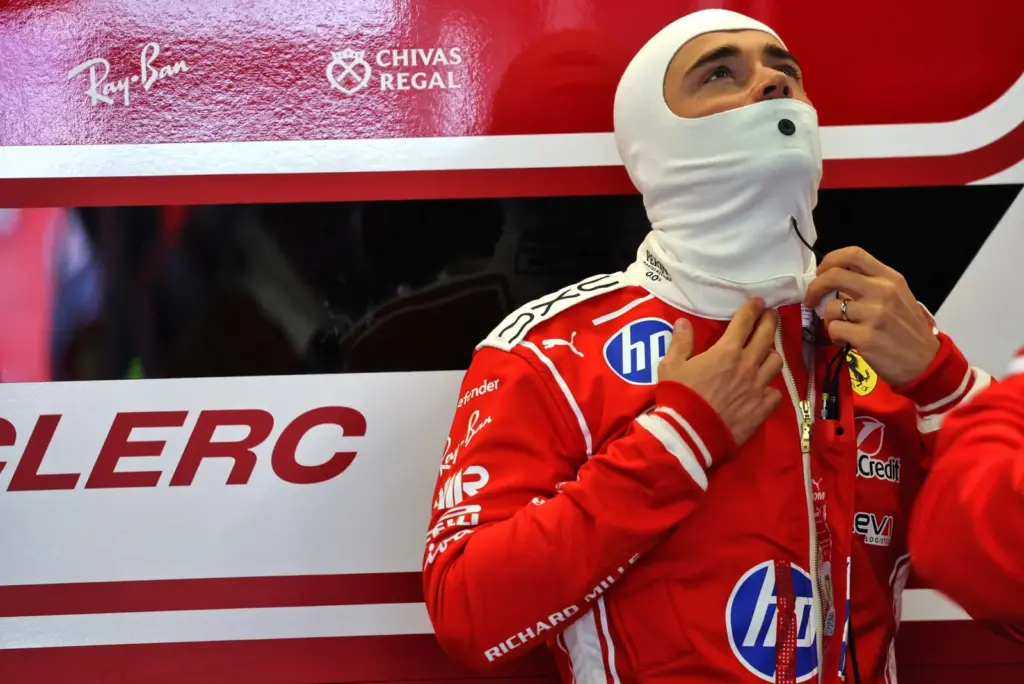
Leclerc was heading for the podium but inexplicably spun alone on the final lap, resulting in a sharp drop to the middle of the pack. And, as luck is not usually a word present in the Ferrari driver’s dictionary, he also received a post-race penalty that dropped him to eighth place.
The positive balance from Miami was satisfied fans after a month without racing. There are still adjustments to be made, but at least F1 managed to deliver a more competitive and enjoyable race to watch. As for the performance of teams and drivers, the big highlight goes to Antonelli’s consistency, who was not shaken by the disastrous sprint where he was penalized, and Franco Colapinto, who scored good points for Alpine and reinforces that Flavio Briatore may have made a good bet by keeping him on the team.
As for the negative balance… that went to George Russell, fourth place. It could have been Ferrari or even Audi, but the British driver’s performance draws more attention. After years being prepared as a protagonist, going head-to-head with Max Verstappen, and positioning himself as a strong figure off the track, Russell simply does not show up when he is most needed. And this has allowed Antonelli to take the spotlight of the season almost alone in the first four races.
Now F1 is warming up for the Canadian GP, and there we will know if the neuralizer effect is permanent or if it only works in Will Smith’s hands… And, who knows, George Russell might run after one to try to forget the start of the season he has been having.