
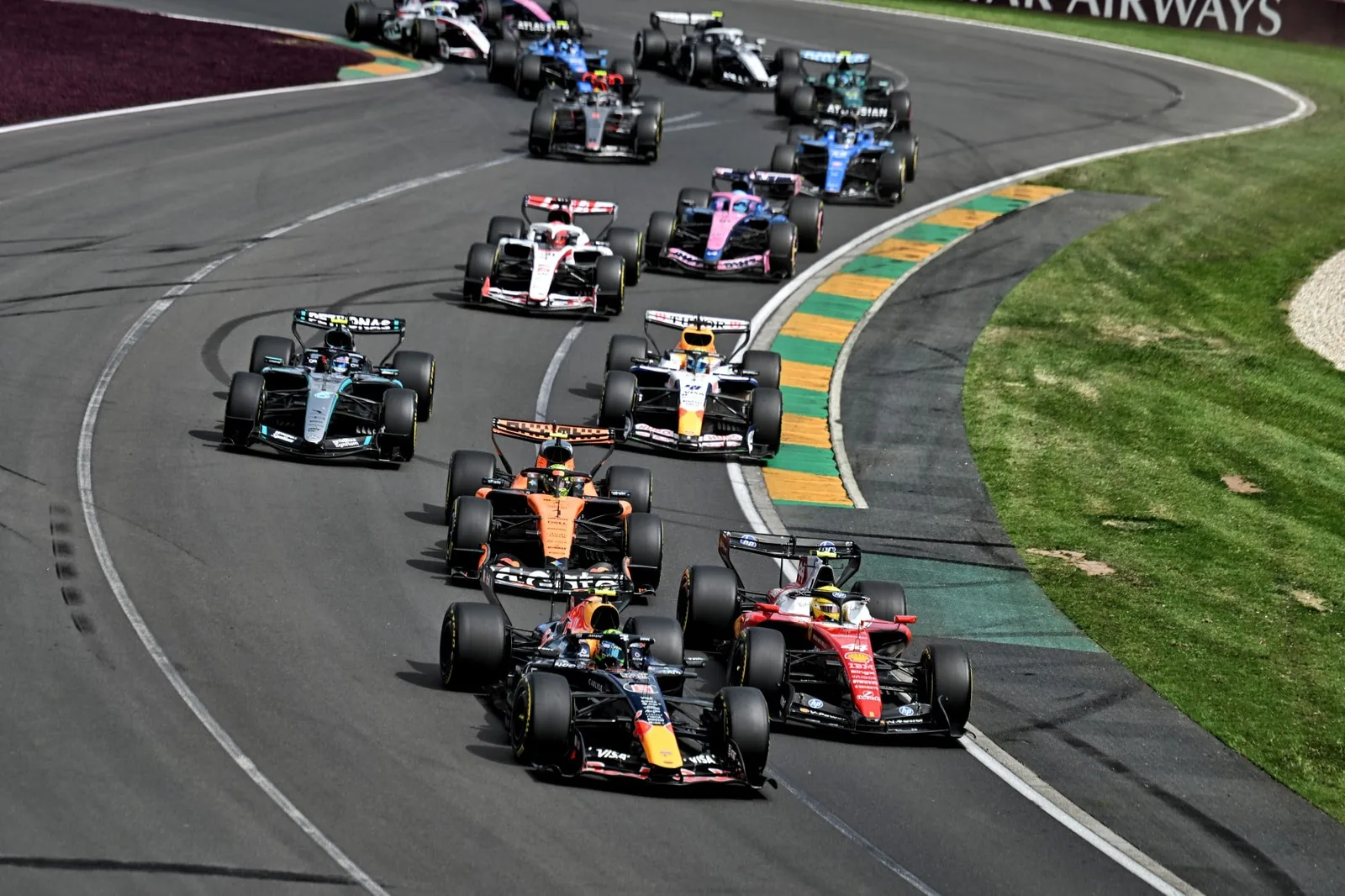
Energy management, overtake button and behavior of the new cars marked the first GP of the 2026 era in Melbourne
Read more F1: Ferrari surprises in race pace and bets on 2026 development
The new era of Formula 1 officially began this Sunday in Melbourne, and the opening race of the 2026 season showed that the new regulations brought profound changes to the way positions are contested on track. The Australian Grand Prix was marked by constant battles, strategic variations and difficult-to-predict car behavior, mainly due to energy management and the functioning of the overtaking system.
Although the final result showed a Mercedes one-two, with George Russell winning and Kimi Antonelli in second, followed by Ferrari’s Charles Leclerc, the course of the race showed that the dynamics of the new generation of cars is much more complex than the qualifying suggested.
During the post-race press conference, Russell highlighted that one of the factors that most influenced the race was precisely the way each team distributed energy throughout the lap, something that becomes particularly challenging at a circuit like Albert Park.
“There is more opportunity for racing, but it also requires more strategy. At a circuit like this you have four important straights and you need to divide the energy between them. No team divides exactly 25% on each straight. Some use more on one, others on another. If you use the overtake mode, you pass the opponent on one straight and they can give it back to you on the next.”
This behavior generated a kind of “yo-yo effect” in the battles, especially in the early laps, when the drivers were still understanding the real functioning of the cars in a race situation. Russell himself reported that position changes were frequent precisely because of this variation in power delivery.
“As soon as someone took the lead it seemed almost impossible to hold the position.”
For Charles Leclerc, who fought one of the most intense battles of the race with the Mercedes driver in the opening laps, the unpredictability was one of the main challenges of the race.
“It was a very complicated race. At the beginning nobody knew exactly what to expect in the battles and in energy management. Defending position also becomes difficult, because you don’t know exactly when the opponent’s engine or battery will kick in on the straight. So huge speed differences arise.”
In addition to energy management, the overtaking system was also one of the protagonists of the race. The so-called “Overtake Mode”, which releases additional power for short periods, had a direct impact on wheel-to-wheel battles and divided opinions among drivers and observers.
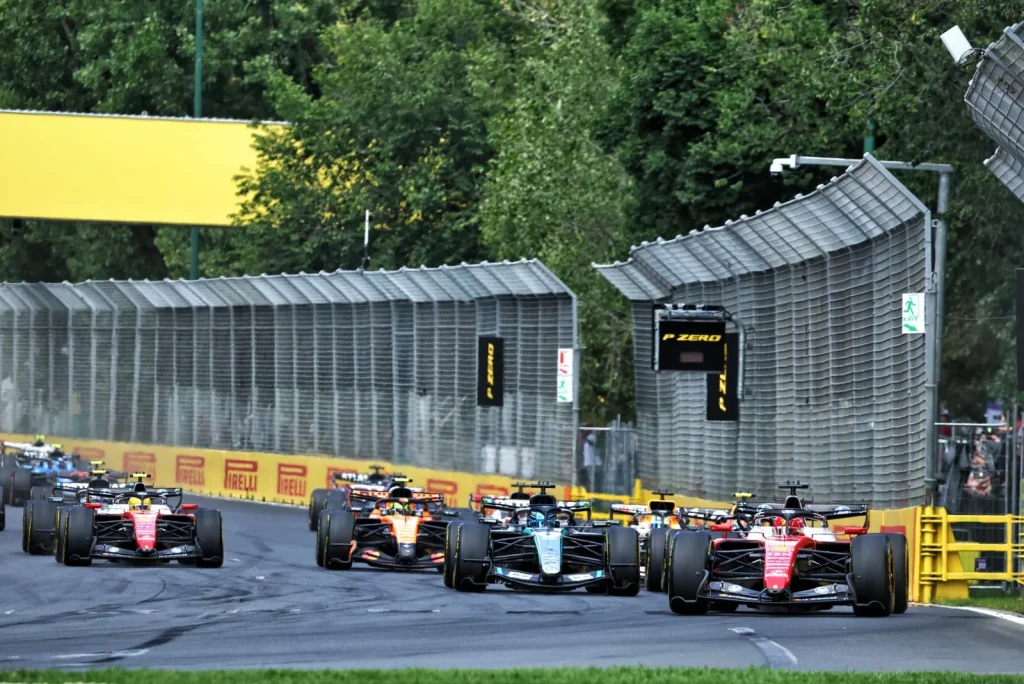
Kimi Antonelli, who finished the race in second after a recovery drive, highlighted that the system was responsible for much of the action in the early laps.
Read more Overtake button divides opinions in F1 2026 debut
“On a track like this the overtake mode was very strong and allowed for many maneuvers. It generated a lot of action in the first laps.”
Leclerc, meanwhile, believes that the new system completely changes the way drivers think about overtaking. In the Monegasque’s view, the battle is no longer just a matter of braking later and starts to involve much more strategic planning.
“Before it was more about who braked later. Now there is much more strategy involved. Every time you activate the boost you know you’re going to pay the price later.”
Another point that drew attention during the race was the behavior of the cars when using the so-called “Straight Mode”, which changes the aerodynamic configuration to maximize speed on the straights. Russell explained that, when activating the system, the car loses front-end efficiency, which can make close racing difficult.
“When we open the Straight Mode we lose a lot of the front of the car. It starts to understeer a lot before the corners.”
Despite the natural uncertainties of the first race under a new technical regulation, the podium finishers agree that it is still too early to draw definitive conclusions about the behavior of the new Formula 1. Each circuit can present completely different characteristics in energy use.
Russell believes that Melbourne might even be a particular case in this regard.
“I think it’s a bit of a different circuit because of the way energy is used throughout the lap. This doesn’t necessarily change the pecking order, but it changes the way the races happen.”
The next test to understand the true balance of the season happens next weekend, with the Chinese Grand Prix. The round in Shanghai will have a Sprint format, which means less practice time and even more pressure for teams and drivers to quickly understand the behavior of the cars.
For the protagonists of the race in Melbourne, the learning from the first weekend of the new era has already made it clear that the 2026 season tends to be marked by strategic battles and the rapid technical evolution of the cars throughout the championship.
Read more F1: Where to watch and the schedule for the 2026 Chinese F1 GP