


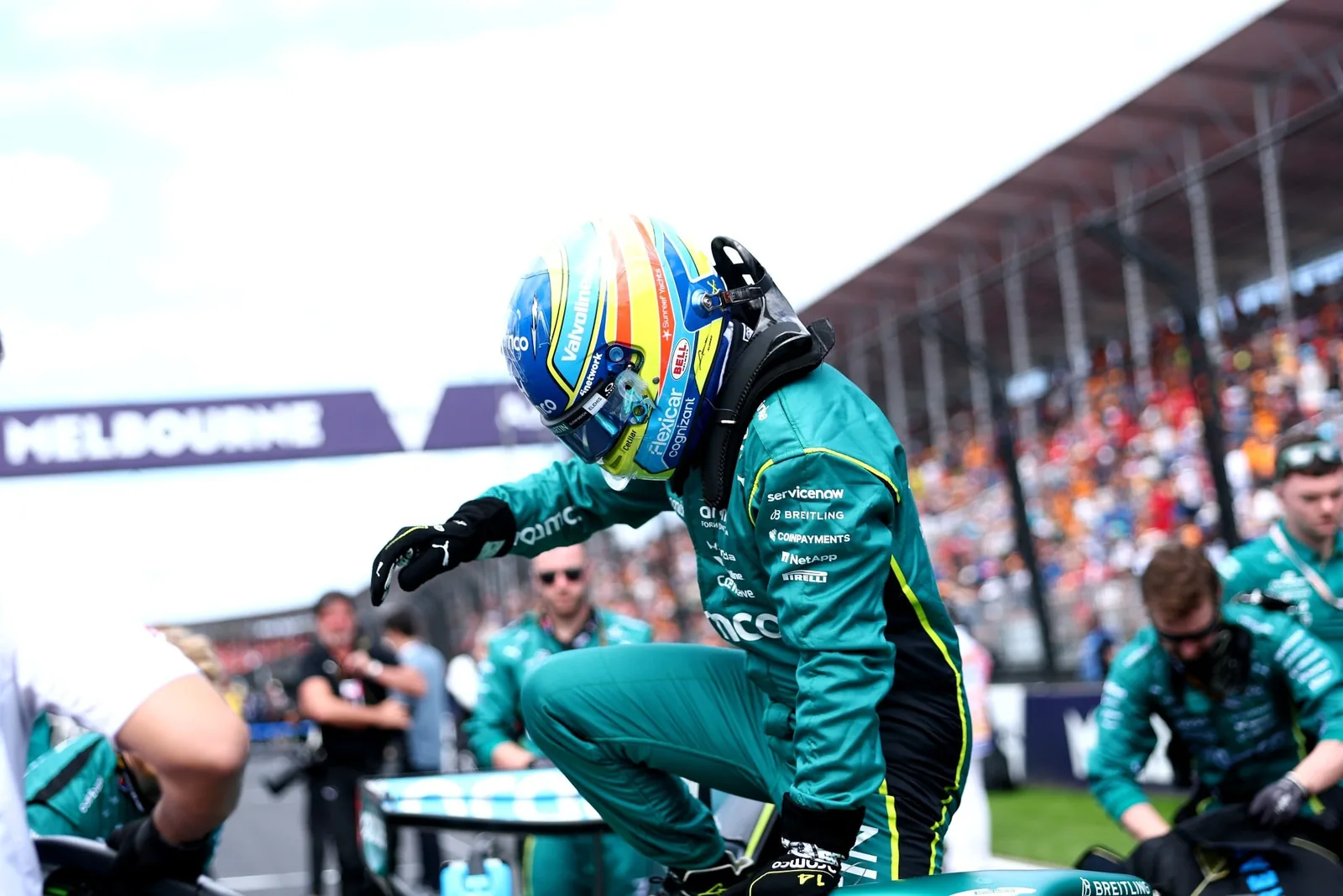
Fernando Alonso took stock of his physical condition after the Formula 1 Australian GP, in which he had to retire from the race due to mechanical problems and exposure to vibrations from the Honda power unit in the Aston Martin car.
Read more F1: Stella explains factors that influenced Piastri’s accident
Before the race, Adrian Newey, Aston Martin’s chief, had already warned that Alonso and Lance Stroll were at risk of ‘permanent nerve damage’ in their fingers due to the vibrations. Newey explained that Alonso could only withstand 25 laps, while Stroll felt his limit at 15.
During the race, Alonso initially went to the pits, staying stationary for many laps, but returned to the track and finally retired for good on lap 21 of 58. Stroll also returned after his first stop, completing 43 laps, but finished in last place, unclassified.
The Spanish driver commented on the impact of the car’s vibrations: “It’s similar to what we felt in Bahrain, and it’s not the best feeling to have this level of vibration. I believe Honda thought the vibrations in the battery were reduced since Bahrain with some modifications, but that hasn’t happened in the chassis yet, because the battery needs to be isolated in another way,” he stated.
Read more F1: Vasseur clarifies Ferrari’s strategic decision in Australia
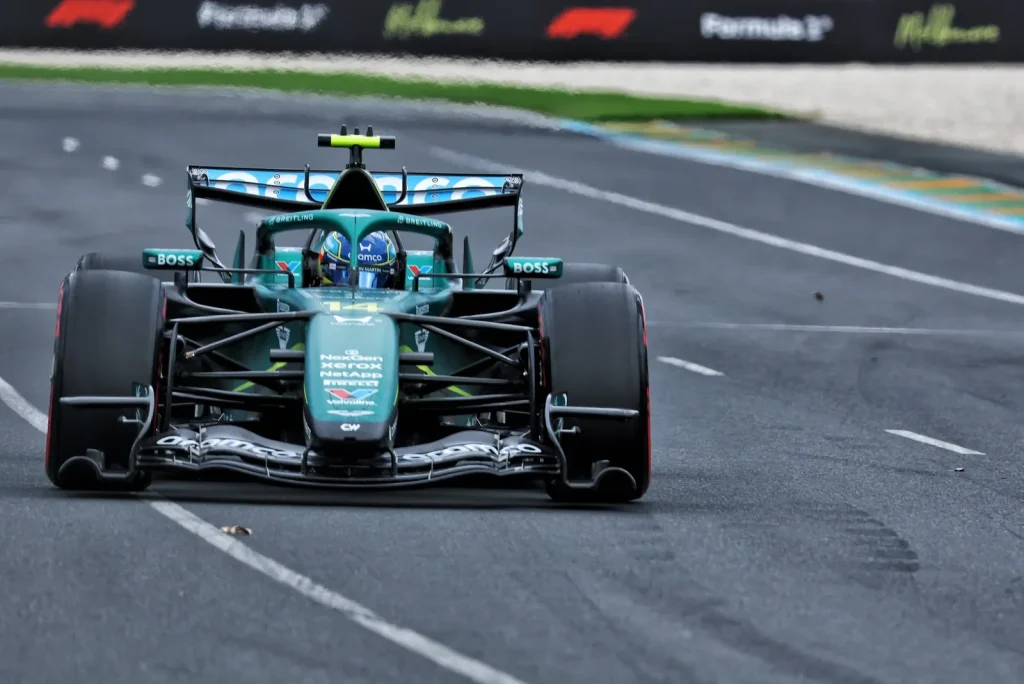
Alonso revealed that the problem will require more time to be resolved, but guaranteed that he will continue trying to extract the maximum from the car: “It will take a little more time, but we will do our best in China and complete as many laps as possible to help the team. It will be another difficult weekend, but we cannot give up. We need to keep testing solutions, especially on the chassis, to improve the package, as we are not optimizing anything yet. China will be a good opportunity,” he added.
The Spaniard also explained the unusual events of his race, marked by a double retirement: “The start and the first two laps were the most fun part of the race, being in P10 for two laps was unexpected. Starts are not our problem, because while everyone else was struggling with the ‘boost’, we had a clean first lap. Then, I dropped to P17 and we had a small data problem that required the first stop. We thought we had solved it, went back on track, but another problem arose, and we stopped for the second time,” concluded the two-time Formula 1 champion.
Read more F1: Mekies details Red Bull’s critical error at the start of the Australian GP