






The Madring debuts on the Formula 1 calendar this weekend already with a significant technical challenge for tires and teams. According to Pirelli, the new Madrid circuit is among the five most demanding of the season in terms of energy applied to the tires.
Read more F1: Vettel talks about tribute to Schumacher in Monza: «Feeling Michael’s presence»
The track is 5.416 km long with 22 turns, combining a street section with a permanent one. The main highlight is the “Monumental,” a 550-meter corner with a 24% incline, pointed out by Pirelli as generating the highest vertical load of the entire season due to its steep incline and great length.

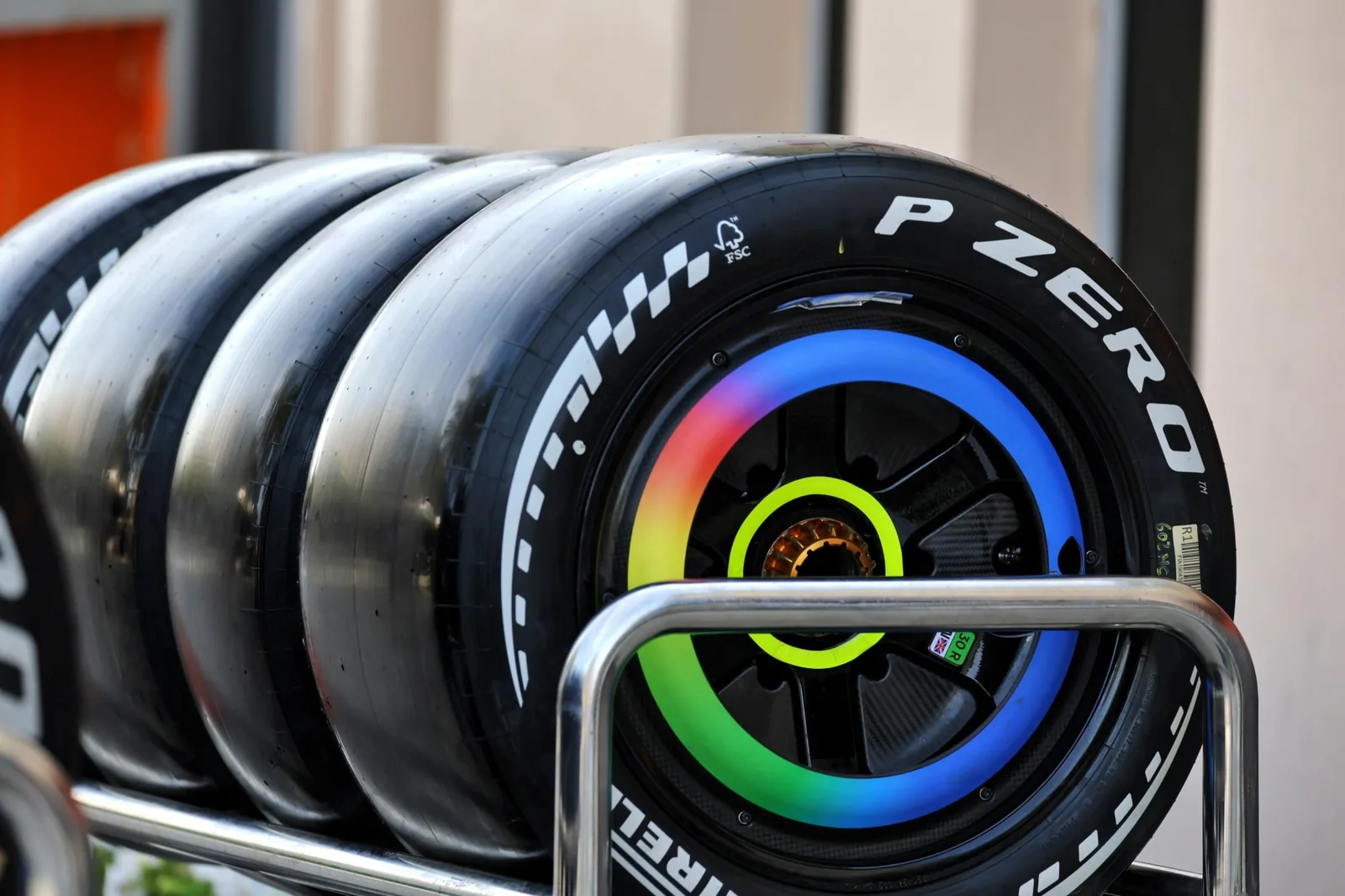
For the Spanish GP, the supplier selected the C2 as Hard, the C3 as Medium, and the C4 as Soft. The expected lateral forces are comparable to those recorded in Barcelona and Silverstone, while the very smooth asphalt tends to offer relatively low grip. The surface was treated with high-pressure water jets to remove dust and oily residues common on new asphalt.
Pirelli began studying the circuit three years ago, using simulations to estimate trajectories and loads on the tires. After the completion of the works, engineers went to the site to measure the macro and micro roughness of the asphalt and refine the data shared with the teams.
Read more F1: Leclerc says he is fine after a heavy crash in Monza

Since there were no prior tests at Madring, the tire usage definition will depend directly on what is observed in TL1. If the degradation of the softer compounds is high, teams may choose to preserve sets of Hard tires for the race.
Formula 1 has previously raced in the Madrid region, with nine editions of the Spanish GP held at Jarama between 1968 and 1981. In the overall history of the race, Michael Schumacher and Lewis Hamilton share the record among drivers, with six wins each, while Ferrari leads among constructors, with 12 victories.
Read more F1: Colapinto regrets mistake and believes Alpine deserved more points