








Formula 1 started a new technical phase in 2026 and a term began to dominate conversations in the paddock shortly after the Australian GP qualifying: the so-called “super clipping”. The phenomenon became evident in Melbourne and showed how the new power units are profoundly changing the way of driving in the category.
Read more TCR: Piquet Jr. leads TL2 with top-10 within the same second in Curvelo
The main consequence of this change is that drivers now need to manage the car’s electrical energy much more carefully. This causes the cars to significantly reduce speed on the straights at certain moments of the lap to recharge the battery, something that drew attention during the qualifying session at Albert Park.
The new generation of Formula 1 cars gives a much larger role to the electrical part of the power unit. With the removal of the MGU-H, the battery recharging process has become a central factor for performance. Teams now need to carefully balance when to use and when to recover energy to put together a competitive lap.
This scenario has made already known practices in the category, such as lift and coast and energy recovery under braking, even more important. Among these effects, the so-called super clipping gained prominence, as it directly interferes with the speed of the cars at the end of the straights.
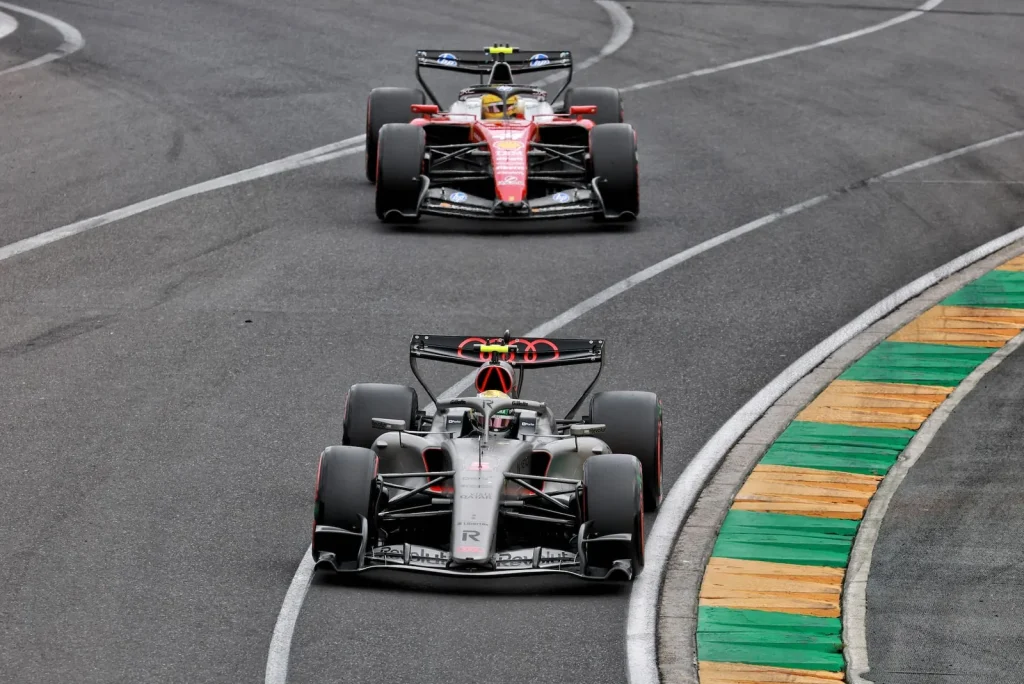
In simplified terms, super clipping happens when the battery starts to recharge while the car still has the throttle fully pressed at the end of a straight. At that moment, the power unit begins to prioritize electrical energy recovery instead of delivering its maximum power, which causes a drop in acceleration and also in top speed.
This behavior may seem contradictory for a sport historically focused on extracting the maximum possible performance from the car at all times. However, with the electrical part representing approximately half of the total power of the package, this strategy has ended up becoming the most efficient way to drive the new cars.
Read more F1: Leclerc is another driver to criticize the new cars
During qualifying in Melbourne, onboard footage of several drivers showed significant drops in speed at certain points on the track. In some cases, especially approaching turn 9, the difference reached over 50 km/h, highlighting the impact of energy management on performance.
The effect could become even more pronounced on circuits with long straights and fewer heavy braking zones. Tracks like Spa-Francorchamps, Monza, or Las Vegas, for example, could further amplify this phenomenon throughout the season.
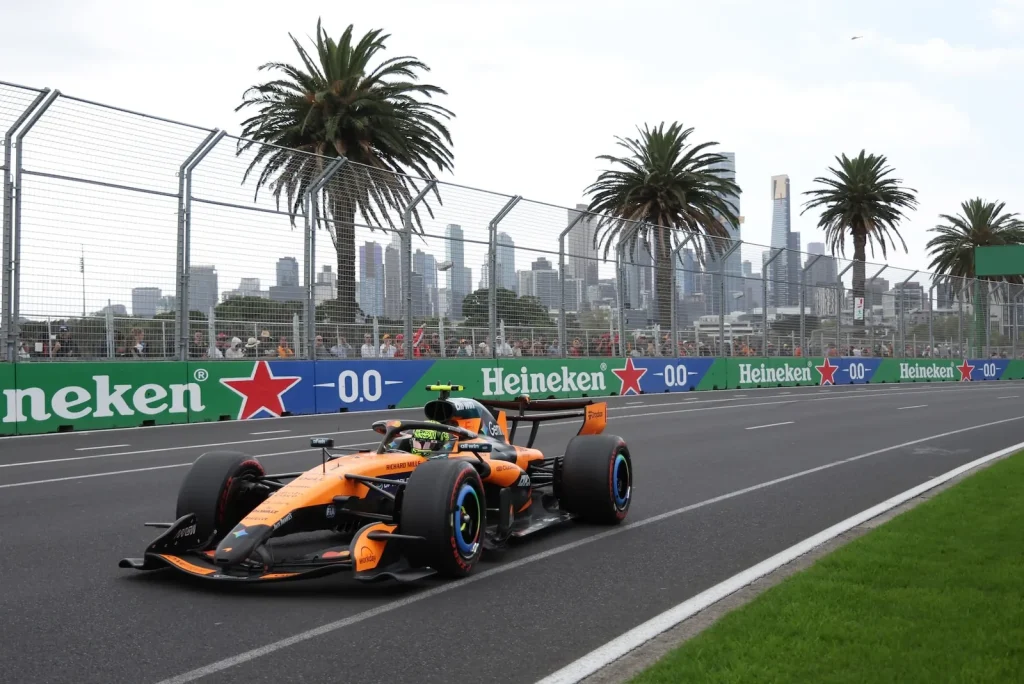
Lando Norris commented after qualifying that driving the new cars requires a completely different approach. According to the Briton, putting together a fast lap now depends on finding a very specific rhythm, which includes lifting off the throttle earlier than usual, changing gear usage, and carefully calculating braking points.
With energy management becoming a central element of performance, Norris also highlighted that track time will be fundamental throughout the championship. For drivers, understanding how to extract the most from these new cars requires several laps of adaptation, something that could directly influence results in the first races of the season.
Read more F1: Newey reveals Honda’s inexperience and Aston Martin’s difficulties in Melbourne