






George Russell put Mercedes on pole for the Dutch GP Sprint, but Friday’s data shows a much tighter battle in Formula 1 than the isolated result suggests. Mercedes, McLaren, and Ferrari were separated by just 0.08 seconds in the Sprint Qualifying performance analysis, while race pace put the Maranello team in an especially strong position for Saturday.
Read more F1: Vowles postpones plans and admits that Williams’ reaction may take five years
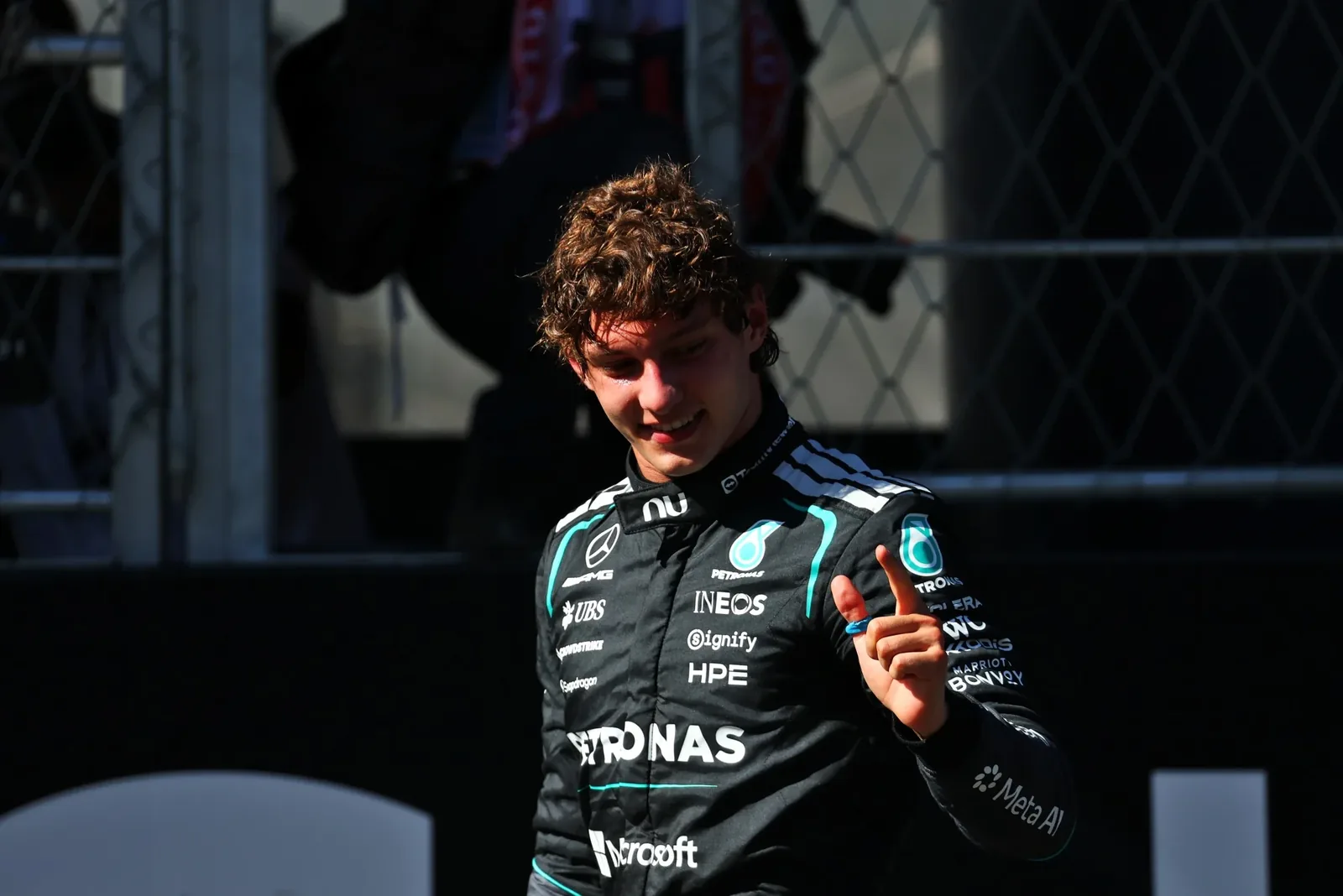
Russell confirmed an improvement that had already appeared in free practice, when he finished just over a tenth behind Kimi Antonelli. After passing through the first two phases of Sprint Qualifying on Medium tires, the Briton nailed his lap on the Softs at the decisive moment and secured his third pole for a Sprint in 2026. On the other two occasions, China and Canada, he converted the first position into victory.

Despite this, Russell himself pointed to Ferrari as the benchmark for the Sprint. “Ferrari’s race pace seemed exceptionally strong this morning. We seemed to be quite far behind, to be honest, on the order of three or four tenths,” he said. The scenario gains importance in Zandvoort, where overtaking is difficult, increasing the weight of the start for the Mercedes driver.
Ferrari finished just 0.08 seconds behind Mercedes in the qualifying pace analysis and showed an advantage especially in low and high-speed corners. Charles Leclerc was less than a tenth off pole and secured third place, his best Sprint Qualifying of the year. The team brought changes mainly to the floor, as well as modifications to the diffuser and beam wing. Lewis Hamilton, however, found a different behavior after adjustments between practice and qualifying. “It was a completely different car,” he said.

McLaren appears practically on the same level. The estimated difference to Mercedes was only 0.06 seconds, and ideal lap data indicates that Oscar Piastri would have been practically tied with Russell if he had put together his best minisets. “With a better lap, maybe we could have gotten pole,” the Australian acknowledged. Lando Norris also highlighted that the car maintained the good performance shown earlier and believes there are still possible gains for Saturday’s qualifying.
Read more Genz is the fastest in the first NASCAR Brazil practice in Londrina
Antonelli, on the other hand, had his session compromised right at the start. An off-track excursion caused two holes in the Mercedes floor, according to the driver himself, and an estimated loss of 25 points of aerodynamic downforce. The team tried to repair the car during the session, but the championship leader suffered mainly in low-speed corners and finished fifth. With the car recovered, the data expectation is that he will return to the fight for the top positions in the GP qualifying.
Further back, the gap grew significantly. The analysis places Red Bull 0.55 seconds behind Mercedes, followed by Audi at 0.84, Alpine at 0.86, and Racing Bulls at 0.99. Max Verstappen finished only sixth and reported a lack of grip and balance, although he considered the car better than during practice.
Among the substitutes, Liam Lawson reached 11th place for Red Bull and believed he had the pace to advance to SQ3. Yuki Tsunoda, who had not previously driven a 2026-spec car, was immediately behind with Racing Bulls, only 0.009 seconds slower than Lawson. Friday’s data, therefore, points to an extremely balanced fight between Mercedes, McLaren, and Ferrari at the front, with the Italian team emerging as a particularly relevant threat when the focus shifts from the fast lap to Sprint pace.
Read more F1: Racing Bulls sees chance for progress in Zandvoort