






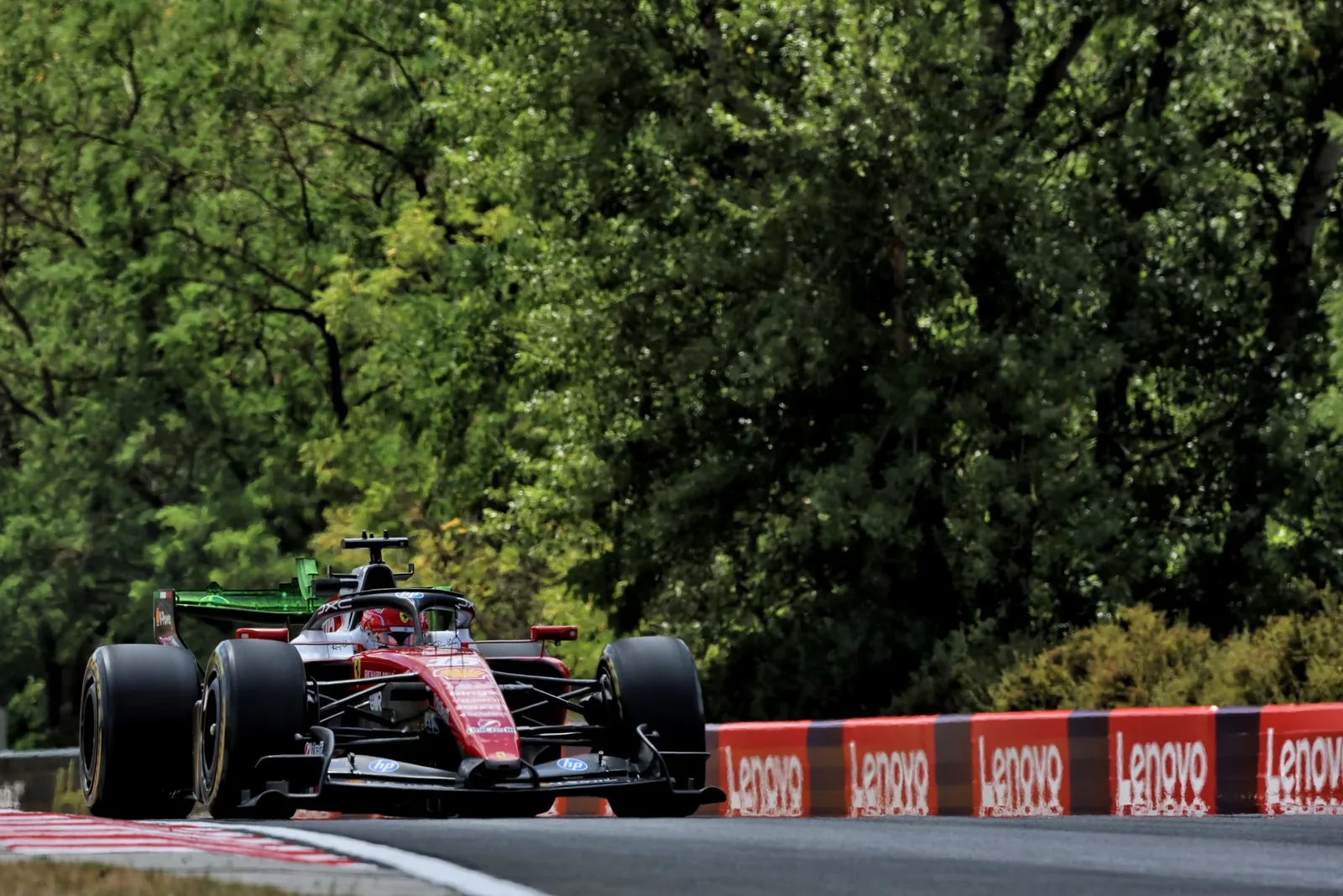
Seeing a Formula 1 car reach an impressive top speed does not, by itself, mean it has the best package for the race. The most useful question for those following a practice or qualifying session is another: where is the car gaining time and how much is it sacrificing to achieve that?
Read more Dutch GP 2026: the live Free Practice of F1 in Zandvoort
In a category where aerodynamics, tires, power unit, and setup work together, speed is only part of the equation. Efficiency appears when the car can turn its potential into consistent performance across different sectors and conditions.

1. Top speed doesn’t tell the whole story
One of the most common mistakes is looking at the speed trap and concluding that the fastest car on the straight is automatically the most efficient.
In practice, a team may seek more speed by reducing drag, but this can alter aerodynamic balance and compromise cornering behavior. With the active aerodynamics of 2026, this relationship became even more interesting: cars can use different aerodynamic configurations depending on the circuit section.
What to watch for: compare the top speed with the sector times in corners and high-speed sections. If a car gains a lot on the straight but consistently loses in corners, the reading needs to be more careful.
2. Lap time needs to be broken down by sectors
Two cars can record very close times and reach that result in completely different ways.
One may be strong on the straights and lose in slow corners. Another may sacrifice a few kilometers per hour at the end of the straight but recover a lot of time in corner entries and exits. Therefore, analyzing only the full lap hides an important part of the story.
A simple comparison
When evaluating two cars, it’s worth asking:
- Which is faster on the straights?
- Which brakes later without losing stability?
- Which maintains more speed in the middle of the corner?
- Which accelerates earlier on the exit?
- Does the difference remain in all sectors?
3. More downforce can be an advantage
It’s tempting to associate a more loaded wing with a less efficient car. However, this conclusion can be mistaken.
The goal is not simply to produce maximum downforce or reduce drag to a minimum. Teams seek the best compromise for the circuit. In 2026, the very logic of straight and corner modes reinforces this need to balance downforce and aerodynamic resistance.
Read more F1 today? Find out how to watch the practice sessions of the 2026 Dutch GP
On a track with many high-speed corners, accepting a certain level of drag can make sense if the gain in stability and cornering speed compensates for the loss on the straights. On a circuit with long straights, the equation changes.
4. Tires can completely change the reading
A car may seem extremely competitive in a fast lap and lose performance during a sequence of laps.
This happens because qualifying performance and race pace are not necessarily equivalent. Temperature, wear, and the ability to keep the tire within the proper window directly influence the car’s behavior.
Therefore, when comparing two drivers or teams, it is important to separate a qualifying lap from a consistent sequence of laps. The second scenario usually better reveals the package’s efficiency in race conditions.
5. Efficiency also means consistency
The truly efficient car does not necessarily need to dominate all indicators. It needs to deliver predictable performance.
If a team can find a setup that works in different fuel, temperature, and tire conditions, that can be more valuable than an extremely fast solution that is difficult to reproduce.
This logic also helps to understand why performance analysis should not be limited to the flashiest numbers. Even entertainment content related to motorsport, such as laskar togel, should not distract from the indicators that really explain a car’s behavior.
Final considerations
To understand which car is truly efficient, the best strategy is to abandon the idea that top speed represents complete performance. The picture becomes clearer when combining straight-line speed, sector performance, aerodynamic balance, tire behavior, and consistency. In modern F1, the fastest car in a single indicator may not be the one that best exploits the package. Efficiency lies precisely in the ability to turn different technical compromises into lap time — and repeat that performance when conditions change.
Read more F1 today: Verstappen renews and Rafa Câmara in Haas’ sights